

• About   |
  • Submit Guest Post |
  • Contact Us
No Result
View All Result
The Second Angle (TSA Magazine)
Advertise
  • Infotainment
    • Sports
    • People
    • Inspiring
  • Entertainment
    • Lifestyle
    • Home & Decoration
  • Buzz
  • Education
  • Travel
  • Finance
  • Healthcare
  • Technology
The Second Angle
No Result
View All Result
  • Infotainment
  • Entertainment
  • Buzz
  • Education
  • Travel
  • Finance
  • Healthcare
  • Technology
Advertisement
ADVERTISEMENT
Home Explainers

Explaining BJP government’s New Media Accreditation law and how does it curb journalistic rights?

The 10 disqualification clause that comes under the new laws dilutes the basic fundamentals of journalism in India

by Veena Nair
February 17, 2022
in Explainers
Reading Time: 3 mins read
Explaining BJP government’s New Media Accreditation law and how does it curb journalistic rights?
Share on FacebookShare on WhatsApp
Advertisement Advertisement Advertisement
ADVERTISEMENT

The Ministry of Information and Broadcasting published the new guidelines for central media accreditation has been included with 10 disqualification clauses. The clauses dilute the basic definition of journalism. It leaves journalists’ Press Information Bureau status in a volatile position where the centre is free to interpret according to its subjective views. 

Accreditation is a process that gives journalists access to government offices and helps in getting information from the opaque bureaucratic system in India. Any reporter who was presented or covered the gatherings over several years was an ‘accredited’ journalist. The years of experience spent observing such gatherings would establish that these gatherings are diverse and bring a lot of perspective to the table. 

Explaining BJP government’s New Media Accreditation law and how does it curb journalistic rights?
Image Source: muslimmirror

The murkiness of the laws doesn’t end there. According to a report in The Wire, the guidelines put out by the Ministry leave it to the discretion of government officials to interpret what is defamatory or prejudicial to the sovereignty or integrity of India. This will be decided simultaneously with whether a journalist’s accreditation should be suspended or withdrawn based on certain interpretations.

The jargon which further makes it easier for the government to target any media organisation is the abstract law which says “acts in a manner which is prejudicial to the sovereignty and integrity of India, the security of the State, friendly relations with foreign States, public order, decency or morality of in relation to contempt of court, defamation or incitement to an offence.”


RelatedPosts

The Future of Tezos: Insights and Predictions

The Future of Tezos: Insights and Predictions

What does Twitter look like under Elon Musk

What does Twitter look like under Elon Musk

There are multiple defamation cases filed on the most frivolous accounts and now that can be considered to further thwart the media from getting access to government offices. 

Seema Chisti in her article for The Quint explains why access to the government office is critical for a thriving democracy. “Journalists here are meant to serve as proxies of the people at large, in the hope that they will be able to ask questions that would ensure that those who claim to represent them and have been vested with so much power will always be alert and anxious about being answerable,” she writes. This situation is exacerbated by the remaining guidelines associated with the suspension or withdrawal of the accreditation of an accredited journalist. The guidelines also provide that accreditation would be liable to be suspended or withdrawn if a journalist used it for “non-journalistic activities” or if he or she “has been charged with a serious cognizable offence.”

Explaining BJP government’s New Media Accreditation law and how does it curb journalistic rights?
Image Source: twitter

According to a report in The Indian Express, the guidelines further prohibits a journalist who falls into the category fallen above from mentioning “accredited to the Government of India” on social media, visiting cards or letterheads.

One will not be able to find these clauses in the guidelines issued in 2013. In fact, the guidelines also provide the “procedure for grant of accreditation” and the “functions of Principal DG, PIB” in the matter.

These guidelines state that “the Government of India shall constitute a Committee called the Central Media Accreditation Committee, chaired by the Principal DG, PIB and comprising of up to 25 members nomination by the Government of India to discharge the functions laid down under these guidelines.”
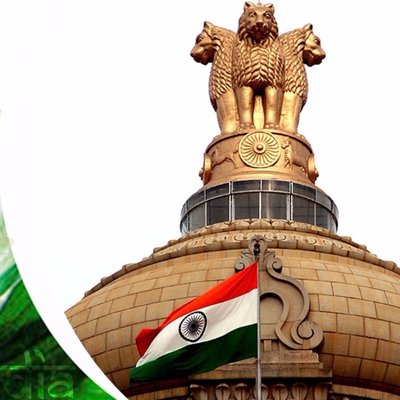
Explaining BJP government’s New Media Accreditation law and how does it curb journalistic rights?
Image Source: twitter

The CMAC would function for a period of two years from the date of its first meeting and shall meet once in a quarter or more frequently, if necessary.

The decisions of the CMAC, the guidelines said, “shall be taken on the basis of the majority of the members present and any dissent may be duly recorded”.

Also Checkout: Throwback: Know about the first Elections held In Uttar Pradesh under British Rule

ShareSendTweet
Previous Post

India lost an Industrialist: Rahul Bajaj’s Legacy

Next Post

The Probability of Cardiovascular Disease is still high even a year after Covid-19, research says

Related Posts

The Future of Tezos: Insights and Predictions
Explainers

The Future of Tezos: Insights and Predictions

In this article, we will explore the future of Tezos and make some predictions on what lies ahead for this...

Read moreDetails
What does Twitter look like under Elon Musk
Technology

What does Twitter look like under Elon Musk

Musk didn't have a business strategy when he chose to acquire Twitter; he only had some thoughts about how it...

Read moreDetails
What Are the Different Causes of Wrongful Arrests?
Explainers

What Are the Different Causes of Wrongful Arrests?

If the police or other security agents hold you against your will, this could be considered a wrongful arrest.

Read moreDetails
Cryptocurrency Wallet – Understand the Detailed Concept
Explainers

Cryptocurrency Wallet – Understand the Detailed Concept

Wallets provide a convenient way for cryptocurrency holders to manage their holdings by storing their private and public keys safely.

Read moreDetails
All you need to know about Cryptocurrency investments
Explainers

All you need to know about Cryptocurrency investments

You are not alone if you find Bitcoin and Ethereum to be unintelligible jargon. They are becoming more well-liked across...

Read moreDetails
All You Need to Know About Bitcoin and Alternative Coins
Explainers

Why you should invest in Cryptocurrency

There is no denying that the value of digital currencies has skyrocketed in recent years. Thanks to the meteoric rise...

Read moreDetails
Load More
Next Post
The Probability of Cardiovascular Disease is still high even a year after Covid-19, research says

The Probability of Cardiovascular Disease is still high even a year after Covid-19, research says

Important Links

  • About
  • Guest Post
  • Privacy Policy
  • Terms
  • Contact Us
  • Newsletter

© 2017-23. The Second Angle. All Rights Reserved. Developed and Managed by SquareBase.io

Welcome Back!

Login to your account below

Forgotten Password?

Retrieve your password

Please enter your username or email address to reset your password.

Log In
No Result
View All Result
  • Infotainment
    • Sports
    • People
    • Inspiring
  • Entertainment
    • Lifestyle
    • Home & Decoration
  • Buzz
  • Education
  • Travel
  • Finance
  • Healthcare
  • Technology

© 2017-23. The Second Angle. All Rights Reserved. Developed and Managed by SquareBase.io

This website uses cookies. By continuing to use this website you are giving consent to cookies being used. Visit our Privacy and Cookie Policy.