

• About   |
  • Submit Guest Post |
  • Contact Us
No Result
View All Result
The Second Angle (TSA Magazine)
Advertise
  • Infotainment
    • Sports
    • People
    • Inspiring
  • Entertainment
    • Lifestyle
    • Home & Decoration
  • Buzz
  • Education
  • Travel
  • Finance
  • Healthcare
  • Technology
The Second Angle
No Result
View All Result
  • Infotainment
  • Entertainment
  • Buzz
  • Education
  • Travel
  • Finance
  • Healthcare
  • Technology
Advertisement
ADVERTISEMENT
Home People

The Indian linkage: Nobel winner Penrose’s work had a juncture in Raychaudhuri’s equation

Mayank Bhardwaj by Mayank Bhardwaj
October 10, 2020
in People, News, World News
The Indian linkage: Nobel winner Penrose’s work had a juncture in Raychaudhuri’s equation

Image Credit: Sky News

0
SHARES
0
VIEWS
Share on FacebookShare on WhatsApp
Advertisement Advertisement Advertisement
ADVERTISEMENT

The Raychaudhuri Equation in General Theory of Relativity derived by Amal Kumar Raychaudhuri (AKR) arrived amid a time when he was a teacher at Ashutosh College, Calcutta during 1950. The equation is now grabbing eyeballs after the Royal Swedish Academy of Sciences awarded a share in 2020 Nobel for Physics to Roger Penrose for his findings pertinent to Black Holes.
Sorubankasi.NET - Paragraf Okuma | Manavgat Şelalesi
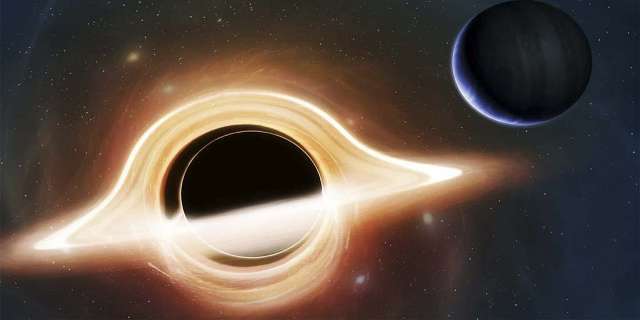
Illustration of a black hole seen from an orbiting planet. A black hole is a region of spacetime where the gravity is so powerful that not even light can escape them. They are created when massive stars die. This one is surrounded by an accretion disc of material, the light from which is warped by the strong gravity. Both the front of the disc and the portion behind the black hole are visible. Image Credit: Sciencemag

Raychaudhuri had published an equation in the journal Physical Review in 1955 that Penrose and celebrated cosmologist Stephen Hawking employed in 1969 for a mathematical description of Back Holes. Nevertheless, Einstein’s General Theory of Relativity had proved Black Holes’ existence but he himself didn’t assume their actuality.

“AKR had used geometry to arrive at a singularity where laws of physics break down and physical quantity becomes infinitely large in the context of gravity and where space time becomes infinitely large,” TOI quoted IISER Physical Sciences department, Prof. Narayan Banerjee, who had attended a workshop at the Jadavpur University in 1987 when Raychaudhuri and Penrose had first met each other, as saying.

“This equation was the building block on which the Penrose-Hawking singularity theorems published in 1969 were based. Both Penrose and Hawking have acknowledged Raychaudhuri’s contribution on numerous occasions in published papers and books,” added Banerjee.
Amal Kumar Raychaudhuri - The Reader Wiki, Reader View of Wikipedia
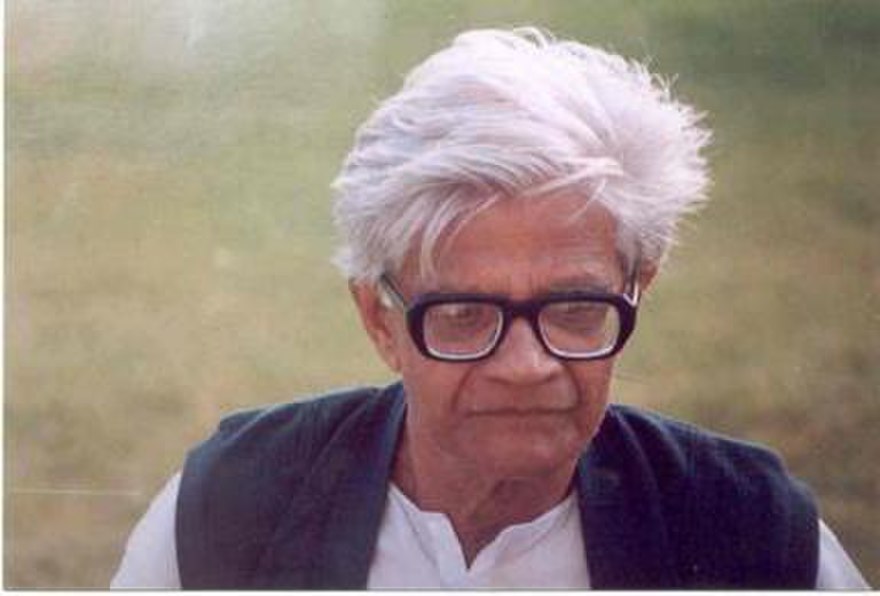
Amal Kumar Raychaudhuri (Credit: Indiatimes.com)

When Soviet physicist, Lev Landau a bit later, also derived the same equation that Raychaudhuri had derived, it was after then only when the scientific community accepted Raychaudhuri Equation as a principal contribution.

Raychaudhuri’s benefactions are priceless and he will still remain a father figure in Indian relativity community, despite not finding a mention in Nobel citation.


Tags: #india#nobelprize#physicsAmal Kumar RaychaudhuriRoger Penrose
Previous Post

Social media has become a society splicing tool

Next Post

World Mental Health Day- 5 Ways By Which Body-Shaming Can Affect Your Health

Mayank Bhardwaj

Mayank Bhardwaj

Next Post
World Mental Health Day- 5 Ways By Which Body-Shaming Can Affect Your Health

World Mental Health Day- 5 Ways By Which Body-Shaming Can Affect Your Health

Important Links

  • About
  • Guest Post
  • Privacy Policy
  • Terms
  • Contact Us
  • Newsletter

© 2017-23. The Second Angle. All Rights Reserved. Developed and Managed by SquareBase.io

Welcome Back!

Login to your account below

Forgotten Password?

Retrieve your password

Please enter your username or email address to reset your password.

Log In
No Result
View All Result
  • Infotainment
    • Sports
    • People
    • Inspiring
  • Entertainment
    • Lifestyle
    • Home & Decoration
  • Buzz
  • Education
  • Travel
  • Finance
  • Healthcare
  • Technology

© 2017-23. The Second Angle. All Rights Reserved. Developed and Managed by SquareBase.io

This website uses cookies. By continuing to use this website you are giving consent to cookies being used. Visit our Privacy and Cookie Policy.