
The best festivals of Bali include Nyepi, the Ogoh-ogoh parade, Galungan and Kuningan, temple odalan at Besakih, Tumpek Landep, the Bali Arts Festival, the kite festivals, the Ubud Writers and Readers Festival, Soundrenaline and Chinese New Year. They range from sacred Balinese Hindu days to modern arts and music events, so there is something on almost every month.
Bali’s calendar is busy because many religious days follow the 210-day Pawukon cycle, so they can come around twice in one year. Others follow the lunar Saka calendar or are fixed modern events. This guide, updated for 2026, explains each festival and when to plan your trip.
Quick facts: festivals of Bali and when they happen
| Festival | Type | When |
|---|---|---|
| Nyepi | Hindu new year, day of silence | 19 March 2026; 9 March 2027 |
| Ogoh-ogoh parade | Eve of Nyepi | Day before Nyepi |
| Galungan and Kuningan | Hindu festival | Galungan 17 June 2026; 13 January and 11 August 2027 |
| Odalan | Temple anniversaries | Year-round, every 210 days per temple |
| Tumpek Landep | Blessing of metal objects | Every 210 days |
| Bali Arts Festival | Culture and arts | Around June to July |
| Kite festivals | Traditional kites | Mid-July to end of August |
| Ubud Writers and Readers Festival | Literature | 21 to 25 October 2026 |
| Soundrenaline | Music | Varies by year |
| Chinese New Year | Lunar new year | Lunar new year |
10 best festivals of Bali
1. Nyepi (Day of Silence)
Nyepi marks the Saka new year and is unlike any festival elsewhere. For 24 hours, from 6 am to 6 am, there is no work, travel or entertainment, and lights are kept off. Everyone on the island, including tourists, must stay indoors.
 Also read7 Fun Festivals of the Philippines: Dates, Places and Highlights
Ngurah Rai International Airport stays closed for the whole day, according to Wikipedia. Nyepi falls on 19 March in 2026 and 9 March in 2027, so plan flights around it.
2. Ogoh-ogoh parade (Ngerupuk)
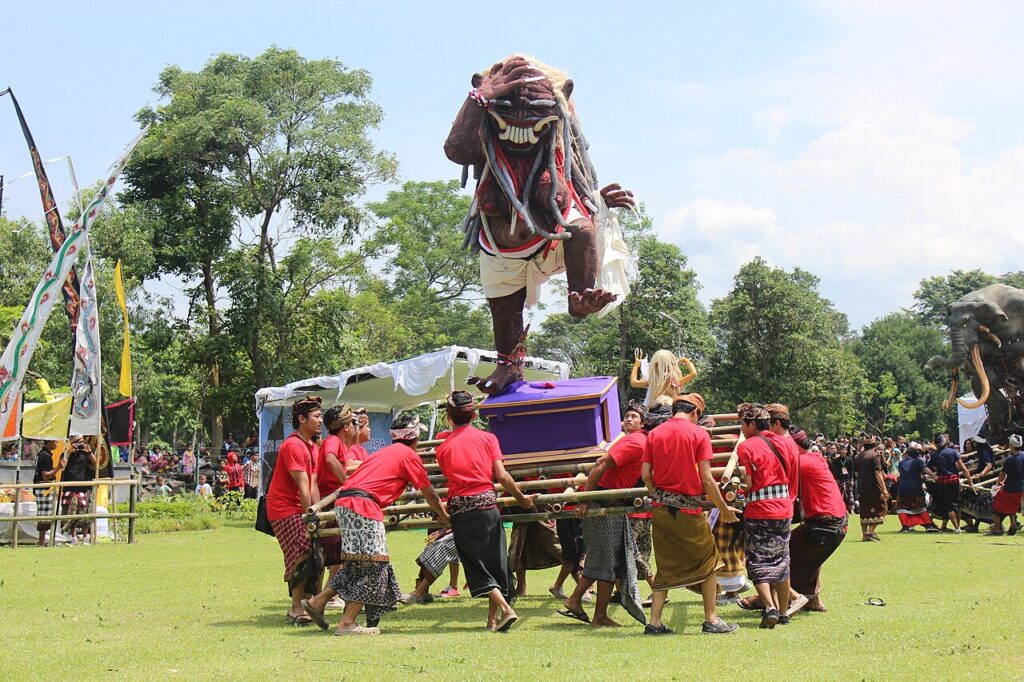
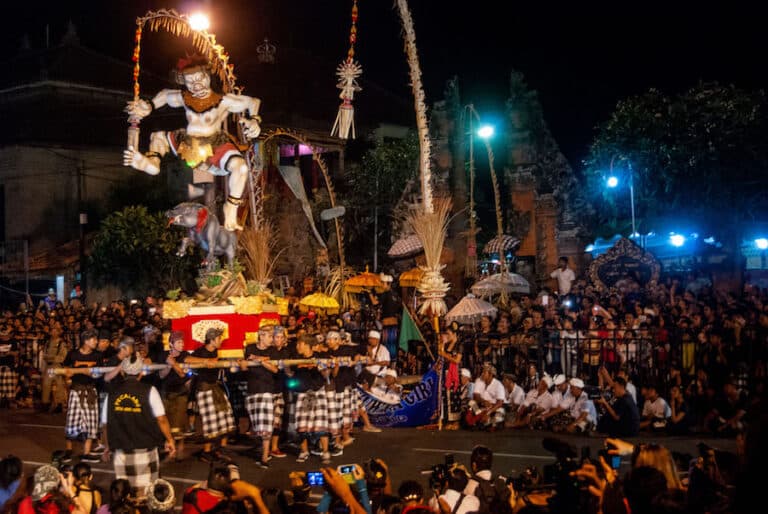
On the evening before Nyepi, villages parade ogoh-ogoh, huge demon figures made of bamboo, papier-mache and cloth that represent evil forces. Families also bang pots and pans and carry torches to drive out bad spirits.
Most figures are burned afterwards as a symbol of cleansing. Roads are closed for the parades, so arrive early and expect crowds.
3. Galungan and Kuningan
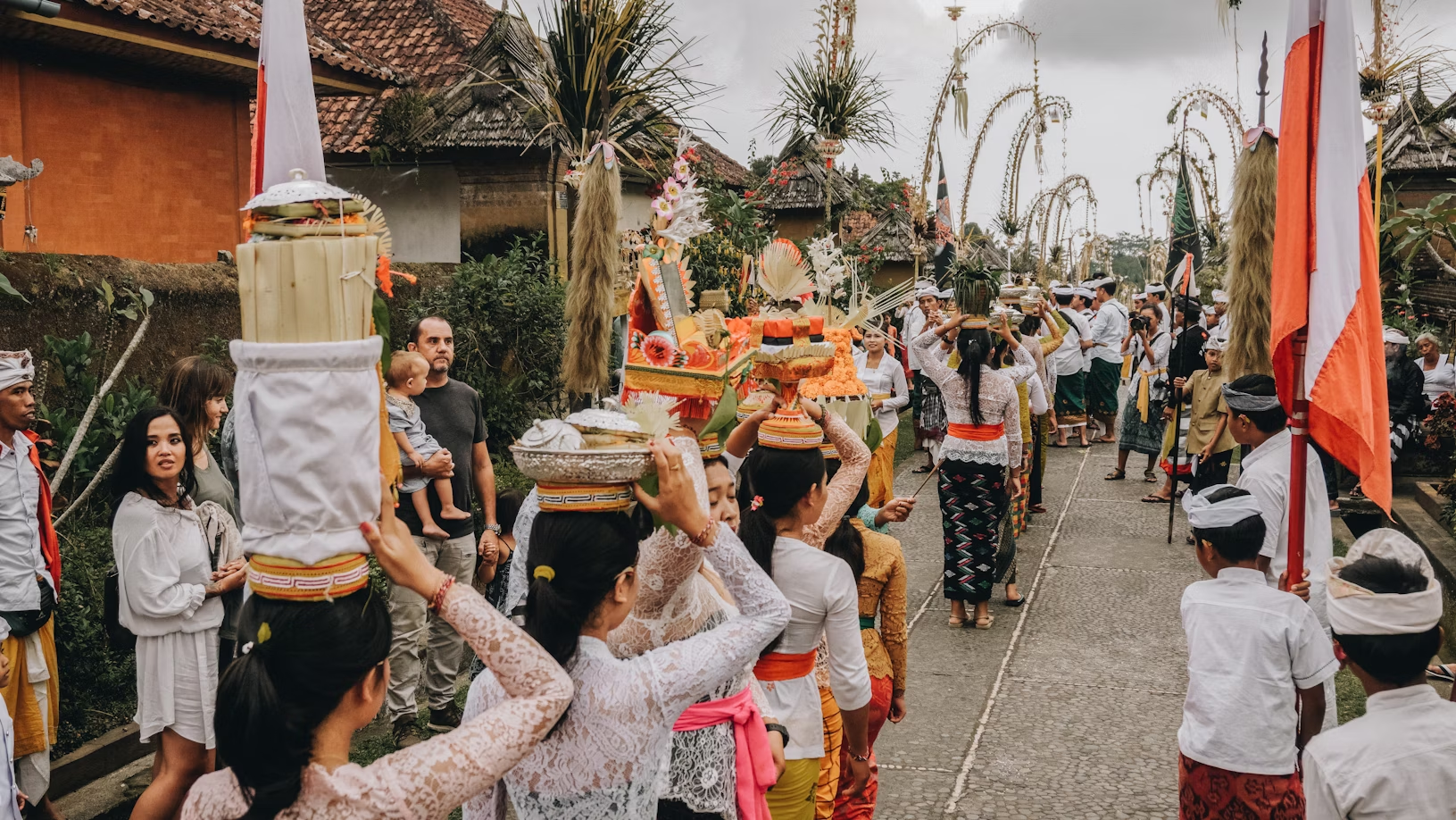
Galungan celebrates the victory of dharma over adharma and marks the time when ancestral spirits are believed to visit the earth. Kuningan, 10 days later, is when the spirits return to heaven.
The clearest sign of the season is the penjor, tall decorated bamboo poles lining the roads. In 2026 Galungan falls on 17 June, with Kuningan on 27 June. In 2027 it comes twice, on 13 January and 11 August.
4. Odalan at Pura Besakih
An odalan is a temple’s anniversary, held every 210 days. Pura Besakih, on the slopes of Mount Agung, is described as the largest and holiest temple of Balinese Hinduism and has 23 related temples.
At least 70 festivals take place there each year, according to Wikipedia. The Bhatara Turun Kabeh ceremony draws very large crowds. Visitors should dress modestly and follow temple rules.
5. Tumpek Landep
Tumpek Landep follows the Pawukon calendar and comes every 210 days. On this day, devotees make offerings for metal objects. It is a quieter, more domestic observance, but visitors may see offerings placed on everyday items.
6. Bali Arts Festival
The Bali Arts Festival was started in 1979 by Ida Bagus Mantra, then Governor of Bali. It is a month-long event, usually held around June and July at the Taman Werdhi Budaya Art Centre in Denpasar.
It opens with a parade and includes daily performances, competitions and exhibitions of art, handicrafts and Balinese food. It is one of the best ways to see traditional Balinese culture in one place.
7. Bali kite festivals
From mid-July to the end of August, the Sanur area fills with giant traditional kites. Events are held at Mertasari Beach and Padang Galak Beach, with some in Gianyar Regency.
Teams from local banjars build huge kites such as the fish-shaped bebean, leaf-shaped pecukan and janggan with long cloth tails. Large kites can need several dozen people to fly them.
8. Ubud Writers and Readers Festival
Founded in 2004 by writer Janet DeNeefe as a healing project after the 2002 Bali bombings, this festival is one of the best-known literary events in Southeast Asia. It brings together writers, artists and thinkers from around the world.
The 2026 edition runs from 21 to 25 October in Ubud. Book tickets for popular sessions in advance.
9. Soundrenaline
Soundrenaline is a long-running Indonesian music festival; The Jakarta Post covered its 15th edition in 2017. It mixes pop, rock, electronica and indie acts. That 2017 edition was held at the Garuda Wisnu Kencana cultural park in Bali.
Venues and dates change from year to year, so check the official announcements before planning around it.
10. Chinese New Year
Bali’s Chinese community marks the lunar new year with decorated Chinese and Buddhist temples, special food and Barongsai, the lion and dragon dances. It is a good example of how different cultures live side by side on the island.
Tips for visiting Bali during festivals
- Check Nyepi dates first, as the airport and roads close for the whole day.
- Dress modestly at temples and follow local guidance.
- Give way to processions and keep a respectful distance during prayers.
- Book hotels early for Galungan, Nyepi and the October literary festival.
For more trip ideas, browse our travel section and culture stories in infotainment.
Further reading: Bali.
Frequently asked questions
What is the biggest festival in Bali?
Nyepi and Galungan are the most important. Nyepi shuts down the whole island for a day, while Galungan and Kuningan are celebrated over 10 days.
When is Nyepi in 2027?
Nyepi falls on 9 March 2027. In 2026 it was on 19 March.
Can tourists go out during Nyepi?
No. Tourists must stay inside their hotel or home, and the airport is closed for the day.
When is the Ubud Writers and Readers Festival 2026?
It runs from 21 to 25 October 2026 in Ubud.
Sources: Wikipedia: Nyepi, Wikipedia: Galungan, Wikipedia: Ubud Writers and Readers Festival, The Jakarta Post.