

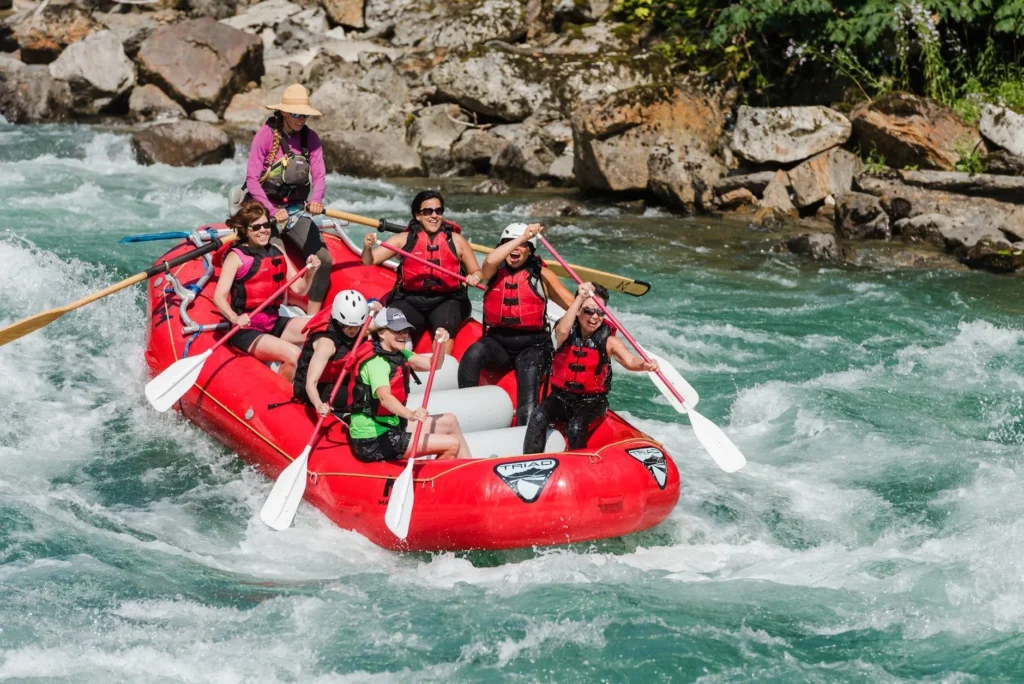
The best places for river rafting in India are Rishikesh on the Ganga, the Yamuna near Mussoorie, the Tons at Mori, the Bhagirathi in Tehri Garhwal, the Teesta and Rangeet near Darjeeling, the Zanskar and Indus in Ladakh, the Spiti in Himachal Pradesh, and the Brahmaputra in eastern India. Rishikesh is the easiest place for first-timers.
Rafting means riding river rapids in an inflatable boat with a guide. How hard it is depends on the rapids, which form where the river drops sharply or flows over rocks. Rapids are graded by difficulty, and a higher grade means rougher water.
Quick facts: river rafting in India
| Place | River | Rapid grades | Best for |
|---|---|---|---|
| Rishikesh, Uttarakhand | Ganga | 3 to 4 | Beginners and groups |
| Mussoorie, Uttarakhand | Yamuna | 1 to 3 | Beginners |
| Mori, Uttarakhand | Tons | 3 to 5 | Experienced rafters |
| Tehri Garhwal, Uttarakhand | Bhagirathi | Demanding | Intermediate rafters |
| Darjeeling, West Bengal | Teesta and Rangeet | Varied | Beginners and thrill-seekers |
| Ladakh | Zanskar and Indus | Varied | Scenic trips |
| Spiti, Himachal Pradesh | Spiti | Varied | Remote adventure |
| Eastern India | Brahmaputra | Varied | Long expeditions |
1. Rishikesh, Uttarakhand
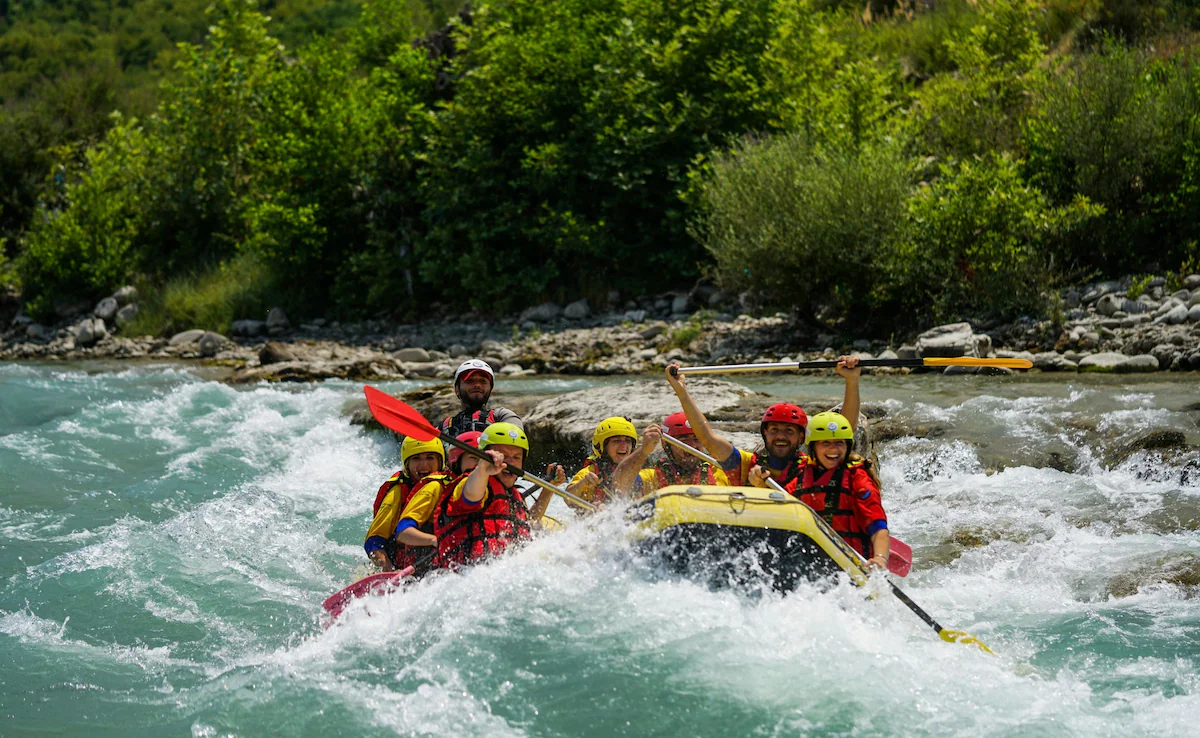
Rishikesh is the best-known river rafting destination in India. The Ganga here has grade 3 and 4 rapids, which are exciting but manageable with a trained guide. The stretch from Shivpuri to Lakshman Jhula is the most popular, and longer runs start further upstream at Kaudiyala.
 Also read15 Interesting Things About Paris You Probably Didn’t Know
The Kaudiyala to Shivpuri stretch includes rapids known as Three Blind Mice, The Wall and Crossfire. Other rafting stretches in the region include Brahmpuri, Marine Drive and Byasi. Prices vary by operator and stretch; news reports in recent seasons have put a typical trip at around Rs 2,500 per person.
2. Mussoorie, Uttarakhand
The Yamuna near Mussoorie is a gentler option, with rapids from grade 1 to 3. This makes it good for first-timers and families with older children.
The two common routes are Nainbagh to Juddo, the more popular one with three rapids, and Yamuna Bridge to Juddo. Both are within a short drive of Mussoorie.
3. Mori, Uttarakhand
The Tons, a tributary of the Yamuna, is one of the toughest rafting rivers in India. Its rapids are usually grade 3 to 4 and can reach grade 5, so it suits rafters with prior experience.
Because of the difficulty, trips here are best booked with operators who run technical river expeditions and check your experience first.
4. Tehri Garhwal, Uttarakhand
The Bhagirathi in Tehri Garhwal offers demanding rapids with names like Chute, Elephant Rock, Sharp S and Confluence. Rafting here comes with views of the valleys and mountains of Garhwal.
Many rafters treat it as a step up after a first trip in Rishikesh.
5. Darjeeling, West Bengal
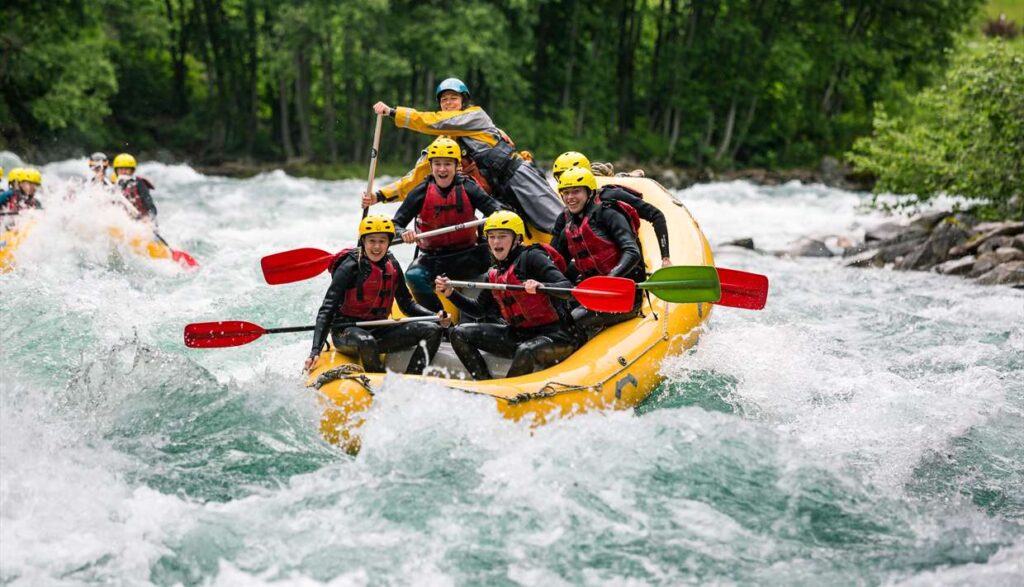
Darjeeling is a newer name in Indian rafting. The Teesta and Rangeet rivers offer a mix of calm stretches and lively rapids, with forested hills on both sides.
It works well for travellers who want to add a day of adventure to a hill station holiday in the region.
6. Ladakh
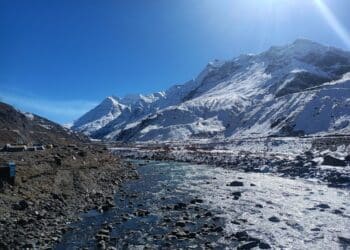
Ladakh offers rafting on the Zanskar and the Indus at an altitude of about 12,000 feet. The scenery is the main draw: snow-capped peaks, steep cliffs, Buddhist monasteries, small villages and deep gorges.
Some stretches need no prior experience, while longer Zanskar runs are for trained rafters. The high altitude means you should spend a day or two getting used to the thin air before you raft.
7. Spiti, Himachal Pradesh
The Spiti River flows through a high, remote valley bordered by Kullu to the south, Ladakh to the north and Tibet to the east. Trips here often cover both the Lahaul and Spiti valleys.
Expect glaciers, mountain meadows and small Himalayan villages along the way. Facilities are basic, so go with an established operator.
8. Brahmaputra, eastern India
The Brahmaputra in eastern India offers one of the longest and slowest-paced rafting expeditions in the country. The classic route runs from Tuting to Pasighat, through green mountains, rocky gorges and tribal villages.
The full trip can take more than a week and needs prior rafting experience. Check permit rules for the region before you plan.
Season, age limits and safety rules
- Season: In Rishikesh, rafting usually runs from late September to mid-December, and again from February to mid-June. It is closed in the monsoon, when heavy rain raises the river level. Late September to mid-November is often suggested as the best time.
- Age and weight: Operators in Rishikesh have set a minimum age of 14 years and a minimum weight of 35 kg.
- Health: Pregnant women and people with certain medical conditions are not allowed.
- No alcohol: Drinking is not allowed during rafting.
- Gear: Always wear the life jacket and helmet, and listen to the guide’s safety briefing.
- Permits: Inner Line Permits are needed in some border areas, so check with your operator before you travel.
For more destination ideas, see our Travel section, and for fitness and safety tips, visit Health.
Further reading: Ladakh.
Frequently asked questions
Which is the best place for river rafting in India?
Rishikesh in Uttarakhand is the most popular choice. Its grade 3 and 4 rapids on the Ganga suit first-timers with a guide, and many operators are based there.
What is the best time for rafting in Rishikesh?
The season usually runs from late September to mid-December and from February to mid-June. Late September to mid-November is often suggested as the best time.
What is the minimum age for river rafting in Rishikesh?
Operators in Rishikesh have set the minimum age at 14 years, with a minimum weight of 35 kg.
Is rafting allowed during the monsoon?
No. Rafting in Rishikesh is suspended during the monsoon because heavy rain raises the river level and makes it unsafe.
Sources: News24 on rafting in Rishikesh; Rishikesh, Wikipedia.