

• About   |
  • Submit Guest Post |
  • Contact Us
No Result
View All Result
The Second Angle (TSA Magazine)
Advertise
  • Infotainment
    • Sports
    • People
    • Inspiring
  • Entertainment
    • Lifestyle
    • Home & Decoration
  • Buzz
  • Education
  • Travel
  • Finance
  • Healthcare
  • Technology
The Second Angle
No Result
View All Result
  • Infotainment
  • Entertainment
  • Buzz
  • Education
  • Travel
  • Finance
  • Healthcare
  • Technology
Advertisement
ADVERTISEMENT
Home News

World Ocean beds are replete with 14 million tonnes of microplastics, suggests Australian study

The Second Angle Crew by The Second Angle Crew
July 2, 2021
in News, offbeat, World News
World Ocean beds are replete with 14 million tonnes of microplastics, suggests Australian study

Image Credit: NRDC

Share on FacebookShare on WhatsApp
Advertisement Advertisement Advertisement
ADVERTISEMENT

Pursuant to a world’s first global estimate ascertaining the degree of microplastics in the oceans’ depth, a study was published in the journal Frontiers in Marine Science by the Commonwealth Scientific and Industrial Research Organisation (CSIRO) on Tuesday which pointed out that the ocean floor is stuffed with 14 million tonnes of microplastics.

The samples used in the research were collected using a robotic submarine at depths of as much as 3,000 metres (9,842 feet) from six different sites in the Great Australian Bight, up to 380 kilometres (236 miles) off the coast of South Australia. By analysing samples collected by employing these methods, the study proposed that the earth’s ocean floor is twice as polluted as the surface.
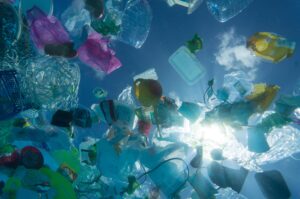
Ocean beds
Image Credit: The New Yorker

Plastic pieces smaller than 5 mm (0.19 inches) scraped away by elements into minute fragments have been observed on the ocean bed, suggested researchers. The results infer that deep-sea has 35 times more plastic than is believed to be floating on the surface of the oceans.

“Our research found that the deep ocean is a sink for microplastics. We were surprised to observe high microplastic loads in such a remote location.”

Principal research scientist Denise Hardesty said

The scientists, who published their findings in journal Frontiers in Marine Science, pronounced that areas with more floating rubbish generally had more microplastic fragments on the seafloor.

“Plastic pollution that ends up in the ocean deteriorates and breaks down, ending up as microplastics. The results show microplastics are indeed sinking to the ocean floor.”

Lead author of the study Justine Barrett said

Hardesty has sought immediate action against persisting plastic pollution problem which is a hazard for wildlife, human beings and especially for mass ecosystems.

Tags: marine lifePlastic Pollutionsave oceans
ShareSendTweet
Previous Post

Top 5 cities that leads in highest crime against women

Next Post

Prevalent lies that we have been told about other Girls

The Second Angle Crew

The Second Angle Crew

Next Post
Prevalent lies that we have been told about other Girls

Prevalent lies that we have been told about other Girls

Important Links

  • About
  • Guest Post
  • Privacy Policy
  • Terms
  • Contact Us
  • Newsletter

© 2017-23. The Second Angle. All Rights Reserved. Developed and Managed by SquareBase.io

Welcome Back!

Login to your account below

Forgotten Password?

Retrieve your password

Please enter your username or email address to reset your password.

Log In
No Result
View All Result
  • Infotainment
    • Sports
    • People
    • Inspiring
  • Entertainment
    • Lifestyle
    • Home & Decoration
  • Buzz
  • Education
  • Travel
  • Finance
  • Healthcare
  • Technology

© 2017-23. The Second Angle. All Rights Reserved. Developed and Managed by SquareBase.io

This website uses cookies. By continuing to use this website you are giving consent to cookies being used. Visit our Privacy and Cookie Policy.