• About   |
  • Advertise |
  • Contact Us
No Result
View All Result
The Second Angle (TSA Magazine)
Advertise
  • Infotainment
    • Sports
    • People
    • Inspiring
  • Entertainment
    • Lifestyle
    • Home & Decoration
  • Buzz
  • Education
  • Travel
  • Finance
  • Healthcare
  • Technology
The Second Angle
No Result
View All Result
  • Infotainment
  • Entertainment
  • Buzz
  • Education
  • Travel
  • Finance
  • Healthcare
  • Technology
Advertisement Advertisement Advertisement
ADVERTISEMENT
Home Explainers

Monetary Cross-Border Issues and UNCITRAL

A U.N. body The United Nations Commission on International Trade Law is responsible for solving cross-border insolvency cases.

by Bhavika Samtani
March 2, 2022
in Explainers
Reading Time: 3 mins read
Monetary Cross-Border Issues and UNCITRAL
Share on FacebookShare on WhatsApp
Advertisement Advertisement Advertisement
ADVERTISEMENT
4 min readGAdd The Second Angle as a preferred source on Google
Key takeaways
About UNCITRAL: The United Nations Commission on International Trade Law proposed the UNCITRAL Model Law on Cross-Border Insolvency.How does it resolve cross-border insolvency issues?: The basis of the Model Law is sometimes referred to as 'Modified Universalism'.India's Current Stand: After the Economic Survey 2022, the Indian government proposes amendments to the Insolvency and Bankruptcy Code (IBC) to...

Cross-Border insolvency, sometimes called international insolvency, refers to a situation where an insolvent has assets or creditors in more than one country. It raises the need for a law and a body to deal with insolvencies of such kind, at a global level. It is more concerned with the insolvency of companies that operate in more than one country rather than the bankruptcy of individuals.

Apart from UNCITRAL’s Model Law, international insolvencies can be resolved by the EC Regulation on Insolvency Proceedings 2000. Both regimes locate the centre of main interest (or “COMI”) of the debtor.

Table of Contents
  • About UNCITRAL
  • How does it resolve cross-border insolvency issues? 
  • India's Current Stand 
  • Conclusion

About UNCITRAL

The United Nations Commission on International Trade Law proposed the UNCITRAL Model Law on Cross-Border Insolvency. This proposal was adopted on May 30, 1997, at the 13th session of UNCITRAL held in Vienna. The model can be adopted by countries with modifications. This model law has since emerged as the most widely accepted framework to deal with cross-border insolvency issues. The Model Law has, to date, been adopted by 49 countries. India has not substantially implemented the Model Law into our domestic legislation. 
What Compelled Russia’s Invasion of Ukraine? Conflict ExplainedAlso readWhat Compelled Russia’s Invasion of Ukraine? Conflict Explained

The Commission is composed of sixty member states elected by the General Assembly. Its membership is structured to be representative of the world’s various geographic regions and its principal economic and legal systems.
Monetary Cross-Border Issues and UNCITRAL
Image Source: blog.ipleaders

This law addresses the core issues of cross-border insolvency cases with the help of four main principles, which include access, recognition, cooperation, and coordination.

Apart from the above-mentioned, UNCITRAL seeks to facilitate international trade through the harmonization of national law on procurement based on the main principles of transparency and competition. 

How does it resolve cross-border insolvency issues? 

The basis of the Model Law is sometimes referred to as ‘Modified Universalism’. The methodology can be summarized into three large verticals: Rather than prescribing a single set of rules for all states to adopt, the Model Law focuses on trying to:

  • Identify the most relevant jurisdiction in relation to cross-border insolvency (called the “foreign main proceedings”);
  • Ensure that insolvency officials from that jurisdiction are recognized in other states; and
  • Ensure that other states provide the necessary cooperation to facilitate the insolvency process in the principal jurisdiction.

All other proceedings are referred to as the “non-main proceedings”. The main proceedings are commenced where the debtor has its centre of main interest, or ‘Center Of Main Interest’ (COMI). Non-main proceedings may be commenced in any place where the debtor has a commercial establishment.

India’s Current Stand 

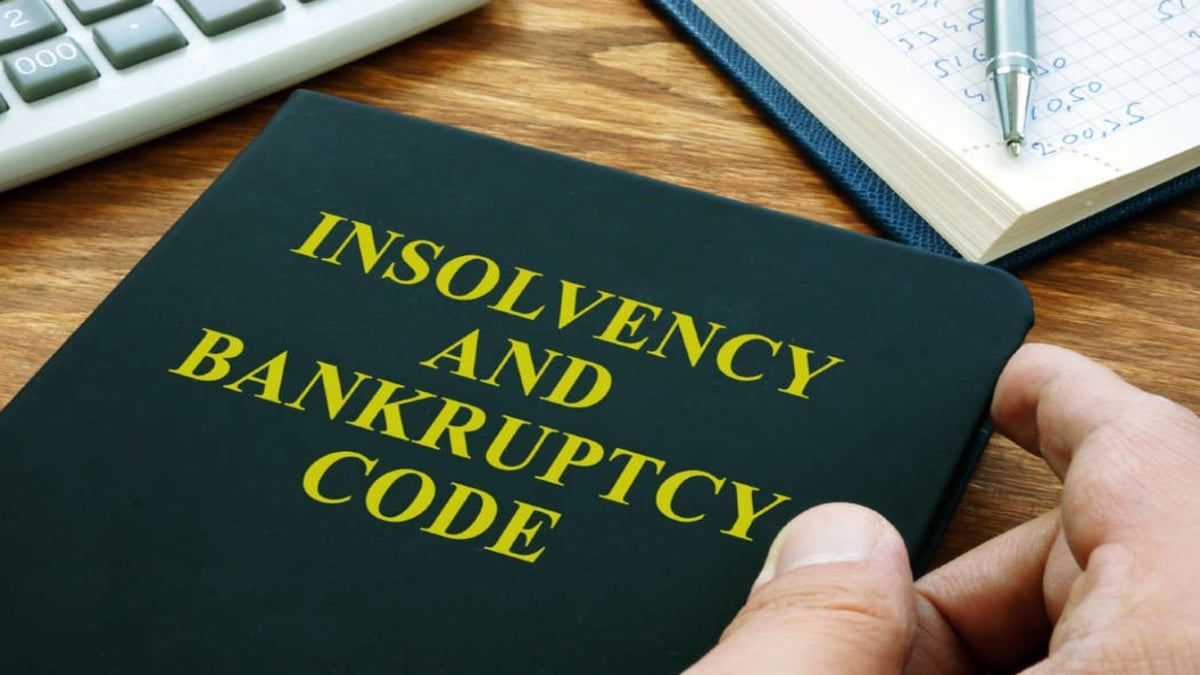
After the Economic Survey 2022, the Indian government proposes amendments to the Insolvency and Bankruptcy Code (IBC) to introduce a cross-border resolution framework that would be tailored around a model law of the United Nations, it is set to retain powers to intervene under exceptional circumstances. 
Monetary Cross-Border Issues and UNCITRAL
Image Source: thedailyguardian

The government will have the power to intervene if it’s convinced that its insolvency framework based on the United Nations Commission on International Trade Law (UNCITRAL) isn’t adequately protecting the public interest in a particular case. It can then make a decision as it deems fit,” said one of the sources. However, it will be done only under exceptional circumstances, and in all other cases, the framework modelled after the UNCITRAL will be adopted. 

Conclusion

The cross-border insolvency framework was expected to be a part of the Insolvency and Bankruptcy (Second Amendment) Bill, 2021, that the government wanted to introduce in the winter session of Parliament, but couldn’t. 

India aims to amend the law, and we don’t have to go through the rigour of amending the cross-border insolvency framework of the IBC through Parliamentary clearances. However, to introduce the cross-border framework in the IBC, the government needs to amend the law.

Also Checkout: What Compelled Russia’s Invasion of Ukraine? Conflict Explained

Enjoyed this story?Share it with your friends
WhatsAppLinkedInXFacebookEmail
See more TSA Mag stories on GoogleAdd us as a preferred source and our stories will show up more often in your Top Stories.
GAdd The Second Angle as a preferred source on Google
ShareSend
Tweet
Previous Post

The United Nations has released the IPCC report on climate change: Details Here

Next Post

The ‘Anti-Incumbency’ Factor in Uttar Pradesh has been Concealed By PM Modi’s Popularity

Related Posts

Shoppers carrying bags past a store window with sale signs during the holiday shopping season
Explainers

When Is Black Friday 2026? Thanksgiving and Cyber Monday Dates

When is Black Friday 2026? It is on November 27, after Thanksgiving on November 26. See Cyber Monday, the 1941...

Read moreDetails
Analogue alarm clock on a bedside table showing early morning time in autumn
Explainers

When Does Daylight Saving Time End in 2026? Date and Time

When does daylight saving time end 2026? Clocks fall back at 2 a.m. on Sunday, 1 November. States that skip...

Read moreDetails
7 Beautiful Train Routes That You Must Travel
Explainers

Why Are Train Coaches Different Colours? ICF vs LHB Explained

Why are train coaches different colours in India? Blue ICF, red LHB, green Garib Rath and Vande Bharat liveries, safety...

Read moreDetails
Persian Language in India: History, Legacy and Words We Still Use
Explainers

Persian Language in India: History, Legacy and Words We Still Use

How the Persian language in India rose from the 11th century, peaked under the Mughals, lost official status in 1837...

Read moreDetails
The Future of Tezos: Insights and Predictions
Explainers

The Future of Tezos: Insights and Predictions

In this article, we will explore the future of Tezos and make some predictions on what lies ahead for this...

Read moreDetails
What does Twitter look like under Elon Musk
Technology

What does Twitter look like under Elon Musk

Musk didn't have a business strategy when he chose to acquire Twitter; he only had some thoughts about how it...

Read moreDetails
Load More
Next Post
The 'Anti-Incumbency' Factor in Uttar Pradesh has been Concealed By PM Modi Popularity

The 'Anti-Incumbency' Factor in Uttar Pradesh has been Concealed By PM Modi's Popularity

About

The Second Angle

The Second Angle (TSA Mag) is an infotainment and lifestyle magazine covering entertainment, travel, technology, health, education and finance.

Important Links

  • About The Second Angle
  • Advertise With Us
  • Editorial Policy
  • Privacy Policy
  • Terms and Conditions
  • Contact Us
  • Careers
  • Newsletter

Explore

  • Infotainment
  • Entertainment
  • Buzz
  • Education
  • Travel
  • Finance
  • Healthcare
  • Technology
Advertise with us

© 2017-2026. The Second Angle. All Rights Reserved. Developed and Managed by Squarebase.io

Welcome Back!

Login to your account below

Forgotten Password?

Retrieve your password

Please enter your username or email address to reset your password.

Log In
No Result
View All Result
  • Infotainment
    • Sports
    • People
    • Inspiring
  • Entertainment
    • Lifestyle
    • Home & Decoration
  • Buzz
  • Education
  • Travel
  • Finance
  • Healthcare
  • Technology

© 2017-2026. The Second Angle. All Rights Reserved. Developed and Managed by Squarebase.io

We use cookies to keep TSA fast and relevant. Read our Privacy Policy.