
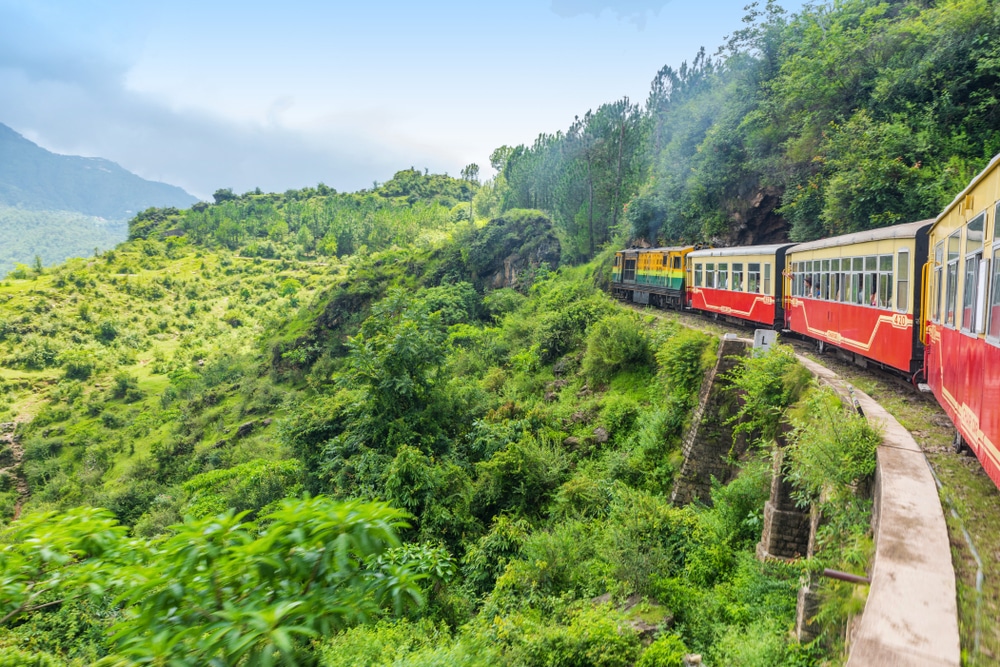

Indian train coaches come in different colours mainly because they belong to different coach designs and train services. Blue coaches are usually older ICF coaches, red or maroon coaches are usually newer LHB coaches, and special trains such as Garib Rath, Rajdhani and Vande Bharat have their own liveries so passengers and staff can spot them easily.
The colour is a quick visual clue, not a strict rule. Indian Railways has repainted coaches several times over the decades, and the same coach type can carry more than one livery. Still, once you know the two main designs, ICF and LHB, most of the colours on a platform start to make sense.
- What do ICF and LHB mean?
- Why are older train coaches blue?
- Why are newer train coaches red?
- Quick comparison: ICF vs LHB coaches
- Is the LHB coach safer than the ICF coach?
- Are LHB coaches more comfortable?
- Why is the Garib Rath green?
- What about Rajdhani, Shatabdi and Duronto colours?
- Why is Vande Bharat white or orange?
- Where are Indian train coaches made?
- How can I tell which coach my train has?
- Frequently asked questions
What do ICF and LHB mean?
ICF stands for Integral Coach Factory, the coach-building unit at Perambur in Chennai. The ICF coach design was developed with a Swiss firm from Schlieren under a 1949 technical agreement, and the first coach rolled out on 2 October 1955. For more than six decades, this was the standard Indian passenger coach.
 Also readPersian Language in India: History, Legacy and Words We Still Use
LHB stands for Linke-Hofmann-Busch, a German coach maker that later became part of Alstom. Indian Railways signed a technology transfer agreement for this design in the mid-1990s. The first LHB coaches entered service in 2000 on the New Delhi to Lucknow Shatabdi Express, and the Rail Coach Factory at Kapurthala has been building them since 2001.
Why are older train coaches blue?
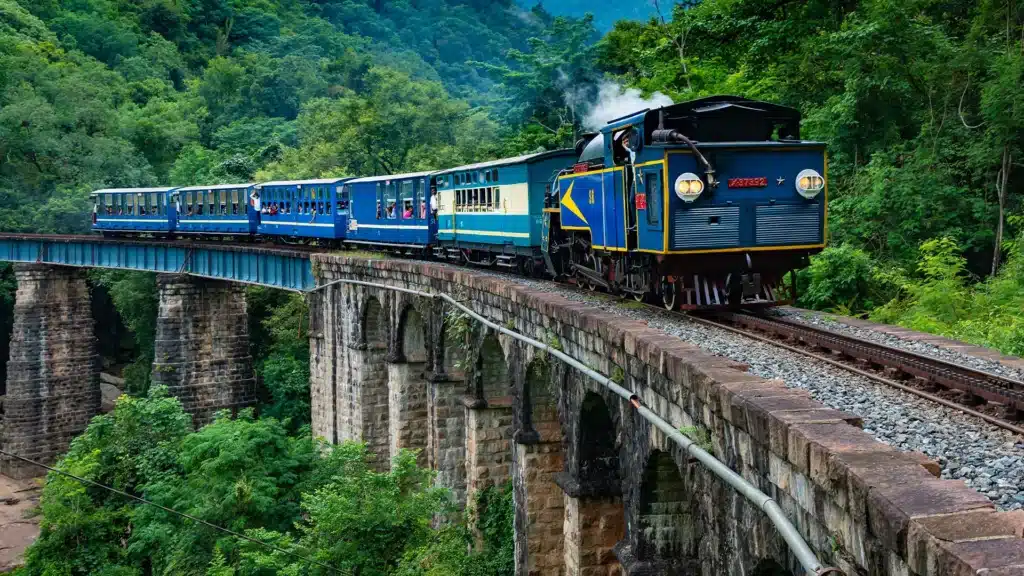
The familiar blue colour belongs mostly to ICF coaches. These coaches were originally painted brick red from 1955 until the 1990s. Blue then became the standard livery for regular express and mail trains and stayed that way until ICF coach production ended.
The last ICF coach was flagged off on 19 January 2018, by which time more than 54,000 had been built. Many blue ICF coaches are still in service, but their numbers are falling as trains are shifted to LHB rakes. Some ICF coaches were also refurbished under the Utkrisht scheme from 2018 and repainted in beige and maroon.
Why are newer train coaches red?
Most LHB coaches on regular express trains carry a red body with grey or blue detailing. This red and grey scheme has been in use since 2016 and is seen on trains such as Rajdhani and many superfast services. A blue and grey LHB livery, used since 2019, appears on trains like Shatabdi and Gatimaan Express.
So a red train usually means modern LHB coaches, but not always a faster train. A blue LHB Shatabdi can be quicker than a red LHB express. The train category and timetable decide the speed, not the paint.
Quick comparison: ICF vs LHB coaches
| Feature | ICF coach | LHB coach |
|---|---|---|
| Origin of design | Swiss, adapted at ICF Chennai | German (Linke-Hofmann-Busch) |
| In service since | 1955 | 2000 |
| Common colour | Blue (earlier brick red) | Red and grey, or blue and grey |
| Body | Mild steel | Stainless steel, lighter |
| Coupler | Screw coupling on most coaches | Centre buffer coupler with anti-climbing feature |
| Brakes | Air brakes (earlier vacuum) | Pneumatic disc brakes |
| Design speed | 110 km/h (up to 140 km/h on modified coaches) | 160 km/h for AC coaches |
| Production status | Stopped in 2018 | Current standard |
Is the LHB coach safer than the ICF coach?
Yes, LHB coaches are considered safer, and that is the main reason Indian Railways decided to stop making ICF coaches. The 2015-16 Railway Budget set the plan to end production of conventional coaches from 2018 onwards.
The key safety features of LHB coaches are:
- Centre buffer coupler with anti-climbing feature: in a collision or derailment, the coupler helps stop one coach from riding up over the next one.
- Anti-telescopic design: the body is built so that coaches do not crush into each other in a head-on impact.
- Lower risk of overturning: ICF coaches often capsized during derailments, which caused more deaths and damage. LHB coaches are designed to stay upright more often.
- Disc brakes: pneumatic disc brakes allow better braking at higher speeds.
- Better suspension: flexi coil suspension and a modern bogie give a smoother ride with less jerking.
Railways has also been retrofitting some older ICF coaches with stronger couplers and anti-climbing features, since they will remain in use for some years.
Are LHB coaches more comfortable?
For most passengers, yes. LHB coaches are about 2 metres longer than conventional coaches, with a body length of 23.54 metres. That extra space allows more berths, for example 8 additional berths in an AC three-tier coach. The ride is quieter because of noise-insulated flooring, and the coaches use modular toilets.
Why is the Garib Rath green?
Garib Rath trains were launched as a low-cost, fully air-conditioned service. The first one, the Saharsa to Amritsar Garib Rath Express, started on 5 October 2006. The original rakes were ICF coaches in a distinct green livery, which made them easy to tell apart from regular blue trains.
From July 2024, Indian Railways began replacing old Garib Rath rakes with LHB rakes made up mostly of AC three-tier economy coaches. These new rakes follow the LHB colour scheme, so the green Garib Rath is gradually disappearing from the tracks.
What about Rajdhani, Shatabdi and Duronto colours?
Premium trains have had their own liveries for decades so that they stand out at stations:
- Rajdhani Express: a red and cream scheme on ICF coaches from 1969. Most Rajdhanis now run on red LHB coaches.
- Shatabdi Express: its own livery on ICF coaches from 1988, and now blue and grey LHB coaches.
- Duronto Express: a special livery from 2009 that was easy to recognise, later moved to standard LHB colours on many routes.
Why is Vande Bharat white or orange?
Vande Bharat Express is different from both ICF and LHB trains. It is a self-propelled trainset, which means the motors are spread under the coaches and there is no separate locomotive. The first Vande Bharat trainsets were built at ICF Chennai in a white and blue colour scheme.
In 2023, newer Vande Bharat rakes started coming out in a saffron and grey colour scheme. Railway Minister Ashwini Vaishnaw said the new colour was inspired by the national flag. Both versions are now in service, so you may see either colour on a Vande Bharat route.
Where are Indian train coaches made?
Three state-owned factories build LHB coaches for Indian Railways:
- Integral Coach Factory (ICF), Chennai: the oldest of the three, earlier the home of the ICF coach and now also the maker of Vande Bharat trainsets.
- Rail Coach Factory (RCF), Kapurthala, Punjab: the first unit to build LHB coaches in India, from 2001.
- Modern Coach Factory (MCF), Rae Bareli, Uttar Pradesh: a newer factory that makes only LHB coaches and was given its present name in December 2015.
For more such stories on how everyday things work, see our Explainers section, and for trip ideas by rail and road, browse our Travel stories.
How can I tell which coach my train has?
The easiest way is to look at the colour and the coach shape at the station. LHB coaches look longer and have a smoother body, and the coach number is printed on the side. Train enquiry apps and the railway’s own enquiry services also show the rake type for many trains. Keep in mind that a train can switch from ICF to LHB rakes after an upgrade, so the colour you saw last year may have changed.
Frequently asked questions
Why are some Indian train coaches blue and some red?
Blue coaches are usually older ICF coaches made at Chennai. Red coaches are usually newer LHB coaches based on a German design, which are safer and can run faster.
What is the full form of LHB coach?
LHB stands for Linke-Hofmann-Busch, the German company whose coach design Indian Railways adopted through a technology transfer agreement in the 1990s.
Does a red coach mean the train is faster?
Not always. Red usually means LHB coaches, which can run faster, but the actual speed depends on the train category, route and timetable.
Are ICF coaches still being made?
No. The last ICF coach was flagged off in January 2018. Existing ICF coaches are still running but are being replaced with LHB coaches.
Where is the Vande Bharat train made?
Vande Bharat trainsets were first built at the Integral Coach Factory in Chennai, which was earlier the home of the blue ICF coach.
Sources: Indian Railways, PIB on modernisation of rail coaches, Deccan Herald on Garib Rath LHB rakes, Governance Now on LHB coach safety.