



The best comedy dialogues from Bollywood movies include “Utha le re baba” from Hera Pheri, “Mogambo khush hua” from Mr. India, “Crime Master Gogo” from Andaz Apna Apna and “All is well” from 3 Idiots. These lines are short, easy to repeat and still used every day in conversations, WhatsApp chats and memes.
Some of the lines below come from pure comedies. Others were serious scenes that audiences turned into jokes over the years. We have listed each with its film, the character who says it and a simple English meaning.
Comedy lines from the 1980s to 2000s
1. “Tussi jaa rahe ho? Tussi na jao!”
Kuch Kuch Hota Hai (1998). The little Sardar boy at the summer camp, played by Parzaan Dastur. Meaning: “You are leaving? Please don’t go!” It is still the internet’s favourite farewell line.
 Also read7 Most Iconic Bollywood Directors and Their Best Films
2. “Mogambo khush hua”
Mr. India (1987). Amrish Puri’s villain Mogambo. Meaning: “Mogambo is pleased.” People use it whenever something goes their way.
3. “Crime Master Gogo naam hai mera, aankhen nikal ke gotiyan khelta hoon”
Andaz Apna Apna (1994). Shakti Kapoor as Gogo. Meaning: “My name is Crime Master Gogo, I play marbles with people’s eyes.” A threat so silly that it became a cult classic.
4. “Teja main hoon, mark idhar hai”
Andaz Apna Apna (1994). Paresh Rawal as the crook Teja, pointing to a mark that proves who the real Teja is. Meaning: “I am Teja, the mark is here.”
5. “Main toh nanha sa, pyaara sa, chhota sa bachcha hoon”
Chaalbaaz (1989). Shakti Kapoor’s grown villain calling himself a cute little child. The contrast between the words and the man is the joke.
6. “Main hoon Nandu, sabka bandhu”
Raja Babu (1994). Shakti Kapoor as Nandu. Meaning: “I am Nandu, everyone’s friend.” His other catchphrase, “Samajhta nahi hai yaar”, is just as popular.
7. “Utha le re baba”
Hera Pheri (2000). Paresh Rawal as Baburao, begging God to take away his troublesome tenants instead of him. Meaning: “Take them away, God.” One of the most used meme lines in India.
8. “Yeh Baburao ka style hai”
Hera Pheri (2000). Baburao again, defending his odd ways. Meaning: “This is Baburao’s style.” Fans use it to defend their own quirks.
9. “Tension lene ka nahi, sirf dene ka”
Munna Bhai M.B.B.S. (2003). Sanjay Dutt as Munna Bhai. Meaning: “Don’t take tension, only give it.” A neat summary of the film’s carefree hero.
10. “Jaadu ki jhappi”
Munna Bhai M.B.B.S. (2003). Munna’s cure for everything is a “magic hug”. The phrase entered everyday Hindi.
11. “All is well”
3 Idiots (2009). Aamir Khan as Rancho, who says it to calm his scared heart. Students still repeat it before exams.
12. “Control, Uday, control”
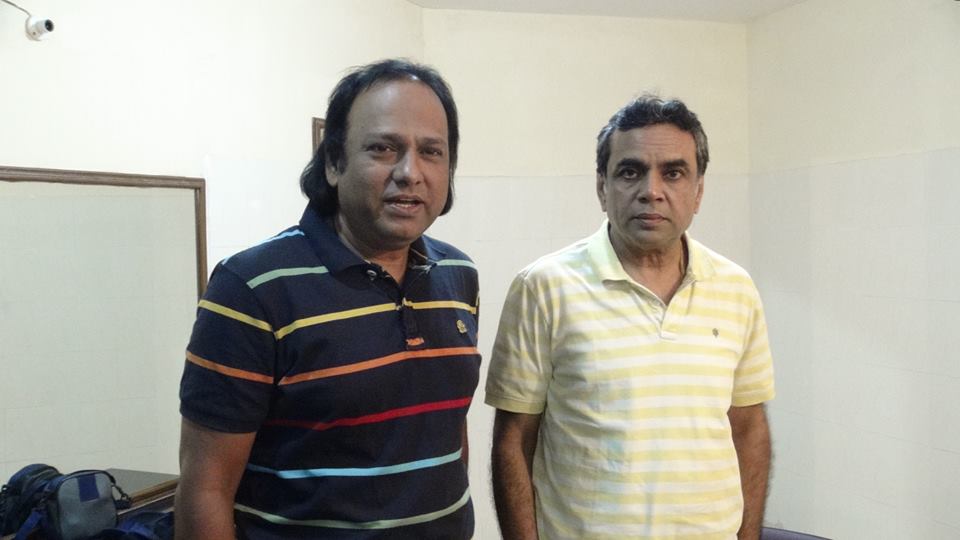
Welcome (2007). Nana Patekar as gangster Uday Shetty, trying hard to keep his temper. Meaning: “Control yourself, Uday.”
13. “Don’t angry me”
Rowdy Rathore (2012). Akshay Kumar’s cop Shiva, with his own brand of English. The broken grammar is what makes it funny.
Lines from Shah Rukh, Salman and the 2000s
14. “Ek chutki sindoor ki keemat tum kya jaano, Ramesh Babu”
Om Shanti Om (2007). Deepika Padukone’s Shantipriya in a film within the film, spoofing 1970s melodrama. Now used sarcastically on social media.
15. “Picture abhi baaki hai, mere dost”
Om Shanti Om (2007). Shah Rukh Khan. Meaning: “The film isn’t over yet, my friend.” Used whenever a story has more twists to come.
16. “Main apni favourite hoon”
Jab We Met (2007). Kareena Kapoor as Geet. Meaning: “I am my own favourite.” A cheerful line that became a self-love slogan.
17. “Thappad se darr nahi lagta sahab, pyaar se lagta hai”
Dabangg (2010). Sonakshi Sinha as Rajjo, to Salman Khan’s Chulbul. Meaning: “I am not scared of a slap, I am scared of love.”
18. “Mere baare mein itna mat sochna, dil mein aata hoon, samajh mein nahi”
Kick (2014). Salman Khan as Devi. Meaning: “Don’t think too much about me, I enter hearts, not minds.”
19. “Zindagi mein teen cheezon ko kabhi underestimate nahi karna: I, me and myself”
Ready (2011). Salman Khan as Prem, boasting in his own style.
20. “Ek baar jo maine commitment kar di, uske baad toh main khud ki bhi nahi sunta”
Wanted (2009). Salman Khan as Radhe. Meaning: “Once I commit, I don’t even listen to myself.” Mostly quoted in jest today.
Classic lines that turned into jokes
21. “Jaa Simran jaa, jee le apni zindagi”
Dilwale Dulhania Le Jayenge (1995). Amrish Puri as Baldev Singh, finally letting his daughter go. An emotional moment that is now used jokingly for any permission.
22. “Bade bade deshon mein aisi chhoti chhoti baatein hoti rehti hain, Senorita”
Dilwale Dulhania Le Jayenge (1995). Shah Rukh Khan as Raj. Meaning: “Such small things keep happening in big countries.” A line for brushing off any mishap.
23. “Kitne aadmi the?”
Sholay (1975). Amjad Khan as Gabbar Singh. Meaning: “How many men were there?” A serious villain line that is now a favourite for jokes.
24. “Arre O Sambha, kitna inaam rakhe hai sarkar hum par?”
Sholay (1975). Gabbar again, asking his henchman about the reward on his head. Meaning: “How much reward has the government put on me?”
25. “Basanti, in kutton ke saamne mat naachna”
Sholay (1975). Dharmendra as Veeru, in the climax. Meaning: “Basanti, don’t dance in front of these dogs.” Often quoted with exaggerated drama.
26. “Rishte mein toh hum tumhare baap lagte hain, naam hai Shahenshah”
Shahenshah (1988). Amitabh Bachchan. Meaning: “By relation I am your father, my name is Shahenshah.” A swagger line used in friendly banter.
27. “Hum jahan khade ho jaate hain, line wahin se shuru hoti hai”
Kaalia (1981). Amitabh Bachchan. Meaning: “Wherever I stand, the queue starts from there.” Perfect for jokes about jumping queues.
28. “Mere Karan Arjun aayenge”
Karan Arjun (1995). Rakhee as the mother who never loses faith in her sons’ return. Now a meme for waiting endlessly for anything.
29. “Pushpa, I hate tears”
Amar Prem (1972). Rajesh Khanna as Anand Babu. A tender line that is now often quoted playfully.
30. “O Stree, kal aana”
Stree (2018). The warning painted on walls in the horror comedy’s town of Chanderi. Meaning: “O woman, come tomorrow.” The Stree films turned it into a pop culture phrase.
Why these lines last
Most of these lines are short, rhythmic and tied to a strong character. Actors such as Paresh Rawal, Shakti Kapoor and Nana Patekar turned small parts into memorable roles through timing alone. Social media has given many of them a second life as reaction memes.
For more film lists, visit our entertainment section or browse light reads in infotainment.
Frequently asked questions
Which Bollywood film has the most famous comedy dialogues?
Hera Pheri (2000) and Andaz Apna Apna (1994) are the most quoted, thanks to Baburao, Teja and Crime Master Gogo.
Who says “Utha le re baba”?
Paresh Rawal’s character Baburao Ganpatrao Apte says it in Hera Pheri.
Is “Kitne aadmi the” a comedy dialogue?
No. Gabbar Singh says it in a tense scene in Sholay, but the line is now widely used in a humorous way.
Sources: Wikipedia: Hera Pheri, Wikipedia: Andaz Apna Apna, Wikipedia: Sholay.