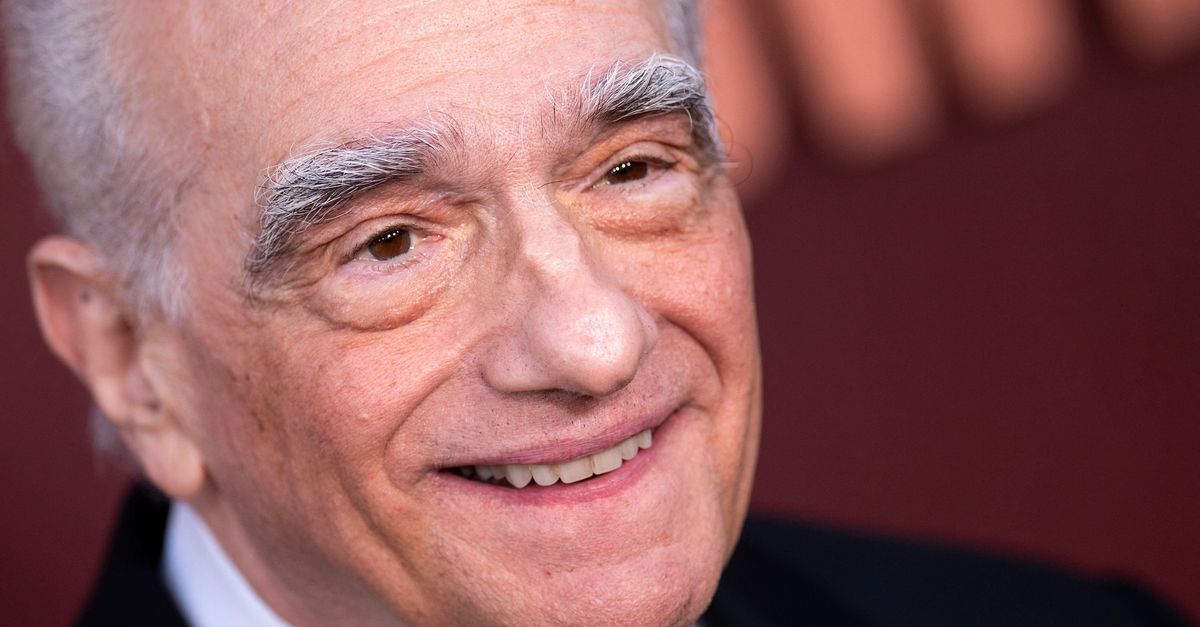

NEW YORK (AP) — A moment from years ago keeps replaying in Martin Scorsese’s mind.
When Akira Kurosawa was given an honorary Academy Award in 1990, the then 80-year-old Japanese filmmaker of “Seven Samurai” and “Ikiru,” in his brief, humble speech, said he hadn’t yet grasped the full essence of cinema.
It struck Scorsese, then in post-production on “Goodfellas,” as a curious thing for such a master filmmaker to say. It wasn’t until Scorsese also turned 80 that he began to comprehend Kurosawa’s words. Even now, Scorsese says he’s just realizing the possibilities of cinema.
“I’ve lived long enough to be his age and I think I understand now,” Scorsese said in a recent interview. “Because there is no limit. The limit is in yourself. These are just tools, the lights and the camera and that stuff. How much further can you explore who you are?”
 Also readBlake Shelton Honors Gwen Stefani With Moving Walk Of Fame Speech
MARTIN SCORSESE SHUTS DOWN CRITICISM OVER THE 3.5-HOUR RUNTIME FOR ‘KILLERS OF THE FLOWER MOON’
Scorsese’s lifelong exploration has seemingly only grown deeper and more self-examining with time. In recent years, his films have swelled in scale and ambition as he’s plumbed the nature of faith ( “Silence” ) and loss ( “The Irishman” ).
His latest, “Killers of the Flower Moon,” about the systematic killing of Osage Nation members for their oil-rich land in the 1920s, is in many ways far outside Scorsese’s own experience. But as a story of trust and betrayal — the film is centered on the loving yet treacherous relationship between Mollie Kyle (Lily Gladstone), a member of a larger Osage family, and Ernest Burkhart (Leonardo DiCaprio), a WWI veteran who comes to work for his corrupt uncle (Robert De Niro) — it’s a profoundly personal film that maps some of the themes of Scorsese’s gangster films onto American history.
More than the back-room dealings of “Casino,” the bloody rampages of “Gangs of New York” or the financial swindling of “The Wolf of Wall Street,” “Killers of the Flower Moon” is the story of a crime wave. It’s a disturbingly insidious one, where greed and violence infiltrate the most intimate relationships — a genocide in the home. All of which, to Scorsese, harkens back to the tough guys and the weak-willed go-alongs he witnessed in his childhood growing up on Elizabeth Street in New York.
“That’s been my whole life, dealing with who we are,” says Scorsese. “I found that this story lent itself to that exploration further.”
“Killers of the Flower Moon,” a $200-million, 206-minute epic produced by Apple that’s in theaters Friday, is an audacious big swing by Scorsese to continue his kind of ambitious, personal filmmaking on the largest scale at a time when such grand, big-screen statements are a rarity.
Scorsese considers “Killers of the Flower Moon” “an internal spectacle.” The Oklahoma-set film, adapted from David Grann’s 2017 bestseller, might be called his first Western. But while developing Grann’s book, which chronicles the Osage murders and the birth of the FBI, Scorsese came to the realization that centering the film on federal investigator Tom White was a familiar a type of Western.
“I realized: ’You don’t do that. Your Westerns are the Westerns you saw in the late ’40s and early ’50s, that’s it. Peckinpah finished that. ‘Wild Bunch,’ that’s the end. Now they’re different,” he says. “It represented a certain time in who we were as a nation and a certain time in the world – and the end of the studio system. It was a genre. That folklore is gone.

Scorsese, after conversations with Leonardo DiCaprio, pivoted to the story of Ernest and Mollie and a perspective closer to Osage Nation. Consultations with the tribe continued and expanded to include accurately capturing language, traditional clothing and customs.
“It’s historical that Indigenous Peoples can tell their story at this level. That’s never happened before as far as I know,” says Geoffrey Standing Bear, Principal Chief of Osage Nation. “It took somebody who could know that we’ve been betrayed for hundreds of years. He wrote a story about betrayal of trust.”
“Killers of the Flower Moon” for Scorsese grew out of a period of reflection and reevaluation during the pandemic. COVID-19, he says, was “a gamechanger.” For a filmmaker whose time is so intensely scheduled, the break was in some ways a relief, and it allowed him a chance to reconsider what he wants to dedicate himself to. For him, preparing a film is a meditative process.
“I don’t use a computer because I tried a couple times and I got very distracted. I get distracted as it is,” Scorsese says. “I’ve got films, I’ve got books, I’ve got people. I’ve only begun this year to read emails. Emails, they scare me. It says ‘CC’ and there are a thousand names. Who are these people?”
Scorsese is laughing when he says this, surely aware that he’s playing up his image as a member of the old guard. (A moment later he adds that voicemail “is interesting to do at times.”) Yet he’s also keen enough with technology to digitally de-age De Niro and make cameos in his daughter Francesca’s TikTok videos.
Scorsese has for years been the preeminent conscience of cinema, passionately arguing for the place of personal filmmaking in an era of moviegoing where films can be devalued as “content,” theater screens are monopolized by Marvel and big-screen vision can be shrunk down on streaming platforms.
“I’m trying to keep alive the sense that cinema is an artform,” Scorsese says. “The next generation may not see it that way because as children and younger people, they’re exposed to films that are wonderful entertainment, beautifully made, but are purely diversionary. I think cinema can enrich your life.”
“As I’m leaving, I’m trying to say: Remember, this can really be something beautiful in your life.”
That mission includes spearheading extensive restoration work with the Film Foundation along with a regular output of documentaries in between features. Scorsese and his longtime editor Thelma Schoonmaker are currently producing a documentary on Michael Powell and Emeric Pressburger.
Cinema, he says, may be the preeminent 20th century artform, but something else will belong to the 21st century. Now, Scorsese says, “the visual image could be done by anything by anybody anytime anywhere.”
“The possibilities are infinite on all levels. And that’s exciting,” Scorsese says. “But at the same time, the more choices, the more difficult it is.”
The pressure of time is weighing more heavily on Scorsese, too. He has, he’s said, maybe two more feature films left in him. Currently in the mix are an adaptation of Grann’s latest book, the 18th century shipwreck tale “The Wager, ” and an adaptation of Marilynne Robinson’s “Home.”
“He’s uncompromising. He just does what he feels he really wants to look into,” says Rodrigo Prieto, Scorsese’s cinematographer on “Flower Moon,” as well as his last three feature films.
“You can feel that it’s a personal exploration of his own psyche,” adds Prieto. “In doing that, he allows growth for everybody, in a way, to really look into these characters who might be doing things we might find very objectionable. I can’t think of many other filmmakers who attempt at such a level of empathy and understanding.”
Yet Scorsese says he often feels like he’s in a race to accomplish what he can with the time he has left. Increasingly, he’s prioritizing what’s worth it. Some things are easier for him to give up.
“Would I like to do more? Yeah. Would I like to go to everybody’s parties and dinner parties and things? Yeah, but you know what? I think I know enough people,” Scorsese says with a laugh. “Would I like to go see the ancient Greek ruins? Yes. Go back to Sicily? Yes. Go back to Naples again? Yes. North Africa? Yes. But I don’t have to.”
Time for Scorsese may be waning but curiosity is as abundant as ever. Recent reading for him includes a new translation of Alessandro Manzoni’s “The Betrothed.” Some old favorites he can’t help but keep revisiting. “Out of the Past” — a movie he first saw as 6-year-old — he watched again a few weeks ago. (“Whenever it’s on, I have to stop and watch it.”) Vittorio De Sica’s “Golden Naples” was another recent rewatch.
“If I’m curious about something, I think I’ll find a way – if I hold out, if I hold up – to try to make something about it on film,” he says. “My curiosity is still there.”
So too is his continued astonishment at cinema and its capacity to transfix. Sometimes, Scorsese can hardly believe it. The other day he watched the Val Lewton-produced 1945 horror film “The Isle of the Dead,” with Boris Karloff.
“Really? How many more times am I going to see that?” Scorsese says, laughing at himself. “It’s their looks and their faces and the way (Karloff) moves. When I first saw it as a child, a young teenager, I was terrified by the film and the silences of it. The sense of contamination. I still get stuck on it.”
(this story has not been edited by TSA Mag staff and is published from a syndicated feed.)