• About   |
  • Advertise |
  • Contact Us
No Result
View All Result
The Second Angle (TSA Magazine)
Advertise
  • Infotainment
    • Sports
    • People
    • Inspiring
  • Entertainment
    • Lifestyle
    • Home & Decoration
  • Buzz
  • Education
  • Travel
  • Finance
  • Healthcare
  • Technology
The Second Angle
No Result
View All Result
  • Infotainment
  • Entertainment
  • Buzz
  • Education
  • Travel
  • Finance
  • Healthcare
  • Technology
Advertisement Advertisement Advertisement
ADVERTISEMENT
Home Technology

Space Travel, a billionaire fantasy or expansion of technology?

Reusable rockets have started impacting the economy significantly

by TSA Desk
April 19, 2022
in Technology
Reading Time: 4 mins read
Space Travel, a billionaire fantasy or expansion of technology?
Share on FacebookShare on WhatsApp
Advertisement Advertisement Advertisement
ADVERTISEMENT
4 min readGAdd The Second Angle as a preferred source on Google
Key takeaways
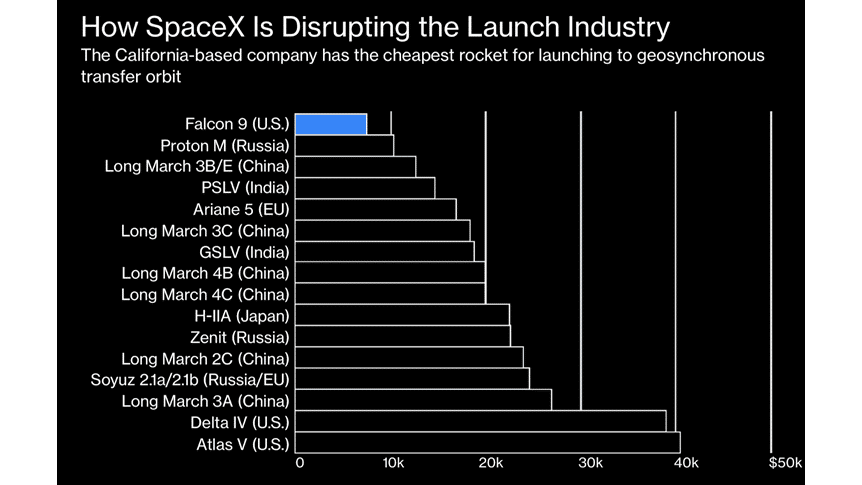
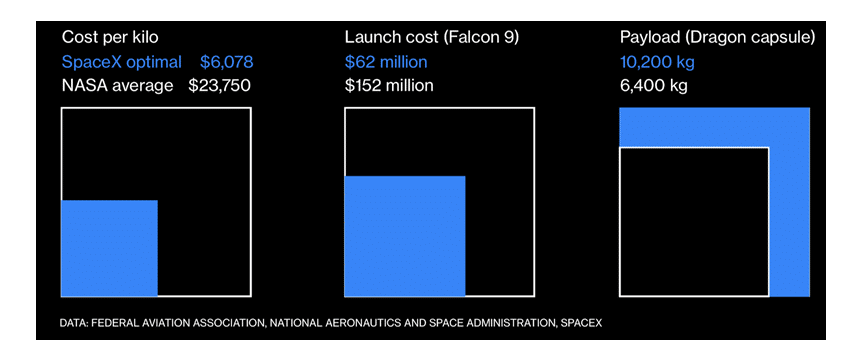
A few decades ago, when our parents were our age, the dream of space tourism and Mars colonization was just that , a dream.NASA’s space shuttle had a cost of about $1.5 billion to launch 27,500 kg to Low Earth Orbit (LEO), $54,500/kg.Even without reusable rockets, SpaceX’s average cost of a rocket launch (Falcon 9) is a quarter lower than NASA’s average.

A few decades ago, when our parents were our age, the dream of space tourism and Mars colonization was just that — a dream. However, in our generation, that dream seems far closer to reality than it ever did. While humans reached space in the 1960s, one of the key reasons for the relatively slow pace of space exploration and repeated travel is the astronomical cost associated with each flight. It is because of this cost that space travel was confined to monopolistic space programs of rich countries. But this is changing now.

Table of Contents
  • Twenty-five for the price of one
  • But is space flight really necessary? How does it solve the problems on earth?

Twenty-five for the price of one

NASA’s space shuttle had a cost of about $1.5 billion to launch 27,500 kg to Low Earth Orbit (LEO), $54,500/kg. SpaceX’s Falcon 9 now advertises a cost of $50 million to launch 22,800 kg to LEO, $2194/kg reusing an old rocket. That constitutes a 25 times reduction in the cost in under 2 decades. While the overall cost of rocket launch has been brought down significantly by Elon Musk’s SpaceX, reusable rockets provide an additional 20% cost reduction. 
Space Travel, a billionaire fantasy or expansion of technology?

Are we raising a generation of internet addicts?Also readAre we raising a generation of internet addicts?


Even without reusable rockets, SpaceX’s average cost of a rocket launch (Falcon 9) is a quarter lower than NASA’s average. With reusable rockets, that cost is lower than 20% currently (and likely to go down much further as the rockets get used over and over again).
Space Travel, a billionaire fantasy or expansion of technology?


This is just the beginning. It is estimated that NASA’s SLS rocket would have a launch cost of $2 billion, whereas SpaceX’s larger rocket, Starship, would have a per-unit reusable cost of just $1 million. That is a 200 times reduction as reusability reaches scale. Once starships start carrying passengers on a regular basis, the cost of a round trip to space could be as low as $50,000 — less than the tuition fee of some top American universities. I wonder how many students would like to drop a year of college to make a zero-gravity field trip.

But is space flight really necessary? How does it solve the problems on earth?

A big criticism of Elon Musk, Jeff Bezos and Sir Richard Branson (and their companies SpaceX, Blue Origin and Virgin Galactic) in recent times has been that they are wasting resources on space when there are real problems to be solved on Earth — poverty, disease, climate change etc.  On the face of it, this is a valid argument. Are these billionaires fulfilling their childhood space fantasies at the cost of ‘real-world problems’? Maybe they are. But this criticism is based partly on the ‘eccentric billionaire’ perception often propagated by the media, but mostly they are based on a lack of understanding of the benefits of space technologies.

Even if you don’t believe in the vision of space exploration and making our species multi-planetary, you have to understand that the modern world depends on space. Satellites provide the communication and telecom infrastructure that powers the internet, which in turn powers the engine of the world. We are all aware of and greatly benefit from the internet’s ability to facilitate global trade, finance, business, education, healthcare, entertainment and human connections, creating economic opportunities for billions.

However, we also know that, sadly, 50% of the world’s population is deprived of these benefits. Reduced costs of rocket technology and reusable rockets are poised to change that situation. SpaceX’s Starlink program aims to put over 30000 satellites in low orbit with the aim to provide high speed — low-cost internet access to every corner of the earth. Each Falcon 9 launch carries 60 satellites at a remarkably low cost. Once the constellation is ready, internet inequity will reduce significantly, creating education, jobs, and other opportunities for the underprivileged. 
Space Travel, a billionaire fantasy or expansion of technology?

While satellites and the internet are still correlated with space technologies, what most people don’t know is that a large number of inventions, things we use every day, are derived from space technologies.

From LASIK surgery to memory foam, from scratch-resistant lenses to new farming techniques developed through research on the space station, from artificial limbs to enriched baby foods, from shock absorbers for buildings to water location and purification systems, from improved GPS tracking to improved mine safety, the list of inventions that have come from space technologies goes on.

The economics of cost decline curves in rocket technology will have a profound impact on human life. Humans are nothing if not explorers and inventors. Rockets and space technologies can propel us to the next phase of social and economic growth, reduce inequities, increase economic opportunities and take us closer to the stars.

Also Checkout: 7 Best Apple Watch Alternatives Under 5000 Rs. – April 2022

Enjoyed this story?Share it with your friends
WhatsAppLinkedInXFacebookEmail
See more TSA Mag stories on GoogleAdd us as a preferred source and our stories will show up more often in your Top Stories.
GAdd The Second Angle as a preferred source on Google
ShareSend
Tweet
Previous Post

Particulate Matter induced Pollution is silently killing us

Next Post

Adil Ansari: Aligarh’s Young Covid Doc restores our faith in humanity

Related Posts

Person checking a laptop screen for signs that their email address was exposed in a data breach
Technology

How to Check If Your Email Was in a Data Breach (2026 Guide)

How to check if your email was in a data breach using Have I Been Pwned, Google, Apple and Mozilla...

Read moreDetails
Customer scanning a UPI QR code with a smartphone to make a small payment
Technology

What Is UPI Lite Limit in 2026? Wallet, Payment Caps and Setup

What is UPI Lite limit in 2026: Rs 1,000 per payment and Rs 5,000 balance. How to enable it, auto...

Read moreDetails
Smartphone showing mobile network settings used to add an eSIM in India
Technology

How to Activate eSIM in Jio, Airtel and Vi: Step-by-Step Guide

How to activate eSIM in Jio, Airtel and Vi: check phone support, follow official app steps, know the charges, switch...

Read moreDetails
10 Best Free Productivity Apps in 2026 and What Each Plan Offers
Technology

10 Best Free Productivity Apps in 2026 and What Each Plan Offers

The best free productivity apps in 2026, including Notion, Todoist, Trello and Obsidian, with free plan limits checked on each...

Read moreDetails
A man in Bengaluru looking at his smartphone
Technology

DigiLocker Guide: How to Use It and Which Documents Are Valid

A simple DigiLocker guide for India: how to sign up, fetch your PAN, driving licence and marksheets, share them safely,...

Read moreDetails
A young person using a mobile phone
Technology

How to Block a Lost or Stolen Phone on Sanchar Saathi (CEIR)

Lost your mobile? Here is how to block a lost phone on Sanchar Saathi using CEIR, the documents you need,...

Read moreDetails
Load More
Next Post
Adil Ansari: Aligarh’s Young Covid Doc restores our faith in humanity

Adil Ansari: Aligarh’s Young Covid Doc restores our faith in humanity

About

The Second Angle

The Second Angle (TSA Mag) is an infotainment and lifestyle magazine covering entertainment, travel, technology, health, education and finance.

Important Links

  • About The Second Angle
  • Advertise With Us
  • Editorial Policy
  • Privacy Policy
  • Terms and Conditions
  • Contact Us
  • Careers
  • Newsletter

Explore

  • Infotainment
  • Entertainment
  • Buzz
  • Education
  • Travel
  • Finance
  • Healthcare
  • Technology
Advertise with us

© 2017-2026. The Second Angle. All Rights Reserved. Developed and Managed by Squarebase.io

Welcome Back!

Login to your account below

Forgotten Password?

Retrieve your password

Please enter your username or email address to reset your password.

Log In
No Result
View All Result
  • Infotainment
    • Sports
    • People
    • Inspiring
  • Entertainment
    • Lifestyle
    • Home & Decoration
  • Buzz
  • Education
  • Travel
  • Finance
  • Healthcare
  • Technology

© 2017-2026. The Second Angle. All Rights Reserved. Developed and Managed by Squarebase.io

We use cookies to keep TSA fast and relevant. Read our Privacy Policy.