

• About   |
  • Advertise |
  • Contact Us
No Result
View All Result
The Second Angle (TSA Magazine)
Advertise
  • Infotainment
    • Sports
    • People
    • Inspiring
  • Entertainment
    • Lifestyle
    • Home & Decoration
  • Buzz
  • Education
  • Travel
  • Finance
  • Healthcare
  • Technology
The Second Angle
No Result
View All Result
  • Infotainment
  • Entertainment
  • Buzz
  • Education
  • Travel
  • Finance
  • Healthcare
  • Technology
Advertisement
ADVERTISEMENT
Home World News

Scientists say climate change goosed New Zealand storm fury

by TSA Desk
March 14, 2023
in World News
Reading Time: 5 mins read
Scientists say climate change goosed New Zealand storm fury
Share on FacebookShare on WhatsApp
Advertisement Advertisement Advertisement
ADVERTISEMENT
4 min readGAdd The Second Angle as a preferred source on Google
Key takeaways
Cyclone Gabrielle struck the country’s north on February 13, and was the most destructive on record to hit the nation of 5 million people.Climate change worsened flooding from a tropical cyclone that shut down much of New Zealand last month in one of the country's costliest disasters, scientists said, but they couldn't quite...A flash study on March 14 by 23 scientists from around the globe found that global warming from the burning of fossil fuels added to the downpours from Cyclone Gabrielle...

[ad_1]

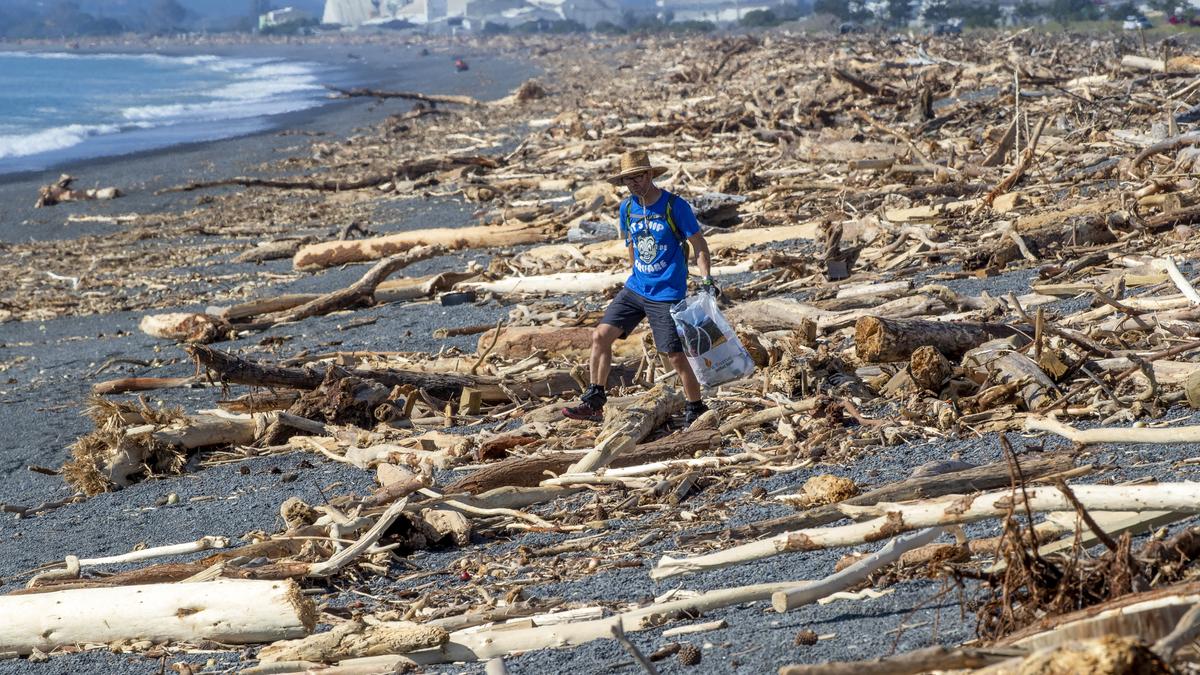
Cyclone Gabrielle struck the country’s north on February 13, and was the most destructive on record to hit the nation of 5 million people. A new study published on March 14, 2023, has found that global warming from the burning of fossil fuels added to the downpours from Cyclone Gabrielle.

Cyclone Gabrielle struck the country’s north on February 13, and was the most destructive on record to hit the nation of 5 million people. A new study published on March 14, 2023, has found that global warming from the burning of fossil fuels added to the downpours from Cyclone Gabrielle.
| Photo Credit: AP

Climate change worsened flooding from a tropical cyclone that shut down much of New Zealand last month in one of the country’s costliest disasters, scientists said, but they couldn’t quite calculate how much it magnified the catastrophe.

Taiwan unveils portable attack drone as China tensions riseAlso readTaiwan unveils portable attack drone as China tensions rise

A flash study on March 14 by 23 scientists from around the globe found that global warming from the burning of fossil fuels added to the downpours from Cyclone Gabrielle that included at least six hours of deluges of nearly an inch per hour (20 millimetres per hour) of driving rain. But normal methods to quantify how much climate change added to the disaster weren’t conclusive enough for scientists because weather records there don’t go back very far, the area affected was relatively small and the region is subject to naturally high weather variability.

“Climate change is a serious concern for flooding in New Zealand and you’ve got to understand these are gigantic amounts of rainfall,” said Sam Dean, a co-author and scientist at New Zealand’s National Institute of Water and Atmospheric Research. “I have no doubt whatsoever in my mind with my experience of my life as a climate scientist that climate change has influenced the event but do we know it’s exactly 30%? No, we don’t.”

The study is not yet peer-reviewed, the gold standard in science, because it is such a recent event. But the scientists at World Weather Attribution follow well-established techniques for attributing climate change — comparing a given event to simulations of what would have resulted without accelerated warming — and later get their work published in peer-reviewed journals.

More than 200,000 homes lost power for days on end, a nationwide emergency was declared and the storm caused $8 billion ($13 billion New Zealand) in damage to New Zealand, called Aotearoa in Indigenous Māori. In some places rainfall totaled as much as 15.7 inches (400 millimeters) in just two days, according to the Meteorological Service of New Zealand. The storm killed 11 people.


ALSO READ | New Zealand city grinds to halt as deluge from cyclone looms

The cyclone hit just a couple weeks after extensive flooding in the region had saturated the ground and essentially lived up to New Zealand officials’ worst-case scenarios, according to the MetService.

Based on extrapolations from weather records that go back to 1979, heavy rain like that recorded over two days was about 30% more intense and four times more likely than in a pre-warming world that is 2.1 degrees Fahrenheit (1.2 degrees Celsius) cooler than now. But the scientists said there are large uncertainties in those figures because there’s not a lot of data.
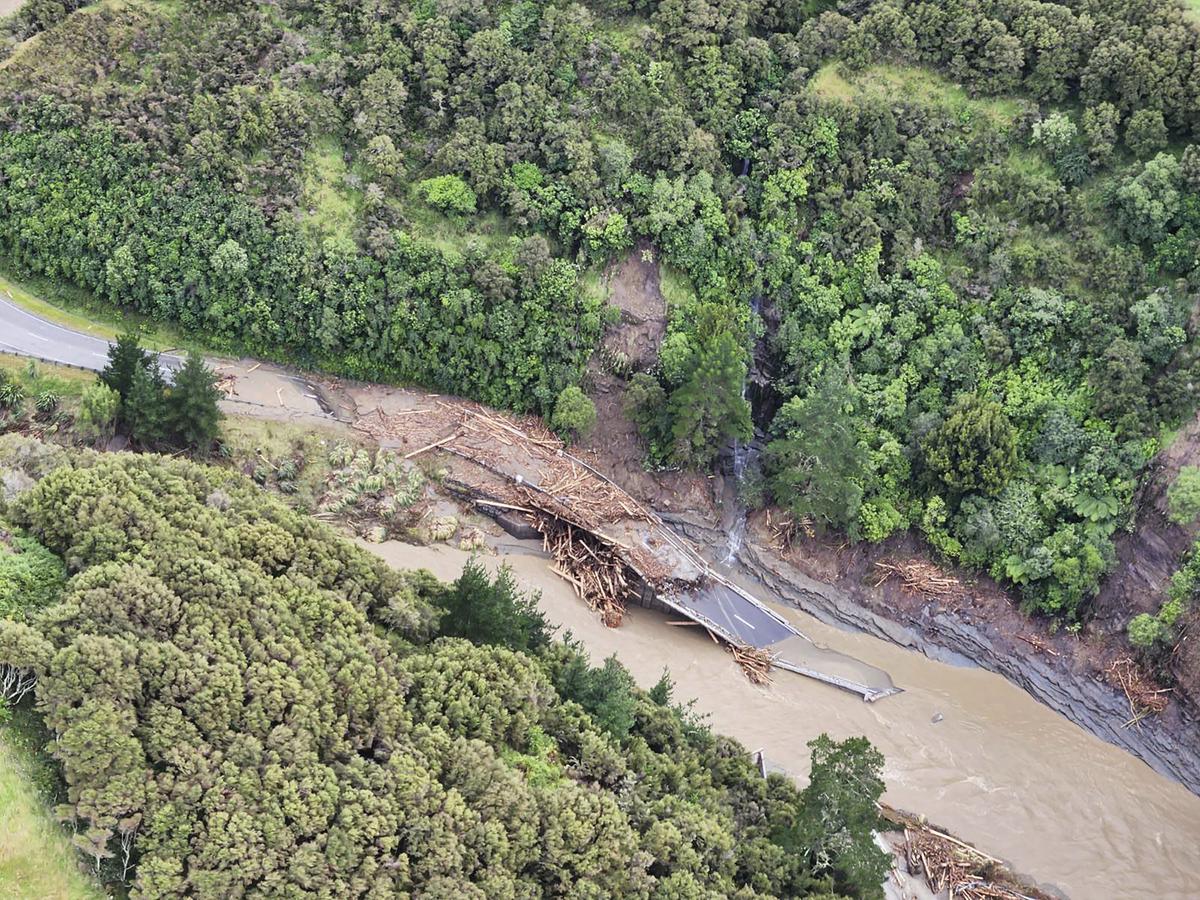
A road between Napier and Wairoa is washed out by floodwater in the aftermath of Cyclone Gabrielle. Climate change worsened flooding from the tropical cyclone that shut down much of New Zealand in one of the country’s costliest disasters, scientists said, but they couldn’t quite calculate how much it magnified the catastrophe.

A road between Napier and Wairoa is washed out by floodwater in the aftermath of Cyclone Gabrielle. Climate change worsened flooding from the tropical cyclone that shut down much of New Zealand in one of the country’s costliest disasters, scientists said, but they couldn’t quite calculate how much it magnified the catastrophe.
| Photo Credit:
AP

Scientists also use computer simulations to see if global warming plays a role. But the area that got flooded is so small that most of the computer models couldn’t deal with it. The ones that could found a much smaller climate fingerprint than the historical data shows or practically none.

Still, scientists said they are certain climate change played a role, even if they can’t put a precise number on it.

University of Pennsylvania climate scientist Michael Mann, who wasn’t part of the study team, said the group probably is underestimating the impact of climate change on the New Zealand destruction because climate models in general are insufficient to describe all of climate change’s impacts on extreme weather.

“Human-caused warming means there is more energy and moisture in every storm whether or not a study formally attributes it,” he said.

In addition to climate change, researchers found that a recently concluded La Nina phenomenon, which changes weather worldwide, and an ocean heat wave were factors in goosing Gabrielle’s impact.

“Every additional bit of warming will make these kind of events worse,” said study co-author and team leader Friederike Otto, a climate scientist at the Imperial College of London. “Climate change is not something that happens sometime in the future or to someone else but actually affects people, particularly vulnerable populations, affects people everywhere around the world today.”

[ad_2]

Enjoyed this story?Share it with your friends
WhatsAppLinkedInXFacebookEmail
See more TSA Mag stories on GoogleAdd us as a preferred source and our stories will show up more often in your Top Stories.
GAdd The Second Angle as a preferred source on Google
ShareSend
Tweet
Previous Post

Taiwan unveils portable attack drone as China tensions rise

Next Post

Russian jet collides with U.S. drone over Black Sea: U.S. military

Related Posts

LGBTQIA+ in Afghanistan
World News

LGBTQIA+ in Afghanistan: Life Under Taliban Rule in 2026

LGBTQIA+ in Afghanistan: the law before 2021, abuses reported under the Taliban, and the July 2025 ICC arrest warrants that...

Read moreDetails
chinese
Opinion

Boycott Chinese Products: What Changed in India Since 2020

Did the call to boycott Chinese products after Galwan work? A look at app bans, investment rules, phone sales and...

Read moreDetails
The United Kingdom, spending $800,000 to conceal Mountbatten's diaries
World News

Mountbatten Diaries Case: What the UK Tribunal Decided and Why

The Mountbatten diaries case explained: why historian Andrew Lownie went to court, what the 2022 UK tribunal ruled and what...

Read moreDetails
Top 10 Richest Men In The World: Billion Dollar Club Family
Listicles

Top 10 Richest Men in the World in 2026: Forbes List Explained

The top 10 richest men in the world in October 2026 per Forbes: Elon Musk leads at $936 billion, then...

Read moreDetails
Richest Kids in the world
Entertainment

Top 10 Richest Kids in the World and Where They Are Now (2026)

The top 10 richest kids in the world from the 2020 Kids Rich List, led by Morocco's Moulay Hassan, plus...

Read moreDetails
At least 25 killed in rebel attack on Ugandan school near Congo border
World News

At least 25 killed in rebel attack on Ugandan school near Congo border

The Allied Democratic Forces, or ADF, is accused of launching many attacks on civilians in recent years, notably on civilian...

Read moreDetails
Load More
Next Post
Russian jet collides with U.S. drone over Black Sea: U.S. military

Russian jet collides with U.S. drone over Black Sea: U.S. military

About

The Second Angle

The Second Angle (TSA Mag) is an infotainment and lifestyle magazine covering entertainment, travel, technology, health, education and finance.

Important Links

  • About The Second Angle
  • Advertise With Us
  • Editorial Policy
  • Privacy Policy
  • Terms and Conditions
  • Contact Us
  • Careers
  • Newsletter

Explore

  • Infotainment
  • Entertainment
  • Buzz
  • Education
  • Travel
  • Finance
  • Healthcare
  • Technology
Advertise with us

© 2017-2026. The Second Angle. All Rights Reserved. Developed and Managed by Squarebase.io

Welcome Back!

Login to your account below

Forgotten Password?

Retrieve your password

Please enter your username or email address to reset your password.

Log In
No Result
View All Result
  • Infotainment
    • Sports
    • People
    • Inspiring
  • Entertainment
    • Lifestyle
    • Home & Decoration
  • Buzz
  • Education
  • Travel
  • Finance
  • Healthcare
  • Technology

© 2017-2026. The Second Angle. All Rights Reserved. Developed and Managed by Squarebase.io

We use cookies to keep TSA fast and relevant. Read our Privacy Policy.