


[ad_1]
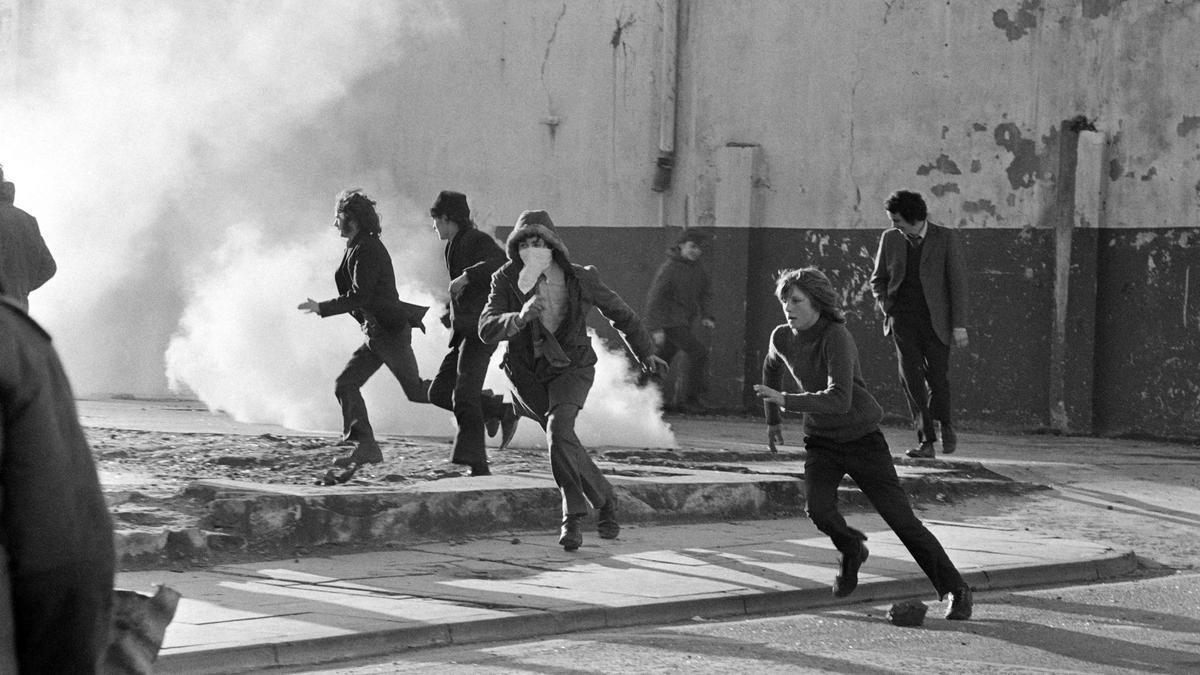
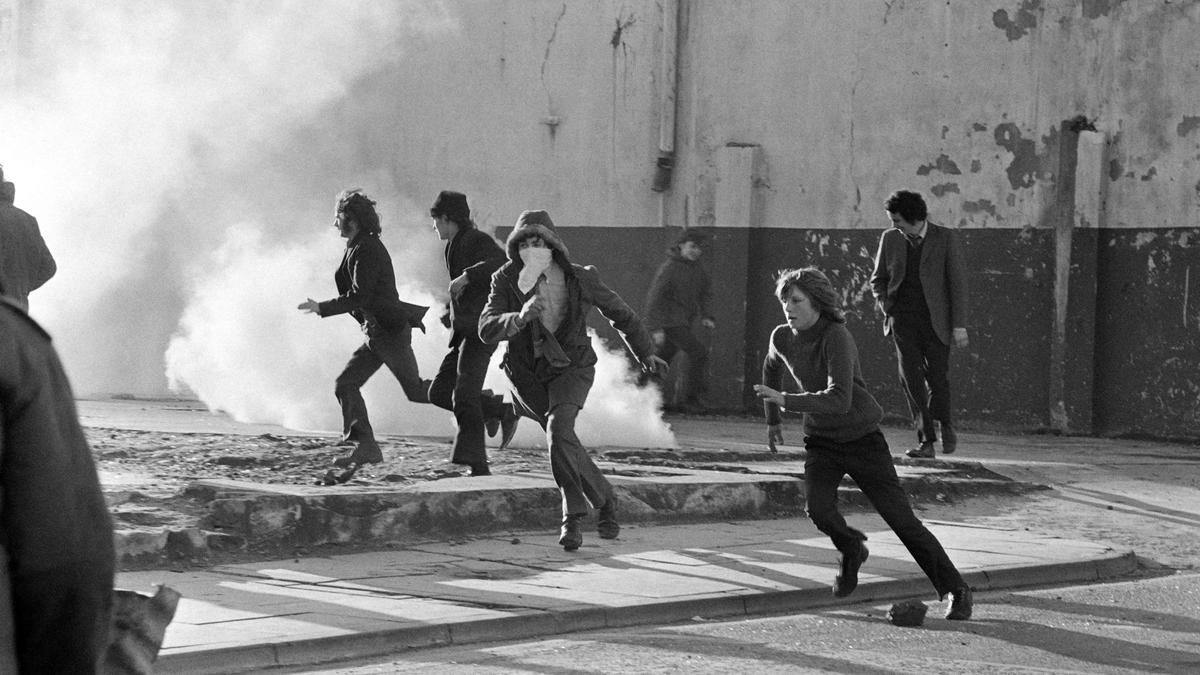
Signed in 1998, the peace deal ended more than three decades of bloody conflict, known as the ‘Troubles’, in which more than 3,700 people were killed.
| Photo Credit: AFP
U.S. President Joe Biden visited Northern Ireland and the Republic of Ireland last week to commemorate 25 years of the Good Friday Agreement. The visit comes at a time when Northern Ireland is without a government. Its power-sharing government — a product of the Good Friday Agreement — collapsed last year over opposition to the post-Brexit trade rules, putting a question mark over the sustainability of the 25 years of peace that the Agreement had made possible.
 Also readThe Dalai Lama | Straddling the spiritual and the political
Signed in 1998, the peace deal ended more than three decades of bloody conflict, known as the ‘Troubles’, in which more than 3,700 people were killed.
The discord, however, precedes even the ‘Troubles’, going back to centuries of animosity between the Protestants, who mostly came from Britain, and the Catholics, who wanted a ‘unified’ Ireland freed from British rule. The Irish War of Independence (1919-21), fought by the Irish Republican Army (IRA) against British forces, led to the Anglo-Irish Treaty, which granted Ireland the status of a ‘Free State’, or what we know today as the Republic of Ireland. But the treaty also allowed the Protestant-majority north-east of the island to opt out of the Free State and remain a part of Britain.
Also read: Explained | A brief history of 20th-century Northern Ireland, as seen on ‘Derry Girls’
While the Anglo-Irish Treaty ended the armed independence struggle, it could not eliminate the tensions between the Catholic Nationalists and the Protestant Unionists. The Protestant majority, having captured the reins of power in Northern Ireland, discriminated against the minority Catholics — especially in housing and jobs in the police force and government bureaucracy. Disgruntled Catholics signed up for a splinter group of the old IRA that sought to wage an armed struggle against the British rule in Northern Ireland. In response, the Protestants formed the Ulster Volunteer Force (UVF), a paramilitary group. In the late 1960s, a brutal civil war broke out between the two sides in the course of which an estimated 2% of Northern Ireland’s population was killed or wounded.
The ‘Troubles’ ceased with the Good Friday Agreement, signed on April 10, 1998. It had two parts: a ‘multi-party agreement’ between Northern Ireland’s major parties, and an agreement between the governments of the U.K. and the Republic of Ireland. Its biggest breakthrough was legitimising the demands of both sides — that the majority in Northern Ireland wanted to remain a part of the U.K, and that a substantial minority in Northern Ireland as well as the majority in the rest of the island, wanted a ‘united Ireland’. It laid down that Northern Ireland would remain a part of the U.K until a majority of its inhabitants wanted otherwise, and if that happens, then the U.K. would be under a “binding obligation” to respect that choice. Till such time, the rights of the people of Northern Ireland to identify themselves and be accepted as either British or Irish or both, shall be protected, as also their civil and religious liberties. It also put in place a devolved legislature with mandatory cross-community voting on major decisions, and a power-sharing government with representation from the Unionists and the Nationalists.
Brexit woes
Northern Ireland began to prosper under the peace instituted by this deal, and then Brexit happened. With the Republic of Ireland a part of the EU market, Northern Ireland became the only part of the U.K. to have a land border with the EU. This went against the spirit of the Good Friday Agreement, which had guaranteed unfettered flow of goods and people on the island.
The U.K. and the EU then came up with the Northern Ireland Protocol, a supplementary agreement under Brexit, which shifted the trade border for inspection of the goods — to ensure that they are in compliance with EU rules — to Irish ports. But the Unionists, led by the Democratic Unionist Party (DUP), were opposed to any kind of border checks on goods flowing between Britain and Northern Ireland. Holding that it undermined the Good Friday Agreement by instituting a customs border between Britain and Northern Ireland, the DUP boycotted the power-sharing government last year, causing Northern Ireland to continue without a government, which essentially means being governed directly by Westminster.
Just ahead of the Biden visit, and possibly to have something to show the U.S. President, the UK and the EU signed the Windsor Framework, under which all the goods arriving on the island would be split into two different lanes: goods destined for Northern Ireland would go into the ‘green lane’, meaning they wouldn’t need inspection, while those destined for Ireland/EU would go into the ‘red lane’, where they will undergo checks.
While the Nationalists have mostly responded favourably to this arrangement, the DUP is yet to make up its mind. As things stand, The power-sharing government remains in suspension. It is in this context that Mr. Biden’s visit, during which he met British Prime Minister Rishi Sunak as well, assumes significance. The American President has been pushing all the parties to do whatever necessary to protect the spirit of the Good Friday Agreement — the last thing the U.S. wants is armed strife and security concerns in the backyard of its closest ally.
[ad_2]