



The most Instagrammable places in Reykjavik are Hallgrímskirkja church, Harpa concert hall, the Sun Voyager sculpture, the colourful houses and street art of the city centre, and the whale watching boats. The Blue Lagoon, about 20 km from Keflavík airport, is the most photographed day trip, though eruptions have closed it several times.
Reykjavik is a small capital, so most of these spots sit within walking distance of each other. The light changes quickly through the day and across seasons, which gives photographers a lot to work with. Here is an updated list of the best Instagrammable places in Reykjavik and nearby, with practical tips for each.
Quick facts: best photo spots in and around Reykjavik
| Spot | Where | Best for |
|---|---|---|
| Hallgrímskirkja | City centre, on a hill | Architecture, city views from the tower |
| Harpa | Old harbour waterfront | Glass facade, reflections, night lights |
| Sun Voyager | Sæbraut seafront road | Sculpture with sea and mountain backdrop |
| Colourful houses | Old town streets | Street photography |
| Street art | Central lanes | Murals and bold colours |
| Whale watching | Boat trips from the city | Wildlife |
| Blue Lagoon | Near Grindavík, Reykjanes Peninsula | Milky blue water and lava fields |
1. Hallgrímskirkja church
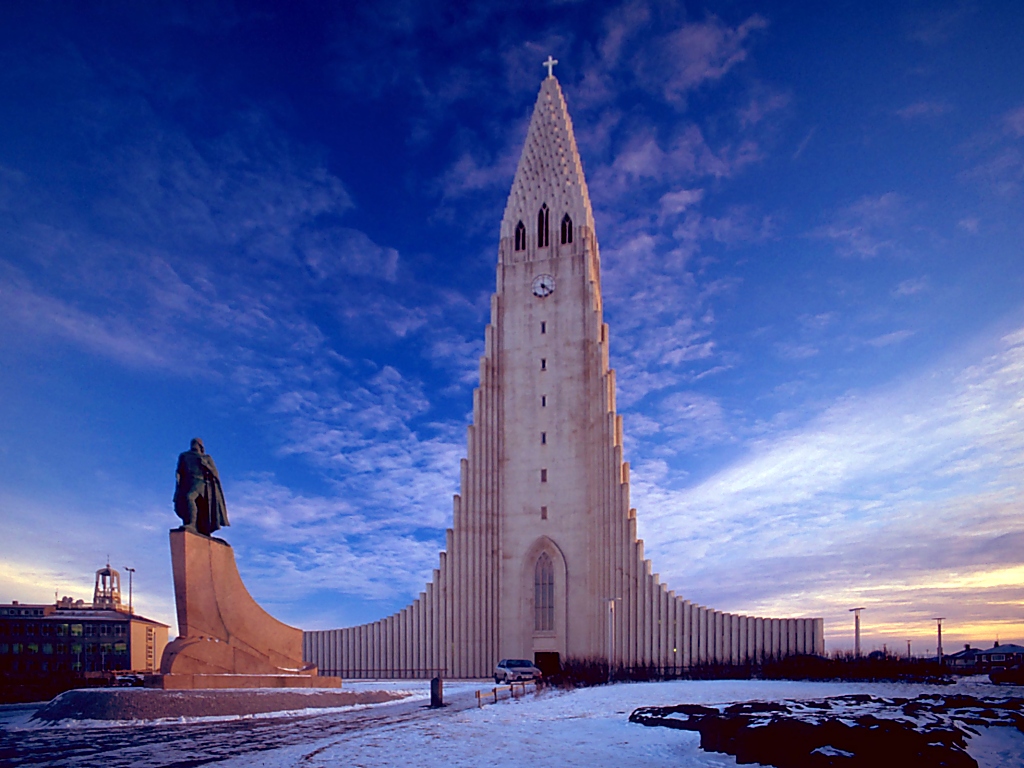
Hallgrímskirkja is the largest church in Iceland and, at 74.5 metres, the country’s second tallest building. State Architect Guðjón Samúelsson’s design was commissioned in 1937, and construction ran from 1945 to 1986.
 Also read10 Best Places to Visit in Ladakh: Updated Travel Guide 2026
The stepped concrete front is said to recall Iceland’s columnar basalt formations. For the classic shot, stand well back down the hill and frame the full tower against the sky. A lift takes visitors up the tower for wide views over the rooftops. The statue of Leif Erikson in front of the church, a gift from the United States in 1930, makes a good foreground.
2. Harpa concert hall
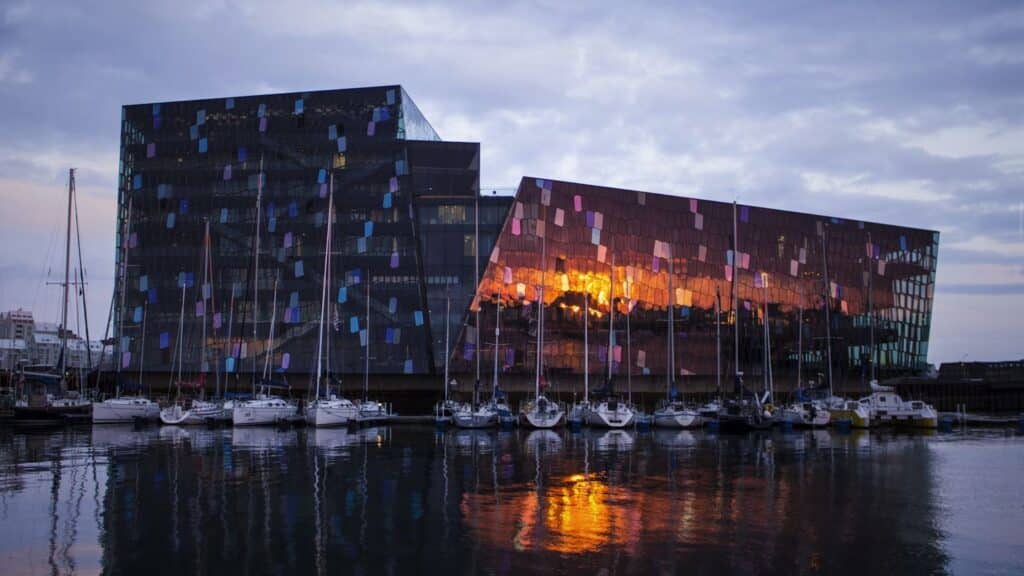
Harpa opened in 2011 and is home to the Iceland Symphony Orchestra. It was designed by Danish firm Henning Larsen Architects with Danish-Icelandic artist Ólafur Elíasson, and it won the European Union’s Mies van der Rohe Award in 2013.
The facade is a steel frame filled with geometric glass panels in different colours, inspired by basalt. Inside, sunlight breaks into patterns on the walls and floors. After dark, 714 LED lights on the facade display video work by Elíasson, so plan one visit by day and one by night.
3. Sun Voyager sculpture
Sun Voyager, by artist Jón Gunnar Árnason, stands on a small headland beside the Sæbraut road. It was unveiled on Reykjavik’s birthday, 18 August 1990. The steel piece looks like a Viking ship, but it was meant as a dreamboat and an ode to the sun, a symbol of hope and freedom.
With the sea and the mountains across the bay behind it, Sun Voyager is one of the most shared images of the city. Sunrise and sunset give the warmest colours. It is a short walk along the seafront from Harpa.
4. Reykjavik’s colourful houses
The old town is full of small houses painted in red, yellow, blue, green and other bright shades. Against grey skies or snow, these houses stand out sharply in photos.
Walk the side streets around the centre rather than only the main shopping road. Early mornings are quieter, which helps if you want clean shots without crowds or parked cars.
5. Street art and nightlife
Many walls in central Reykjavik carry murals by local and international artists, with bold colours, unusual lettering and a range of themes. They add an urban side to a city better known for nature.
In the evenings, the bars and music venues in the centre come alive, especially on weekends. Neon signs and lit windows on dark winter evenings give a different set of photos from the daytime walks.
6. Whale watching trips
Boat trips from Reykjavik take visitors out to look for whales, dolphins and seabirds. Sightings depend on the season, the weather and luck, so treat any promise of a guaranteed sighting with caution and read the operator’s policy on repeat trips.
For photos, a zoom lens and warm, waterproof clothes help. Responsible operators keep a distance from the animals, and good pictures do not need you to get close.
7. Blue Lagoon (day trip)
The Blue Lagoon is not in Reykjavik itself. It is a man-made geothermal spa in a lava field about 5 km from Grindavík on the Reykjanes Peninsula, and about 20 km from Keflavík International Airport. Its water comes from the nearby Svartsengi geothermal power plant and stays at about 37 to 39°C.
Silica gives the water its milky blue colour and forms the white mud bathers put on their skin. The steam and black lava make striking photos. However, the lagoon closed several times between November 2023 and 2024 because of eruptions on the peninsula, and in November 2024 lava destroyed its car park. Check the official website and Icelandic civil protection updates before you book.
Photo tips for Reykjavik
- Light: Summer brings very long days, while winter has short days with soft, low light.
- Weather: Conditions change fast, so carry a rain cover for your phone or camera.
- Respect: Hallgrímskirkja is a working church. Avoid flash and stay quiet during services.
- Drones: Check local rules before flying a drone in the city or near the airport.
For more destination ideas, browse our travel section and the latest lifestyle stories.
Further reading: Reykjavik.
Frequently asked questions
What is the most Instagrammable place in Reykjavik?
Hallgrímskirkja church is the most photographed landmark in the city. Harpa concert hall and the Sun Voyager sculpture on the seafront are close behind.
Is the Blue Lagoon in Reykjavik?
No. It is on the Reykjanes Peninsula, about 5 km from Grindavík and about 20 km from Keflavík airport, so most visitors go there as a day trip or on the way to or from the airport.
Is the Blue Lagoon open after the volcanic eruptions?
It has reopened after each closure so far, but eruptions near Grindavík have shut it several times since late 2023. Check the official website on the day you plan to visit.
Can you go up Hallgrímskirkja tower?
Yes. A lift takes visitors to a viewing deck at the top, with views over Reykjavik and the mountains around it.
Sources: Hallgrímskirkja, Wikipedia, Harpa, Wikipedia, Blue Lagoon, Wikipedia, Iceland Review.