


Chhath Puja is a four-day festival dedicated to Surya, the sun god, and Chhathi Maiya, observed mainly in Bihar, Jharkhand, eastern Uttar Pradesh and Nepal’s Madhesh region. In 2026 it runs from Friday, 13 November to Monday, 16 November, a week after Diwali. This explainer covers why Chhath is celebrated, what happens on each day, and the arghya timings for major cities.
Chhath Puja 2026 dates
| Day | Date | Ritual |
|---|---|---|
| Nahay Khay | Friday, 13 November | Holy bath and one simple meal |
| Kharna | Saturday, 14 November | Day-long fast, broken in the evening with kheer; the nirjala fast begins |
| Sandhya Arghya | Sunday, 15 November | Offering to the setting sun |
| Usha Arghya | Monday, 16 November | Offering to the rising sun, then paran (breaking the fast) |
The festival is tied to Shashthi, the sixth day of the bright half of Kartik month. The name comes from this sixth day. A smaller observance, Chaiti Chhath, takes place in the month of Chaitra in spring.
Why Chhath Puja is celebrated
Chhath is a thanksgiving to the sun for sustaining life on earth, combined with prayers to Chhathi Maiya for the health and long life of children and the wellbeing of the family. Chhathi Maiya, also called Shashthi Mata, is described in tradition as Surya’s sister.
 Also readLakshmi Puja Samagri List 2026: Full Diwali Checklist
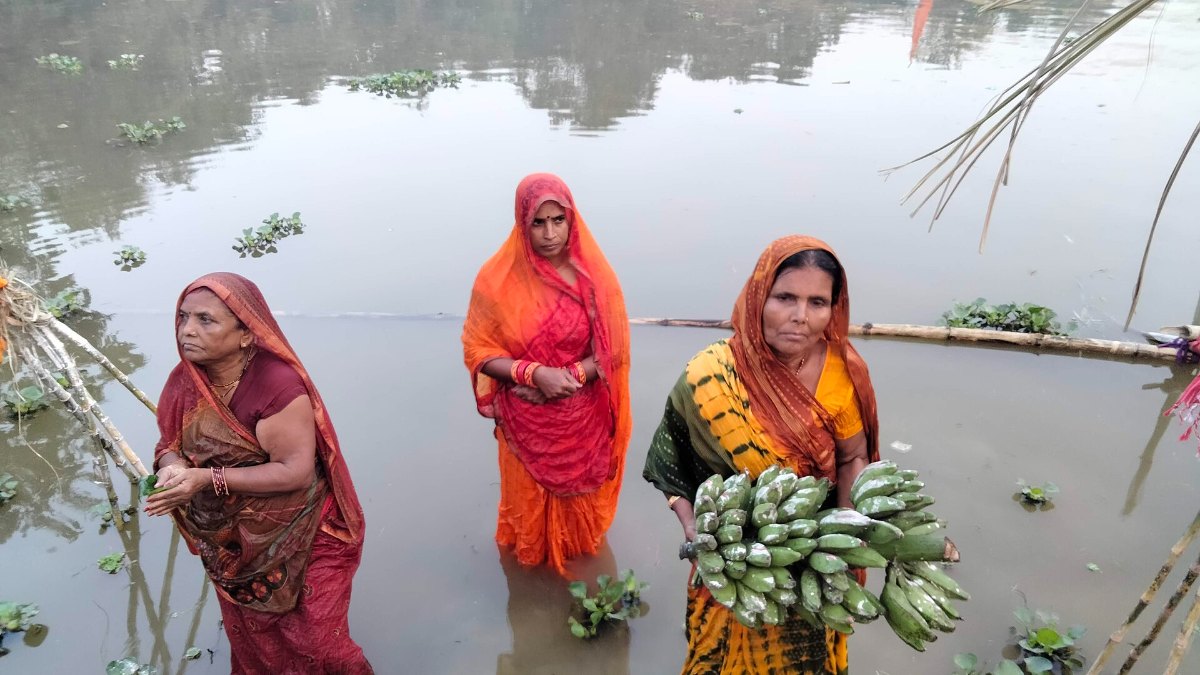
The festival also stands out for what it does not have. There is no idol, no temple and no priest needed. The devotee makes the offering directly, standing in a river, pond or any water body. It is also one of the few Hindu rituals where the setting sun is worshipped, not just the rising one.
Stories linked to Chhath
Several legends are connected to the festival, and many believe the practice is older than all of them.
- Karna: in the Mahabharata, Karna, the son of Surya, is said to have stood in water every morning to make offerings to the sun.
- Draupadi: during the Pandavas’ exile, Draupadi is said to have worshipped the sun on Kartik Shashthi on the advice of sage Dhaumya.
- Sita and Ram: one tradition holds that Sita performed sun worship with fasting and arghya after the return to Ayodhya.
- King Priyavrat: a Puranic story tells of a royal couple whose child was revived by Shashthi Devi, after which they began her worship on this day.
What happens on each day
Day 1: Nahay Khay
The house is cleaned and the devotee, called a parvaitin or vratin, takes a bath, ideally in a river. They eat one sattvic meal, commonly lauki (bottle gourd) with rice, cooked without onion and garlic.
Day 2: Kharna
The devotee fasts through the day and breaks it after evening puja with rasiya (jaggery kheer) and roti, which is then shared as prasad. After this meal begins the nirjala fast, with no food or water, which lasts about 36 hours until the morning of day four.
Day 3: Sandhya Arghya
This is the main day. Families carry bamboo baskets loaded with prasad to the ghat. In the evening the devotee stands waist-deep in water and offers arghya to the setting sun. Folk songs of Chhath are sung through the evening.
Day 4: Usha Arghya
Before dawn, families return to the ghat. Arghya is offered to the rising sun, prasad is distributed, and the devotee ends the fast with paran.
Chhath prasad and offerings
Thekua, a fried sweet made from wheat flour, jaggery and ghee, is the signature prasad. Other offerings include rice laddu, kasar laddu, sugarcane, coconut, banana, sweet lime and seasonal fruits. These are arranged in bamboo baskets called daura and soop.
Arghya timings for 2026
Arghya follows local sunset and sunrise, so the time depends on your city. These are city-centre timings; a riverbank or a ghat surrounded by buildings can differ by a few minutes.
| City | Sandhya Arghya (15 Nov) | Usha Arghya (16 Nov) |
|---|---|---|
| Patna | 5:01 PM | 6:07 AM |
| Ranchi | 5:04 PM | 6:03 AM |
| Varanasi | 5:10 PM | 6:16 AM |
| Lucknow | 5:16 PM | 6:26 AM |
| Delhi | 5:28 PM | 6:44 AM |
| Kolkata | 4:53 PM | 5:50 AM |
| Mumbai | 6:00 PM | 6:46 AM |
Reach the ghat 30 to 45 minutes before sunset. Ghats in Patna, Delhi and Mumbai get crowded, and the best spots near the water fill up early.
Chhath beyond Bihar
Migration has taken the festival far from the Gangetic plains. Large Chhath gatherings now happen in Delhi, Mumbai and Kolkata, along with Nepal’s Janakpur and Kathmandu. Communities in the US, UK, UAE, Singapore, Mauritius and Australia also observe it.
For millions of migrant workers and students from Bihar and eastern UP, Chhath is the one festival they try hardest to go home for. Trains to the region fill months ahead, and Indian Railways has run festival special trains in past years to handle the rush. It is a big part of the identity many Biharis carry with them, something we touched on in 10 stereotypes every Bihari faces.
Sources: Shubh Panchang, Hindutone city-wise timings, SmartPuja, Wikipedia.
Frequently asked questions
When is Chhath Puja in 2026?
Chhath Puja 2026 begins with Nahay Khay on 13 November and ends with Usha Arghya on 16 November. The main evening arghya is on Sunday, 15 November.
Why is Chhath Puja celebrated?
It thanks the sun god Surya for sustaining life and seeks blessings from Chhathi Maiya for the health and long life of children and family.
What is the Sandhya Arghya time in Patna for Chhath 2026?
Sunset in Patna on 15 November 2026 is around 5:01 PM, and sunrise on 16 November is around 6:07 AM.
How long is the Chhath fast?
After the Kharna meal on day two, devotees keep a nirjala fast without food or water for about 36 hours, ending after Usha Arghya.
What is thekua?
Thekua is a fried sweet made from wheat flour, jaggery and ghee. It is the main prasad of Chhath Puja.