




What is artificial intelligence (AI)?
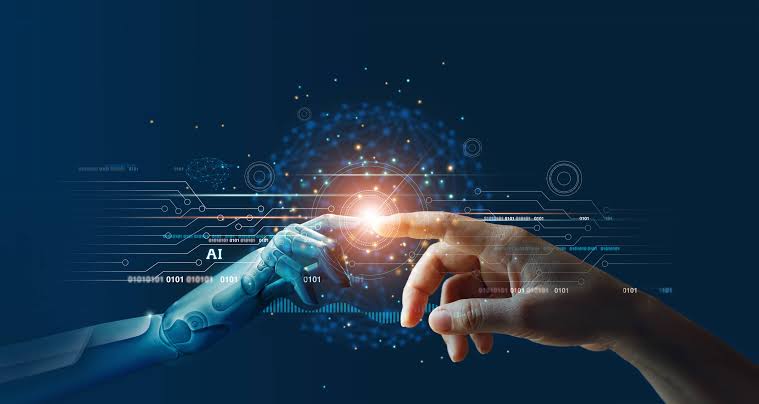
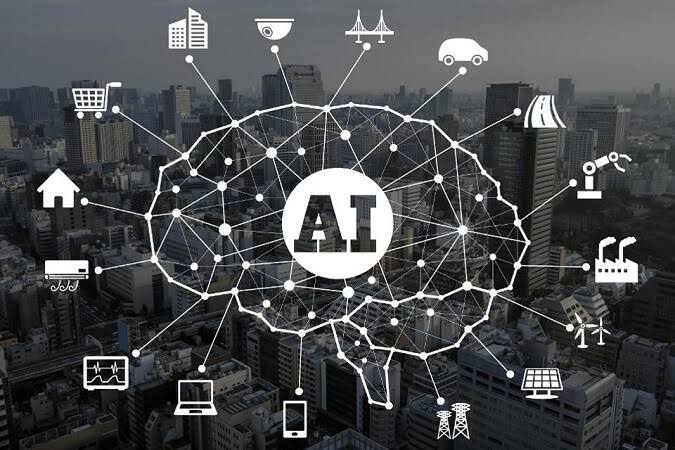
Artificial intelligence (AI) is a wide-ranging department of computer science interested in creating smart machines competent in performing tasks that typically expect human intelligence. AI is an interdisciplinary science with multiple strategies, but improvements in machine learning and deep learning are establishing a paradigm shift virtually in every sector of the tech industry.
AI’s Role now in today’s world
There are several companies that sell fake people. Photos, you can purchase a “unique, worry-free” fake person for $2.99, or 1,000 people for $1,000. If you just need a couple of fake people — for personalities in a video game, or to make your company website look more diverse — you can get their photos from a free website like ThisPersonDoesNotExist.com.
Make them old or young or the nationality of your choice. If you want your fake person animated, a company named Rosebud. AI can do that and can even compel them to talk. Intriguing much?
 Also readHow to Do Reverse Image Search on Smartphone and Desktop
These bogus people are beginning to show up around the internet, used as veils by real people with scandalous intent: spies who gets a desirable face to penetrate the intelligence community; right-wing manipulators who bark behind fake profiles, photo and all; internet harassers who troll their targets with a cheerful visage.

How AI functions
The A.I. system sees each face as a problematic mathematical problem. Choosing different values — like those that specify the size and shape of eyes — can modify the whole image. For other qualities, the system utilizes a distinct approach. Rather than shifting values that specify the specific parts of the image, the system initially generates two images to organize starting and endpoints for all of the values and then creates pictures in between.
The creation of these species of fake images only came to be true in contemporary years thanks to a new type of artificial intelligence named, the generative adversarial network.
In this, you feed a computer program a ton of photos of real people. It reviews them and attempts to come up with its pictures of people, while another fraction of the system tries to observe which of those pictures are fake. Companies are using GAN software to make this transition from young to old, sad to happy possible.
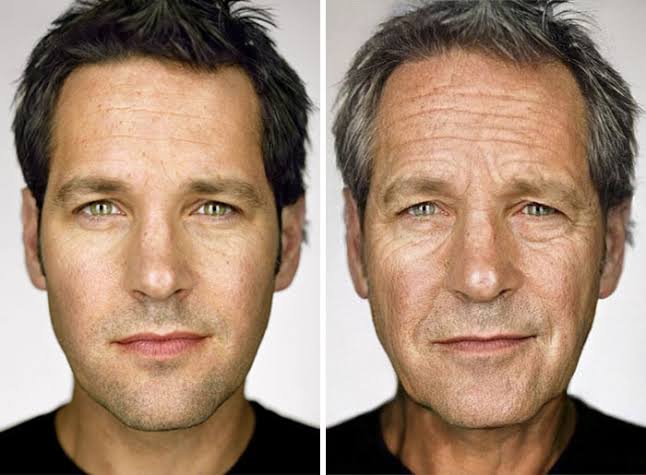
It’s easy to comprehend that very soon, the coming future will be fooled by not a single picture of fake people but whole exhibitions of them which is going to be impossible to tell who is real online and who is a prop of a computer’s imagination.
Camille François, a disinformation researcher whose job is to analyze manipulation of social networks said,” When the tech first appeared in 2014, it was bad — it looked like the Sims.”
Improvements in facial fakery have been made probable in part because technology has evolved so much better at identifying key facial features.
Watch here: Do these people look real to you? because they ain’t.
Shortcomings of AI in today’s world
Facial recognition policies are used by law enforcement to identify and arrest criminal suspects. A company known as ‘Clearview AI’ scraped the network of billions of public photos — casually shared online by everyday users — to create an app capable of comprehending a stranger from just one photo. The technology guarantees superpowers that were not before in the world.
But facial-recognition algorithms, like other A.I. systems, are not exact. Thanks to underlying prejudice in the data used to train them. In 2015, an early image-detection system developed by Google labeled two Black people as “gorillas,” most likely because the system had been fed many additional photos of gorillas than of people with dark skin.
Also, cameras — the eyes of facial-recognition systems — are not as good at apprehending people with dark skin; that unfortunate basic dates to the initial days of film development, when photos were calibrated to best show the faces of light-skinned people.
Artificial intelligence can make our lives easier, but eventually, it is as defective as we are because we are behind all of it. Humans prefer how A.I. systems are made and what data they are disclosed to. We appoint the voices that teach virtual assistants to hear, directing these systems not to comprehend people with accents. We structure a computer program to foresee a person’s criminal behavior by educating it data about past rulings made by human judges — and in the process, we feed our personal biases.
What are the common mistakes that the AI system repeats?
When conjuring fake faces we can support repeated mistakes, such as:
- Like Earrings, for example, might look identical but often may not exactly match. As a result, each eye may be the exact distance from the center.
- Most of us don’t have flawlessly symmetrical features, and the system is good at recreating them. But as a result, it can produce deep indents in one ear that may not exist in the other.
- Then there are unusual artifacts that can appear out of blue. Most often they’re only in one part of the image, but if you look closely enough, it’s hard to ignore it.
Trust issue towards technology
We tend to overlook the shortcomings in these systems, quickly show confidence that computers are hyper-rational, objective, always right. Studies have indicated that in circumstances where humans and computers must collaborate to make a decision — to identify fingerprints or human faces —people have made wrong identification when a computer pushed them to do so.
Is this modesty or overconfidence? Do we place too little importance in human intelligence — or do we overvalue it, speculating we are so reasonable that we can create things smarter still?
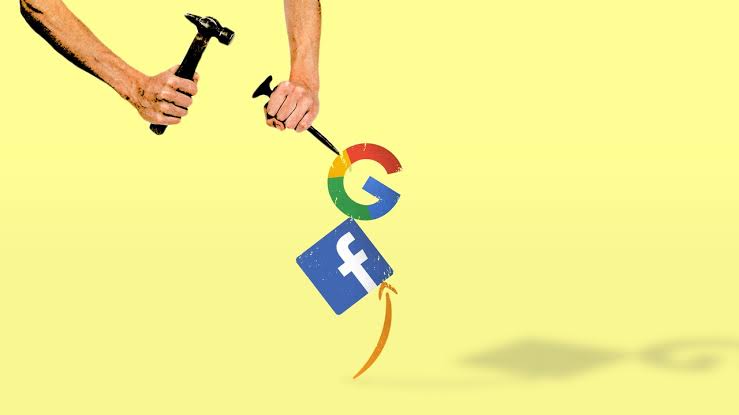
The algorithms of Google sort the world’s knowledge for us. Facebook’s newsfeed processes the updates from our social circles and decides which are significant enough to show us. With self-driving characteristics in cars, we are putting our insurance in the hands of software. We place a lot of confidence in these systems, but they can be as faulty as us.
The difficult thing about technology is that both are amazingly influential and abruptly defective at the same time, it is extraordinary and worrying at the same time. So, are we confident enough to indulge our trust in a so-called machine, over human intelligence?
It’s ironic that we humans only construct such a system, then trust them blindly over our intelligence.
Also Checkout: 10 Best Google Classroom Alternatives For You To Checkout