

• About   |
  • Advertise |
  • Contact Us
No Result
View All Result
The Second Angle (TSA Magazine)
Advertise
  • Infotainment
    • Sports
    • People
    • Inspiring
  • Entertainment
    • Lifestyle
    • Home & Decoration
  • Buzz
  • Education
  • Travel
  • Finance
  • Healthcare
  • Technology
The Second Angle
No Result
View All Result
  • Infotainment
  • Entertainment
  • Buzz
  • Education
  • Travel
  • Finance
  • Healthcare
  • Technology
Advertisement
ADVERTISEMENT
Home Finance

Understanding NAV fluctuations in fixed-income funds

by Alex Malkin
April 29, 2026
in Finance, Offbeat
Reading Time: 3 mins read
Understanding NAV fluctuations in fixed-income funds
Share on FacebookShare on WhatsApp
Advertisement Advertisement Advertisement
ADVERTISEMENT
4 min readGAdd The Second Angle as a preferred source on Google
Key takeaways
Interest rates affect bond prices directly: The most important factor affecting NAV movement in fixed-income mutual funds is the change in interest rates.Duration decides how sharp the movement will be: Two debt funds can hold good-quality bonds and still show very different NAV behaviour.Credit quality can move NAV even without default: NAV can also fluctuate because of credit risk.Liquidity also shapes daily valuation: Liquidity risk receives less attention, but it matters.

Fixed-income funds, commonly known as debt mutual funds, invest in securities such as government bonds, corporate bonds, treasury bills, and money market instruments. Many investors associate volatility only with equity markets, yet fixed-income funds also show daily price movements. These changes appear in the Net Asset Value (NAV) of the fund. 

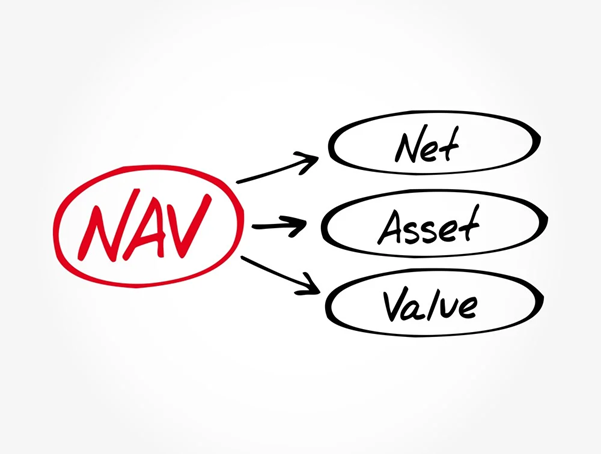
The NAV represents the current market value of one unit of a mutual fund scheme. It is calculated by subtracting liabilities from total assets and dividing the result by the number of outstanding units. The value reflects the market price of the securities in the portfolio at the end of each trading day. Let’s take a look at how different factors influence NAV fluctuations in fixed income funds.

Table of Contents
    • Interest rates affect bond prices directly
    • Duration decides how sharp the movement will be
    • Credit quality can move NAV even without default
    • Liquidity also shapes daily valuation
  • Expenses and dividends
    • Conclusion 

Interest rates affect bond prices directly

The most important factor affecting NAV movement in fixed-income mutual funds is the change in interest rates. Bond prices and interest rates share an inverse relationship. When interest rates rise, the price of existing bonds declines. When interest rates fall, the value of those bonds increases.
Fixed Rate vs Floating Rate Debt Funds ExplainedAlso readFixed Rate vs Floating Rate Debt Funds Explained

For example, consider a bond issued earlier with a 6% coupon. If new bonds enter the market with an 8% yield, investors prefer the newer bonds. The older bond, therefore, trades at a lower price in the market. If a mutual fund holds such bonds, the decline in bond prices reduces the total value of the portfolio and pushes the NAV downward.

Duration decides how sharp the movement will be

Two debt funds can hold good-quality bonds and still show very different NAV behaviour. The main reason is duration. Duration measures how sensitive a bond fund is to interest rate shifts. It indicates the approximate percentage change in the NAV for every 1% change in interest rates. For instance, if a gilt fund has a duration of 7 years, a 1% rise in market interest rates could lead to a 7% drop in its NAV. The longer the time, the greater the “opportunity cost” of missing out on higher rates

Short-term instruments like liquid funds or overnight funds maintain a very low duration. These categories experience minimal NAV volatility because their underlying assets mature quickly, allowing the fund manager to reinvest at newer rates rapidly. 

Credit quality can move NAV even without default

NAV can also fluctuate because of credit risk. If the market starts doubting an issuer’s ability to repay, the price of that bond may fall. A default causes a stronger hit, but even a downgrade or a fear of a downgrade can reduce valuation. This is why funds that hold lower-rated corporate debt often carry more risk than funds that hold government securities or high-rated papers. 

Government securities do not carry default risk in the same way, though they still face interest rate risk. Credit quality, therefore, plays a direct role in daily NAV movement.

Liquidity also shapes daily valuation

Liquidity risk receives less attention, but it matters. If a bond does not trade easily in the market, the fund may find it harder to value or sell that security at a favourable price during stressed conditions. In such periods, valuation pressure may pull the NAV down. 

Debt funds

 that hold shorter-maturity money market instruments usually face lower liquidity stress than portfolios that hold less-traded, longer-tenure securities. This is one reason short-duration categories often look steadier on the surface.

Expenses and dividends

Operating a fund costs money. The Asset Management Company (AMC) deducts an annual expense ratio from the fund. While this deduction is small, it creates a slight drag on NAV growth. 

Also, if you choose the Income Distribution cum Capital Withdrawal (IDCW) option, the AMC pays out a portion of the gains. The NAV decreases by the dividend amount at the time of payout since the funds are transferred from the scheme to your bank account.

Conclusion 

NAV fluctuations are a normal part of how fixed-income funds work. Daily NAV changes reflect shifts in bond prices, interest rate expectations, accrued income, portfolio duration, credit quality, and fund costs. A temporary fall in NAV does not automatically mean the fund is performing poorly. In many cases, it simply shows that the market has revalued the securities in the portfolio.

What matters more is how the fund fits your investment horizon and risk appetite. If you check the fund’s duration profile, credit quality, and return pattern carefully, you can judge it more accurately and choose a debt fund that supports your financial goals.


Enjoyed this story?Share it with your friends
WhatsAppLinkedInXFacebookEmail
See more TSA Mag stories on GoogleAdd us as a preferred source and our stories will show up more often in your Top Stories.
GAdd The Second Angle as a preferred source on Google
ShareSend
Tweet
Previous Post

Fixed Rate vs Floating Rate Debt Funds Explained

Next Post

What fixed-income investors should watch this quarter

Related Posts

Office buildings in Electronic City, Bengaluru, a major IT employment hub
Editors' Pick

How to Read Your Salary Slip in India: CTC, PF and Tax Explained

Learn how to read a salary slip in India: CTC vs take-home pay, basic, HRA, PF, professional tax, TDS and...

Read moreDetails
Home Renovations Made Easy: Creative Ways to Fund Your Dream Upgrades
Home & Decoration

Adam Sandler Net Worth 2026: Netflix Deal, Salary and Career

Adam Sandler net worth explained: his estimated fortune, Forbes earnings, Netflix deals, Happy Gilmore 2 success and how Happy Madison...

Read moreDetails
Inspirational Quotes for College Essays
Offbeat

15 Inspirational Quotes for College Essays and How to Use Them

15 inspirational quotes for college essays from Mandela, Kalam, Ambedkar and others, with checked attributions and tips on using a...

Read moreDetails
Gambling in Pop Culture: Why Hollywood Loves Casino Films
iGaming

Gambling in Pop Culture: Why Hollywood Loves Casino Films

How gambling in pop culture evolved, from Casablanca and Ocean's 11 to Casino, Rounders and Uncut Gems, and what India's...

Read moreDetails
Hidden richest people and royal families in the world 2026
Finance

Hidden Richest People and Royal Families in the World 2026

The hidden richest people in the world in 2026: royal families and private dynasties ranked with Bloomberg estimates, plus which...

Read moreDetails
Richest woman in the world 2026, top 10 list led by Alice Walton
Finance

Richest Woman in the World 2026: Forbes Top 10 List

Who is the richest woman in the world in 2026? Alice Walton leads at $119.1 billion per Forbes. See the...

Read moreDetails
Load More
Next Post
What Fixed Income Investors Should Watch This Quarter

What fixed-income investors should watch this quarter

About

The Second Angle

The Second Angle (TSA Mag) is an infotainment and lifestyle magazine covering entertainment, travel, technology, health, education and finance.

Important Links

  • About The Second Angle
  • Advertise With Us
  • Editorial Policy
  • Privacy Policy
  • Terms and Conditions
  • Contact Us
  • Careers
  • Newsletter

Explore

  • Infotainment
  • Entertainment
  • Buzz
  • Education
  • Travel
  • Finance
  • Healthcare
  • Technology
Advertise with us

© 2017-2026. The Second Angle. All Rights Reserved. Developed and Managed by Squarebase.io

Welcome Back!

Login to your account below

Forgotten Password?

Retrieve your password

Please enter your username or email address to reset your password.

Log In
No Result
View All Result
  • Infotainment
    • Sports
    • People
    • Inspiring
  • Entertainment
    • Lifestyle
    • Home & Decoration
  • Buzz
  • Education
  • Travel
  • Finance
  • Healthcare
  • Technology

© 2017-2026. The Second Angle. All Rights Reserved. Developed and Managed by Squarebase.io

We use cookies to keep TSA fast and relevant. Read our Privacy Policy.