


Debt mutual funds, also known as fixed income funds, play an important role in many investment portfolios because they focus on income generation and capital preservation. These funds invest in fixed-income securities such as government bonds, treasury bills, corporate debentures, and money market instruments. Their performance largely depends on interest rate movements and the type of securities held in the portfolio.
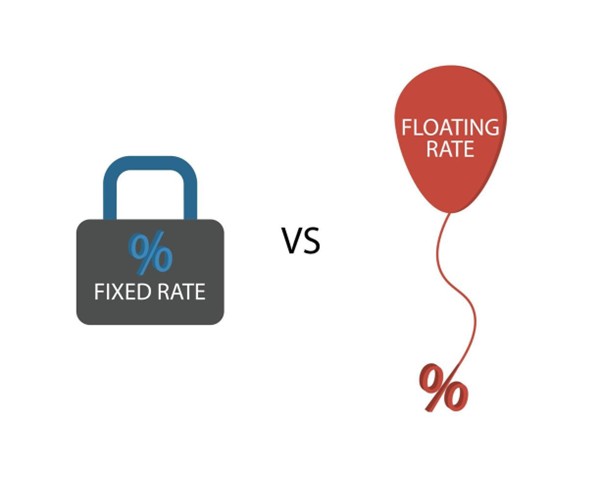
Debt securities generally follow two types of interest structures: fixed rate and floating rate. Most debt mutual funds invest primarily in fixed rate bonds, while some specialised schemes focus on floating-rate instruments. Understanding how these two structures work can help investors evaluate how different debt funds may perform under changing interest rate conditions.
What are fixed rate debt funds?
Most fixed income funds invest in bonds and debt instruments that pay a fixed coupon rate. This means the interest payment on the bond remains constant throughout its tenure.
 Also readWhy Choosing The Right E-commerce Payment Gateway Is Crucial During The Festive Rush
For example, a bond held in the fund’s portfolio may carry a 7% annual coupon that remains unchanged during the life of the bond. However, the overall return generated by the mutual fund is not fixed, because bond prices change depending on market conditions and interest rate movements.
These funds carry interest rate risk. When market interest rates rise, newly issued bonds offer higher yields. As a result, the prices of existing bonds with lower fixed coupons may fall because they become less attractive to investors.
This inverse relationship between bond prices and interest rates can lead to a decline in the fund’s Net Asset Value (NAV) during a rising interest rate environment. To manage volatility during changing rate cycles, investors sometimes combine such funds with shorter maturity investments like ultra-short duration funds or liquid funds.
What are floating rate debt funds?
Floating rate funds, often called ‘floater funds’, operate on a different principle. According to SEBI regulations, these funds must invest at least 65% of their assets in floating rate instruments. These rates change periodically according to a benchmark rate, such as the RBI’s repo rate. Periodic resets can reduce interest rate risk to a large extent.
Key differences between fixed rate and floating rate debt funds
Here is a closer look at how these two debt funds differ from each other:
-
Interest rate structure
Debt funds that hold fixed rate bonds invest in securities that offer a constant coupon rate throughout their tenure. The interest payment from the bond does not change even if market interest rates move. Floating rate funds invest primarily in securities whose coupon rates reset periodically based on benchmark interest rates.
-
Return predictability
Fixed rate bonds generate relatively stable coupon payments, which can make income flows more predictable at the instrument level. However, the overall returns of a debt mutual fund still fluctuate due to changes in bond prices and portfolio composition. Floating rate funds generate variable income because the coupon adjusts periodically in response to changes in benchmark rates.
-
Impact of interest rate movements
When market interest rates rise, the prices of existing fixed rate bonds often decline. This can reduce the NAV of fixed rate debt funds. Floating rate funds respond differently. Their coupon rates reset in line with benchmark rates. This adjustment helps them handle rising interest rate environments better.
-
Risk profile
Debt funds investing in fixed rate bonds carry duration risk, which means their prices can be sensitive to changes in interest rates. Funds with longer maturities are usually more sensitive to such changes.
Floating rate funds generally have lower duration risk because the frequent coupon resets help reduce the impact of interest rate fluctuations. However, both types of debt funds still carry credit risk, which depends on the financial strength and repayment capacity of the issuer.
-
Suitable market conditions
Investors usually prefer fixed rate debt funds when interest rates appear likely to fall. Bond prices may rise in such periods and support better returns. Floating rate funds often become attractive when interest rates may increase. Their variable coupon structure helps align returns with changing market trends.
Conclusion
Both fixed rate and floating rate structures play important roles in the debt market. While most debt mutual funds invest in fixed rate bonds, floating rate funds provide an option that can help reduce interest rate sensitivity in certain market environments.
Investors should assess factors such as interest rate expectations, investment horizon, and risk tolerance before selecting a debt fund. A well-diversified debt allocation may include funds with different interest rate exposures to help manage risk across changing interest rate cycles.