



The most charming villages in Spain for a quaint getaway include Ronda, Albarracín, Cadaqués, Besalú, Frigiliana, Cudillero, Aínsa, Mijas Pueblo, Valldemossa and Peñíscola. They range from cliff-top towns in Andalusia and medieval Aragon villages to fishing ports in Asturias and a mountain village on Mallorca, and most are easy to add to a city trip.
Spain’s big cities get most of the attention, but its small towns are where you see local life at a slower pace. Each place below has a clear reason to visit, whether it is a famous bridge, a castle by the sea or a link to an artist. We have added the region, the nearest base and one thing not to miss.
Quick facts: 10 charming villages in Spain
| Village | Region | Known for |
|---|---|---|
| Ronda | Andalusia (Málaga) | Puente Nuevo over a deep gorge |
| Albarracín | Aragon (Teruel) | Medieval walls and red sandstone cliffs |
| Cadaqués | Catalonia (Girona) | Costa Brava bay and Salvador Dalí |
| Besalú | Catalonia (Girona) | 12th-century bridge and Jewish bath |
| Frigiliana | Andalusia (Málaga) | White houses and Moorish quarter |
| Cudillero | Asturias | Colourful fishing port |
| Aínsa | Aragon (Huesca) | Medieval old town near the Pyrenees |
| Mijas Pueblo | Andalusia (Málaga) | Whitewashed streets and sea views |
| Valldemossa | Balearic Islands (Mallorca) | Charterhouse where Chopin stayed |
| Peñíscola | Valencian Community (Castellón) | Templar castle on a peninsula |
10 charming villages in Spain for a quaint getaway
1. Ronda, Andalusia
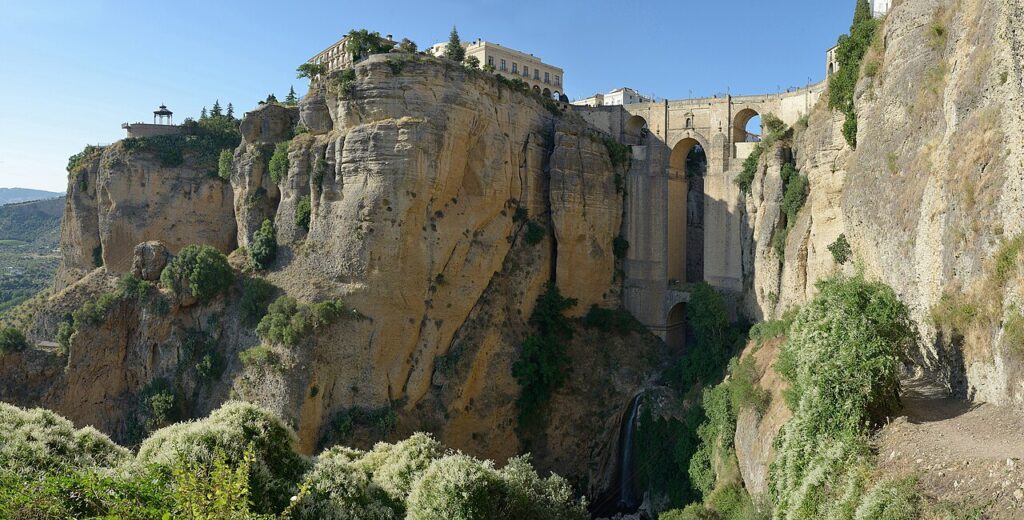
Ronda sits on a plateau split by El Tajo, a gorge more than 100 metres deep. The Puente Nuevo, built between 1751 and 1793, spans it at a height of about 120 metres and is one of the most photographed sights in Spain.
 Also read20 Most Interesting Facts About Orlando
The town also has a historic bullring dating to 1784. Ronda is larger than a village, but its old quarter keeps a small-town feel, and it is reachable by train, including a direct service from Madrid.
2. Albarracín, Aragon
Albarracín, in Teruel province, is a hill town of under a thousand residents, surrounded by red sandstone cliffs and old city walls. It was declared a national monument in 1961.
The town was once the capital of a small Muslim kingdom, the Taifa of Albarracín, before joining the Kingdom of Aragon in 1300. Walk the upper walls early in the morning for the best views.
3. Cadaqués, Costa Brava
Cadaqués is a white seaside town on a bay of the Cap de Creus peninsula, about two and a quarter hours by road from Barcelona. Salvador Dalí spent summers here as a child and later built his home in nearby Port Lligat, now the Salvador Dalí House-Museum.
Picasso, Miró and Duchamp are among the artists who spent time here. The Cap de Creus Natural Park nearby has a lighthouse at the easternmost point of mainland Spain.
4. Besalú, Catalonia
Besalú, in Girona province, is known for its 12th-century Romanesque bridge over the Fluvià river, with a gateway in the middle. The whole old town was declared a historic and artistic site in 1966.
It also has a restored Jewish ritual bath, or mikveh, dating from the 11th or 12th century. Besalú is an easy day trip from Girona.
5. Frigiliana, Andalusia
Frigiliana is a white hill village in the Axarquía area of Málaga province, about 6 km north of the beach town of Nerja. Its Moorish quarter is a maze of steep cobbled lanes and flower-lined houses.
At the end of August, it holds the four-day Festival of the Three Cultures, which marks the town’s Christian, Muslim and Jewish history.
6. Cudillero, Asturias
Cudillero is a fishing town on Spain’s green northern coast, where colourful houses climb the hillside above the harbour. It was once the main fishing port of Asturias, and tourism is now its main business.
Some locals still speak Pixueto, a local dialect. Come for the seafood and the walk up to the viewpoints above the port.
7. Aínsa, Aragon
Aínsa, in Huesca province, lies just south of the Pyrenees. Its walled medieval centre has an 11th-century castle and the 12th-century church of Santa María.
Its medieval main square and mountain backdrop make it a good base for hiking trips in the Pyrenees.
8. Mijas Pueblo, Costa del Sol
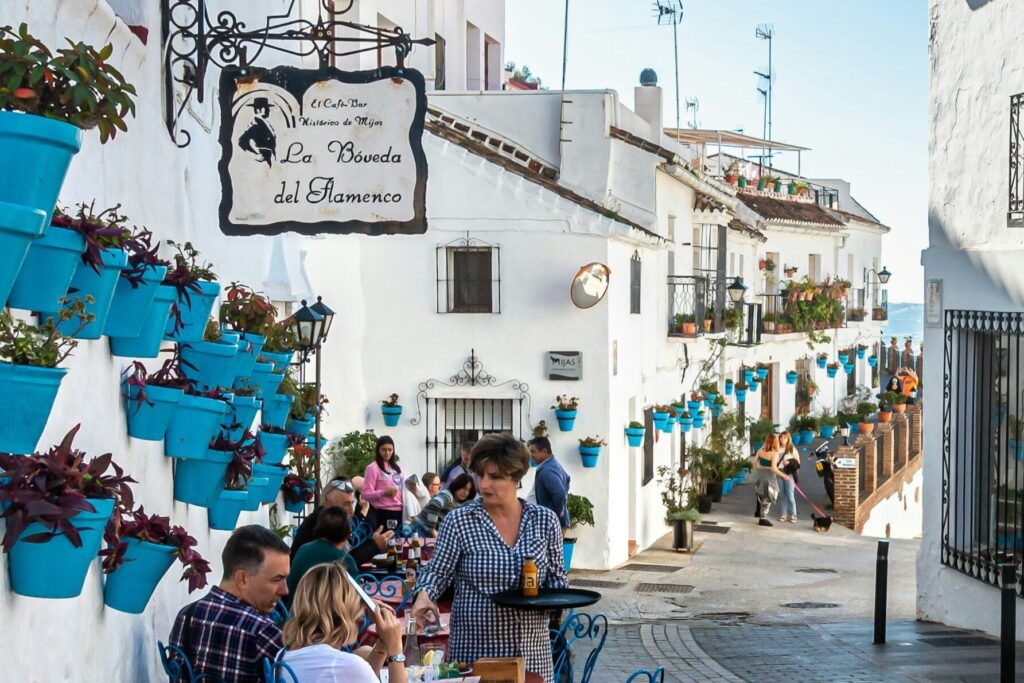
Mijas Pueblo is the old hill village above the busy Costa del Sol resorts. Its narrow whitewashed streets have views down to the Mediterranean.
It is known for its donkey taxis, a long-running attraction. Visit early or late in the day to avoid tour bus crowds.
9. Valldemossa, Mallorca
Valldemossa sits at about 500 metres in the Tramuntana mountains of Mallorca. Its best-known building is the Charterhouse, a former Carthusian monastery.
The composer Frédéric Chopin and writer George Sand spent the winter of 1838 to 1839 here, and Chopin completed his 24 Preludes during the stay. The cell where they lived is now a museum.
10. Peñíscola, Valencian Community
Peñíscola is an old town on a rocky peninsula in Castellón province, ringed by the sea and long sandy beaches. Its castle was built by the Knights Templar between 1294 and 1307.
The castle is named after Pedro de Luna, Antipope Benedict XIII, who lived there. Parts of Anthony Mann’s film El Cid were shot in the town.
Tips for planning your trip
- Best time: spring and early autumn are pleasant and less crowded than peak summer.
- Getting around: a rental car is the easiest way to link villages; Ronda and Besalú are also reachable by public transport.
- Stay overnight: most villages are calmest after day-trippers leave in the evening.
- Visa: Indian travellers should check current Schengen visa rules on the official Spain visa application portal well in advance.
Find more destination guides in our travel section and slow-living ideas in our lifestyle section.
Further reading: 10 charming villages.
Frequently asked questions
Which is the most beautiful village in Spain?
It depends on the trip. Ronda is the most dramatic for its gorge and bridge, Albarracín for medieval streets and Cadaqués for the sea.
What is the best time to visit Spanish villages?
Spring and early autumn offer mild weather and fewer crowds. Southern villages such as Frigiliana and Mijas can be very hot in July and August.
Can I visit these villages without a car?
Some, yes. Ronda has train links, and Besalú is a day trip from Girona. Remote places such as Albarracín and Aínsa are much easier with a car.
Do I need to speak Spanish?
Basic Spanish phrases help, especially in smaller places, though many people in tourist areas speak some English.
Sources: Spain official tourism site, Wikipedia: Ronda, Wikipedia: Valldemossa, Wikipedia: Cadaqués.