

GI-tagged sarees are handloom sarees registered under India’s Geographical Indications law, which links a product to the region where it is traditionally made. Kanchipuram silk, Banarasi brocade, Paithani, Chanderi, Patan Patola, Pochampally Ikat and Muga silk are among the best known. A GI tag protects the name, but buyers still need to check for genuine handloom work.
This guide explains what a GI tag means, how eight classic sarees differ, and the simple checks that help you avoid paying handloom prices for a powerloom copy.
What a GI tag means for sarees
A Geographical Indication is a sign used on products that have a specific origin and qualities linked to that place. In India, GIs are registered under the Geographical Indications of Goods (Registration and Protection) Act, 1999, which came into force in 2003. The GI Registry is in Chennai, and Darjeeling Tea was the first product registered, in 2004-05.
 Also readIndian Classical Dance Forms: A Beginner’s Guide to All Eight
For textiles, a GI registration means only producers from the defined area, using the described method, can legally sell under that name. Weaver groups and state bodies usually apply for the tag. Registered authorised users can then use the GI name and logo on their products.
A GI tag does not, on its own, certify that a particular saree in a shop is genuine. That depends on the seller and on labels such as the Silk Mark and Handloom Mark, explained later in this guide.
8 GI-tagged sarees and how to recognise them
1. Kanchipuram silk, Tamil Nadu
Woven in and around Kanchipuram from mulberry silk and zari, these sarees are known for heavy fabric, wide contrast borders and temple, check and floral motifs. In many traditional pieces, the body and border are woven separately and then interlocked, so the border stays attached even if the body tears. The joint between the body and the pallu is often marked by a zigzag line.
2. Banarasi brocade, Uttar Pradesh
Banaras brocades and sarees received GI registration in 2009. They are known for gold and silver zari brocade with floral and creeper patterns. The main varieties are pure silk (katan), organza (kora), georgette and shattir. Depending on the design, a single saree can take anywhere from 15 days to six months on the loom.
3. Paithani, Maharashtra
Paithani takes its name from Paithan in Chhatrapati Sambhajinagar district. Its signature is a peacock motif on the pallu, along with lotus, parrot and vine designs, and a selvedge with an oblique square pattern. Today, Yeola in Nashik district is the largest production centre. Paithani was registered as a GI in 2010-11.
4. Chanderi, Madhya Pradesh
Chanderi sarees come from the town of Chanderi, on the edge of the Malwa and Bundelkhand regions. They are woven in pure silk, cotton or a silk-cotton mix and are known for a light, sheer feel. Traditional coin-like motifs, florals and peacocks are common. Chanderi was among the early GI registrations in 2004-05.
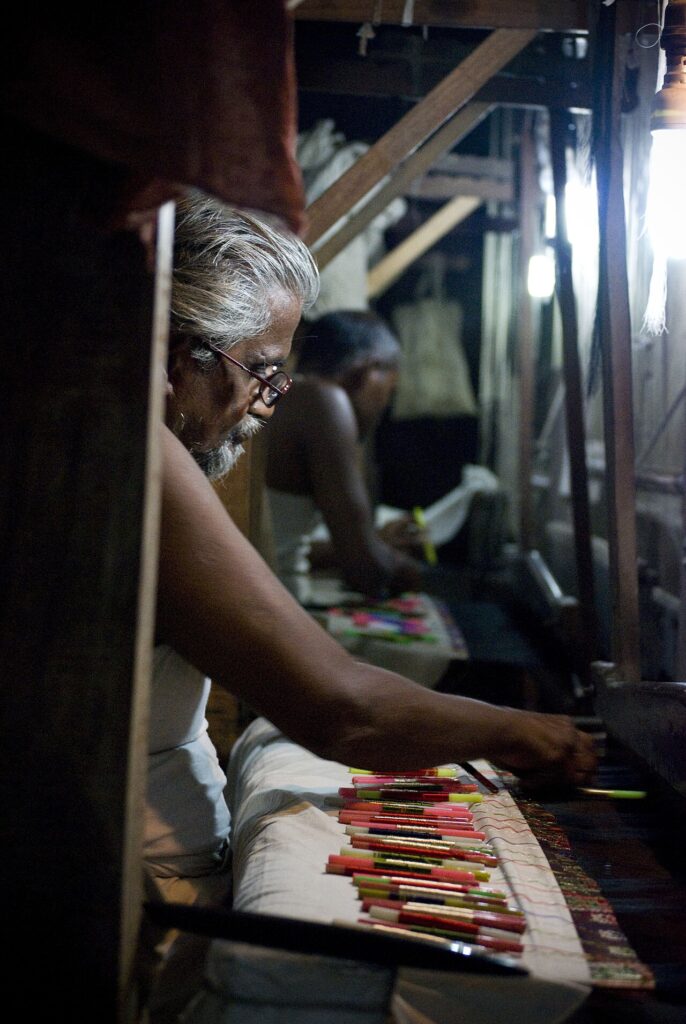
5. Patan Patola, Gujarat
Patola is a double ikat silk textile from Gujarat. In double ikat, both the warp and the weft threads are tie-dyed to the final pattern before weaving, and they must line up exactly on the loom. This is slow, skilled work, which is why genuine Patan Patola is rare and expensive. It was registered as a GI in 2013-14.
6. Pochampally Ikat, Telangana
Made in Bhoodan Pochampally in Yadadri Bhuvanagiri district, these sarees use ikat dyeing to create sharp geometric patterns. Pochampally Ikat is GI-registered, and the village has also been recognised by the United Nations as one of the world’s best tourism villages. The designs are bold and graphic, which makes them easy to spot.
7. Muga silk, Assam
Muga silk comes from the Assam silkmoth, which feeds on som and soalu leaves in the Brahmaputra valley. Its natural golden-yellow shine is the main identifying feature, and the lustre is said to improve with each wash. Muga Silk of Assam was registered as a GI in 2007. It is commonly woven into the traditional mekhela chador.
8. Baluchari, West Bengal
Baluchari sarees, registered as a GI in 2011-12, are known for pallus woven with narrative scenes from epics and daily life. The figures are woven into the fabric rather than printed. Bishnupur in Bankura district is the main centre today.
Quick comparison table
| Saree | State | Fabric | Look for |
|---|---|---|---|
| Kanchipuram | Tamil Nadu | Mulberry silk, zari | Contrast border, heavy weight |
| Banarasi | Uttar Pradesh | Silk, organza, georgette | Zari brocade florals |
| Paithani | Maharashtra | Silk, zari | Peacock pallu |
| Chanderi | Madhya Pradesh | Silk, cotton, silk-cotton | Sheer fabric, coin motifs |
| Patan Patola | Gujarat | Silk | Double ikat, same on both sides |
| Pochampally | Telangana | Silk, cotton | Geometric ikat |
| Muga | Assam | Muga silk | Natural golden shine |
| Baluchari | West Bengal | Silk | Story scenes on pallu |
How to check if a saree is genuine handloom
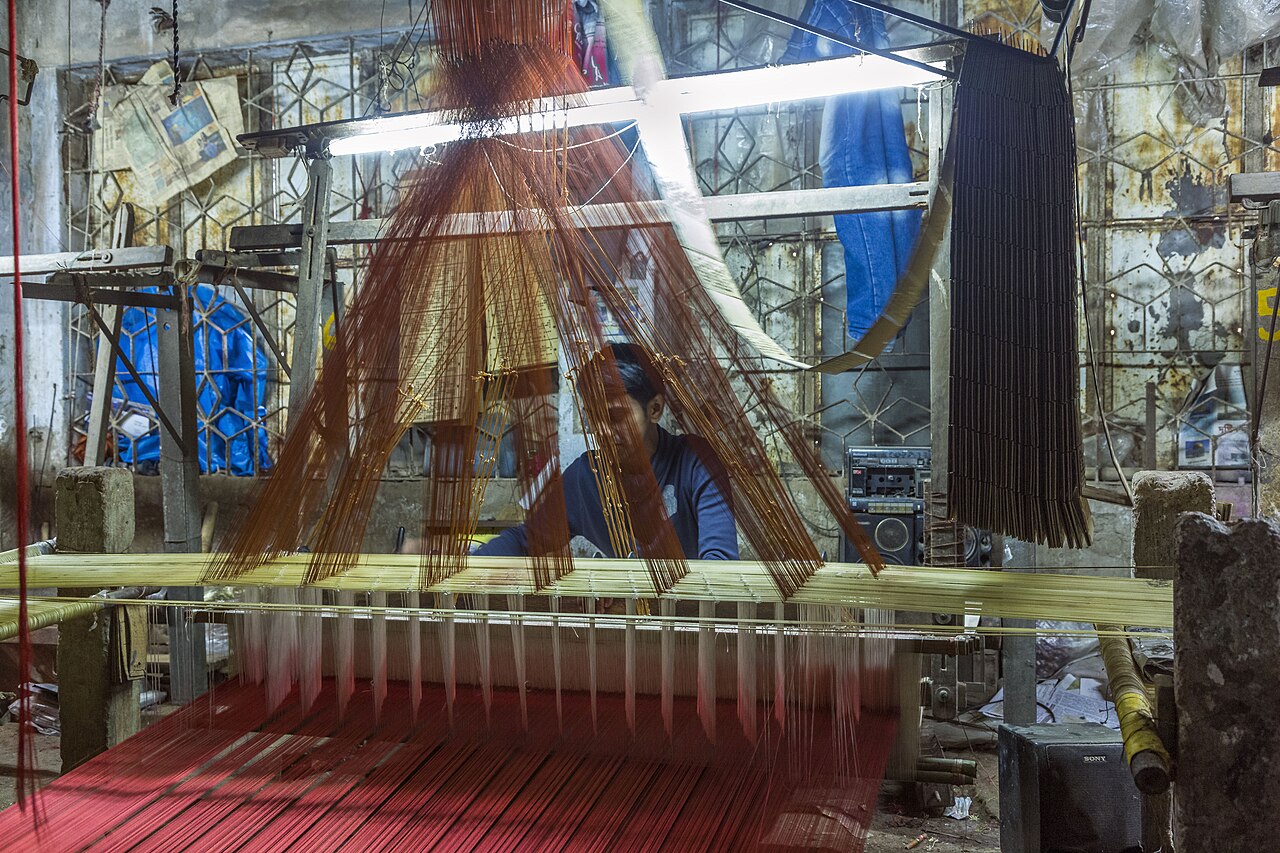
Powerloom and printed copies of famous sarees are widely sold. These checks will not make you an expert, but they help you ask the right questions.
- Look for the Silk Mark: the Silk Mark label is run by the Silk Mark Organisation of India under the Central Silk Board. It certifies that the product is natural silk, not that it is handwoven.
- Look for the Handloom Mark or India Handloom label: these schemes under the Ministry of Textiles help identify handwoven products from registered weavers.
- Turn the saree over: handloom work often shows small irregularities and loose thread floats on the reverse. Very uniform, machine-perfect patterns can point to a powerloom.
- Check ikat on both sides: in a true double ikat like Patola, the pattern looks the same on both faces.
- Ask for the source: genuine sellers can usually name the weaving cluster, cooperative or weaver. State handloom emporiums and weaver cooperatives are safer places to start.
- Be wary of very low prices: pure silk handloom sarees with real zari take days or weeks to weave, so an unusually cheap price is a warning sign.
Caring for a handloom silk saree
- Dry clean heavy zari sarees for the first few washes.
- Store wrapped in soft cotton or muslin, not plastic.
- Refold every few months so the zari does not crack along the folds.
- Keep away from direct sunlight and perfume sprays.
For more on fashion, craft and style, visit our lifestyle section. If you are planning a trip around weaving towns, our travel section has more ideas.
Frequently asked questions
What does a GI tag on a saree mean?
It means the saree’s name is legally linked to a region and its traditional method. Only registered producers from that area can use the name commercially.
Does the Silk Mark prove a saree is handloom?
No. The Silk Mark confirms the fabric is natural silk. For handwoven work, look for the Handloom Mark or India Handloom label and buy from trusted sources.
Which is the costliest GI-tagged saree?
Prices vary widely by design and zari. Patan Patola is generally among the most expensive because double ikat is slow and highly skilled work.
How can I tell Kanchipuram silk from a copy?
Check for the Silk Mark, heavy weight, an interlocked border and a clear source. Buying from a weaver cooperative or state emporium lowers the risk.
Sources: Intellectual Property India: Geographical Indications, Wikipedia: List of GIs in India, Silk Mark Organisation of India, Wikipedia: Banarasi sari.