

Gogoi says little about the Ayodhya and Rafale decisions in his book, other than to shelter behind the fact that the other justices on the bench concurred. While it is unusual for a judge to write a defence of a decision he or she has rendered, Gogoi has remained mum on the factual flaws in the Rafale decision.
While this is not the place to discuss the horrendously erroneous ruling – which ultimately permitted those who demolished the Babri Masjid in 1992 to reap the benefits of their crime – Gogoi has provided no convincing explanation for why the title suit was so urgent that it had to be expedited even before the criminal trial in the matter was completed, and when other constitutional issues with critical implications for the future of electoral democracy (the electoral bonds issue) or law and order and federalism (the Article 370 issue) were allowed to languish for lack of attention.
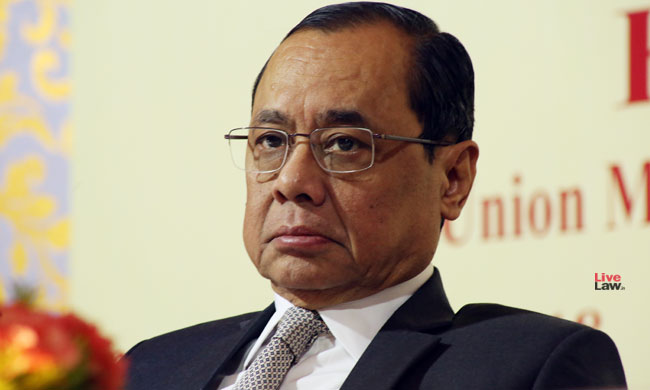
Three faults stained Gogoi’s tenure as Chief Justice of India.
 Also readThere is no achievement in becoming a smart, mega Indian city and not conforming to people’s needs.
The first was the way he utilized his position as roster master to sidetrack critical cases, expedite others, and assign politically sensitive cases to handpicked judges. Second, the extremely problematic judgements he issued as the chairman of several benches – from large ones like Ayodhya and Rafale to little ones like Abhijit Iyer-freedom Mitra’s of expression appeal, for which he was arrested by the Odisha police for a joke.
This includes his administration of the National Register of Citizens, as well as his stance on refugee rights and India’s customary international law duties. The third issue was, of course, how he handled the sexual harassment complaint levelled against him by a former court employee.
After retiring, Gogoi added another blemish to his record: he accepted the government’s gift of a nominated Rajya Sabha seat within weeks of leaving office.
The only other previous CJI to take such favour was Ranganath Mishra, who did so six years after leaving office. Mishra was awarded for whitewashing the 1984 Sikh slaughter in an official investigation. Gogoi prudently avoids mentioning this shady precedent in his work. Perhaps predictably, his career as an MP has been rather unremarkable. His attendance has also been low. His claim that he only goes to parliament when he “feels like it” has earned him a privilege notice.
Gogoi’s tone-deafness has been exacerbated by the publication of a photo in the book showing the Ayodhya bench having wine and supper in a hotel with the tagline, ‘Celebrating the momentous judgment.’ The remarks are his alone – not those of his fellow judges – but the fact that the CJI can ‘enjoy’ the end of an adversarial case – and go public about it – demonstrates how ill-suited he was to rule the issue in the first place.
Gogoi makes a feeble defence of his failure to prioritize cases relating to the reading down of Jammu and Kashmir’s autonomy and the termination of its statehood, as well as his handling of habeas corpus cases that arose when the government illegally detained the erstwhile state’s entire democratic leadership. The truth, on the other hand, is quite the contrary. And he makes no attempt to explain why the Electoral Bonds case, which is critical to the conduct of free and fair elections in India, was not heard.

The most heinous sections of the book, of course, are reserved for his effort to explain his handling of a sexual harassment claim made by a court clerk.
Gogoi admits that he should not have sought to be a judge in his own case, despite the nearly universal opinion of all those with any grasp of law and decorum. Even that confession is half-hearted and insincere: “My appearance on the Bench, which in hindsight could have been avoided, was a statement of fury stirred on the spur of the moment by an accusation beyond belief and comprehension.”
Gogoi asserts that the lady was terminated after an “ex parte departmental hearing in respect of certain particular offences that were in no way linked with the allegations levelled by her.”
This assertion could have been more credible if he had produced data demonstrating that dismissals for these “particular allegations” were not uncommon before the Supreme Court. He could have also addressed the ‘coincidental’ fact that the woman was then arrested on a bogus criminal charge, and that both her husband and brother-in-law were suspended from their police jobs in what appeared to be an act of vendetta carried out by other dramatis personae, presumably on his behalf.

Gogoi’s tenure as Chief Justice of India accomplished little to advance the cause of justice and the rule of law. Now that he is an MP, he wants the powers that be to fight the “monsters” who still believe in constitutional ideals.
Also Read: There is no achievement in becoming a smart, mega Indian city and not conforming to people’s needs.