
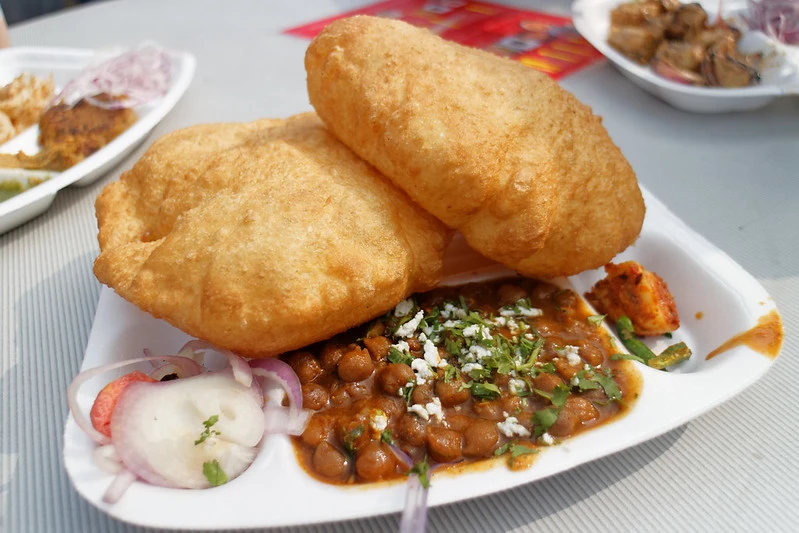

The must-try dishes in Delhi are chole bhature, stuffed paranthas at Paranthe Wali Gali, butter chicken, kebabs and korma from Karim’s near Jama Masjid, aloo tikki and chaat, rajma chawal, nihari and, in winter, daulat ki chaat. Old Delhi around Chandni Chowk and Jama Masjid is the best place to start.
Delhi’s food reflects its history: Mughal kitchens, Punjabi families who arrived after Partition, and generations of street vendors. This guide covers eight dishes, where they come from and where locals usually go for them.
1. Chole bhature
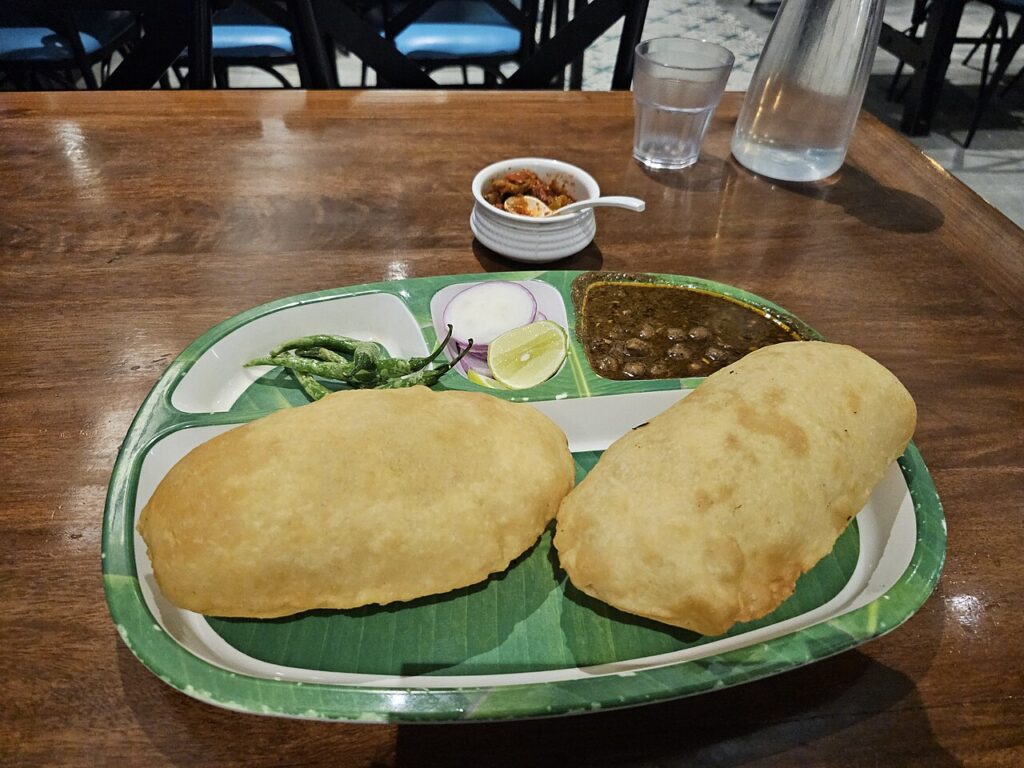
Spicy chickpea curry served with large, puffed, deep-fried bread is Delhi’s favourite heavy breakfast. It usually comes with pickled onions, green chillies and sometimes a glass of lassi.
 Also read12 Most Luxurious Wedding Venues in India for a Royal Wedding
It is sold everywhere, from small stalls to family restaurants. Areas such as Kamla Nagar, Paharganj and Rajinder Nagar have well-known shops. Eat it in the morning or at lunch, when the bhature are made fresh.
2. Paranthas at Paranthe Wali Gali
Paranthe Wali Gali is a narrow lane in Chandni Chowk, Old Delhi. Paratha shops began opening here from the 1870s, and three of the original shops still operate, the oldest dating to 1875.
The paranthas are fried and stuffed with fillings such as potato, peas, cauliflower, paneer, cashew, almond, rabri and khoya. They are served with tamarind and mint chutneys, pickle and vegetable curries. The food here is vegetarian and contains no onion or garlic, so do not expect keema or meat fillings.
3. Butter chicken
Butter chicken, tandoori chicken in a rich tomato, butter and cream gravy, is closely linked with Moti Mahal in Daryaganj. Kundan Lal Gujral and Kundan Lal Jaggi, who came to Delhi from Peshawar after Partition, popularised it there in the 1950s.
Who invented it is now a court matter. In 2024, the Gujral family’s Moti Mahal sued the Jaggi family, who run the Daryaganj restaurant chain, over the claim. Both restaurants serve the dish, and it is also on the menu at most North Indian restaurants in the city.
4. Kebabs and korma at Karim’s
Karim’s in Gali Kababian, near Jama Masjid, was established in 1913 by Haji Karimuddin, whose family had cooked for the Mughal court. It started by serving simple meat curries with roti and grew into one of Delhi’s best-known Mughlai restaurants.
Order seekh kebabs, mutton korma or nihari with roomali roti or khamiri roti. The Jama Masjid outlet is the original, and the brand now has many branches in Delhi NCR and beyond.
5. Aloo tikki and chaat
Aloo tikki is a spiced potato patty fried on a large flat pan until crisp, then topped with curd, green chutney and sweet tamarind chutney. It sits within a large family of Delhi chaat that also includes papdi chaat, dahi bhalla and golgappe.
Chandni Chowk, Bengali Market and markets in South Delhi such as Lajpat Nagar are popular chaat stops. Choose busy stalls where food is made fresh and water is filtered.
6. Rajma chawal
Kidney beans slow-cooked in an onion and tomato gravy, served over plain rice, is the comfort meal of many Delhi homes, especially Punjabi ones. It is often eaten with pickle, onion and papad.
Office areas and college neighbourhoods have small eateries that serve it at lunch. It is filling, simple and one of the most affordable full meals in the city.
7. Nihari
Nihari is a slow-cooked meat stew, usually mutton or buffalo, cooked overnight with spices including long pepper. The name comes from the Arabic word “nahar”, meaning morning, as it was first eaten as a breakfast dish.
In Old Delhi, nihari is traditionally served early in the morning with khamiri roti. Some shops add a portion of the previous day’s stew to the new batch for extra flavour. Go early, as popular places run out quickly.
8. Daulat ki chaat
Daulat ki chaat is a light, airy sweet made by whipping milk and cream until it turns into foam, then topping it with sugar, saffron and dry fruits. It melts the moment it touches the tongue.
It is a winter dish, usually sold from carts in the lanes of Chandni Chowk in the colder months, as it needs cool temperatures to hold its shape.
Where to eat at a glance
| Dish | Type | Where to try | Best time |
|---|---|---|---|
| Chole bhature | Vegetarian | Kamla Nagar, Paharganj | Breakfast, lunch |
| Paranthas | Vegetarian | Paranthe Wali Gali, Chandni Chowk | Any time |
| Butter chicken | Non-vegetarian | Daryaganj | Dinner |
| Kebabs, korma | Non-vegetarian | Karim’s, Jama Masjid | Lunch, dinner |
| Nihari | Non-vegetarian | Old Delhi | Early morning |
| Daulat ki chaat | Sweet | Chandni Chowk | Winter mornings |
Tips for a Delhi food walk
- Take the Delhi Metro to Chandni Chowk or Jama Masjid stations, as parking in Old Delhi is very difficult.
- Start early. Nihari and daulat ki chaat sell out by mid-morning.
- Share plates, so you can try more dishes.
- Drink bottled or filtered water, and carry cash along with UPI, as some small stalls prefer it.
For more city guides, see our travel section and lifestyle stories.
Further reading: India.
Frequently asked questions
What is Delhi most famous for in food?
Delhi is best known for chole bhature, butter chicken, Old Delhi kebabs, stuffed paranthas and street chaat such as aloo tikki and golgappe.
Where did butter chicken originate?
It was popularised at Moti Mahal in Daryaganj, Delhi, in the 1950s. Two families who ran the restaurant now dispute who invented it, and the matter is in court.
Is the food at Paranthe Wali Gali vegetarian?
Yes. The shops serve vegetarian paranthas and side dishes, cooked without onion or garlic.
When can you find daulat ki chaat in Delhi?
Only in winter. Vendors sell it in Old Delhi lanes in the colder months, as the milk foam does not hold in heat.
Sources: Paranthe Wali Gali on Wikipedia, Karim’s on Wikipedia, Butter chicken on Wikipedia.