International Mother Language Day is observed every year on 21 February to promote linguistic and cultural diversity and education in the languages people understand best. UNESCO proclaimed it in 1999, and it has been observed worldwide since 2000. The date honours students and others killed in Dhaka in 1952 while demanding recognition for Bengali.
This updated explainer covers the history of the day, the 2026 theme, the latest UNESCO figures on languages and education, and how the idea of mother-tongue learning connects to India’s education policy.
Quick facts
| Detail | Fact |
|---|---|
| Date | 21 February every year |
| Proclaimed by | UNESCO General Conference, 17 November 1999 |
| First observed | 2000 |
| Recognised by UN General Assembly | 2002 |
| Proposed by | Bangladesh |
| 2026 theme | Youth voices on multilingual education |
History: the 1952 Language Movement
After Partition in 1947, Bengal was divided, and its eastern part became East Pakistan. Although most people in East Pakistan spoke Bengali, the central government in 1948 declared that Urdu alone would be the national language. This led to protests across the region.
 Also readWrong Number Reboot: RVCJ Web Series, Episodes, Where to Watch
On 21 February 1952, students of Dhaka University and other residents defied a ban on gatherings to demand official status for Bengali. Police opened fire, and several protesters were killed. Abul Barkat, Rafiquddin Ahmed, Abdul Jabbar and Abdus Salam are among those remembered as martyrs of the Language Movement, with others killed in the days that followed.
The movement continued, and Bengali was accepted as one of Pakistan’s state languages in 1956. In Bangladesh, 21 February is a national day of mourning and pride, known as Shaheed Dibosh.
How the day became international
Bangladesh proposed an international day for mother languages, and UNESCO’s General Conference proclaimed it on 17 November 1999. It was first observed in February 2000. In 2002 the UN General Assembly welcomed the proclamation.
In 2007 the General Assembly called on member states to protect all languages and declared 2008 the International Year of Languages, with UNESCO as the lead agency. The UN has also declared 2022 to 2032 the International Decade of Indigenous Languages.
2026 theme: Youth voices on multilingual education
The theme for 2026 is “Youth voices on multilingual education”. It focuses on the experiences of young people who learn in a language that is not their own, and on how they can help shape fairer education systems.
According to the UN, about 40% of learners worldwide do not receive education in a language they understand best. Indigenous, migrant and minority youth are the most affected. Recent themes include multilingualism for inclusion in education (2021) and the silver jubilee of the day in 2025.
Why mother languages matter
UNESCO estimates there are 8,324 spoken or signed languages, of which about 7,000 are still in use. Only a few hundred have a real place in schools and public life, and fewer than 100 are used widely online. The UN says a language disappears roughly every two weeks.
Research cited by UNESCO shows that children learn to read and understand concepts more easily when early teaching is in their first language. When a language is lost, communities also lose songs, stories and traditional knowledge carried in it.
How it is observed
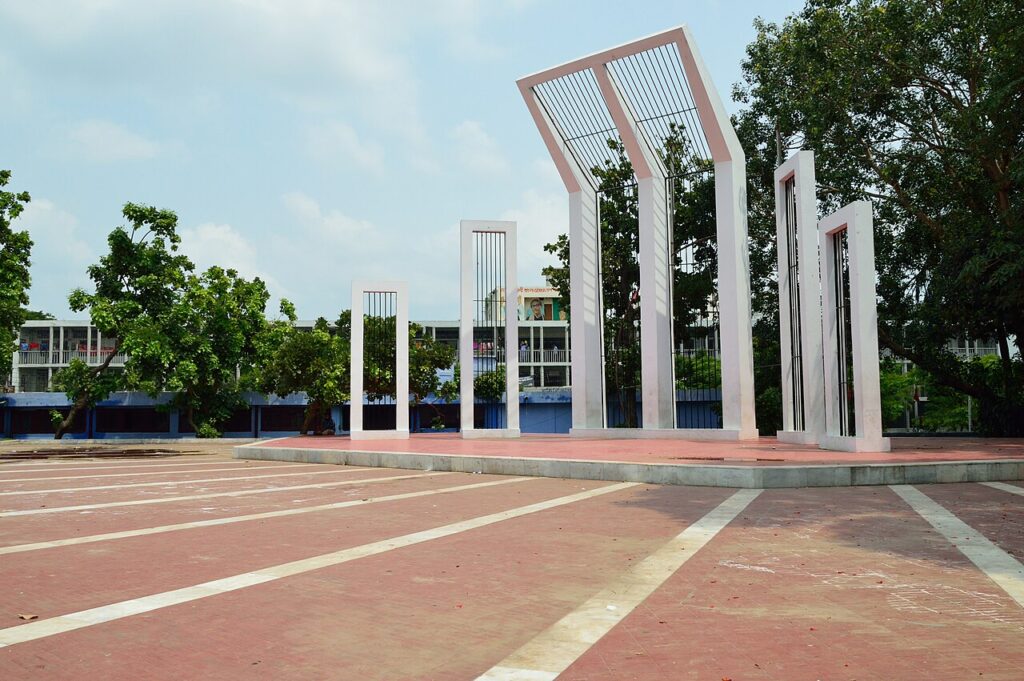
- Bangladesh: People walk barefoot to the Shaheed Minar in Dhaka from midnight to lay flowers and sing “Amar Bhaiyer Rokte Rangano Ekushey February”.
- Abroad: Memorials inspired by the Shaheed Minar stand in other countries, including one at Ashfield Park in Sydney, Australia.
- UNESCO and schools: Events, poetry readings and talks on language rights are held worldwide.
Ways to mark the day
- At school: Ask students to share a poem, proverb or song in their home language.
- At home: Record older relatives telling stories or recipes in their mother tongue, so the words are saved for younger family members.
- Online: Read or share content in a smaller Indian language, or support writers and publishers who work in it.
- At work: Learn simple greetings in a colleague’s language.
These are small steps, but UNESCO’s message each year is that languages survive only when people keep using them in daily life.
The India connection
India has 22 languages in the Eighth Schedule of the Constitution and hundreds of mother tongues. The National Education Policy 2020 says the medium of instruction should, wherever possible, be the home language, mother tongue or regional language at least until Class 5 and preferably until Class 8. It also states that no language will be imposed on any student.
In October 2024 the Union Cabinet granted classical language status to Bengali, along with Marathi, Pali, Prakrit and Assamese. In West Bengal, Tripura and Assam, 21 February is marked with cultural programmes on Bengali language and literature.
For more on schooling and language policy, visit our Education section, and for more days and their stories, see Infotainment.
Frequently asked questions
Why is International Mother Language Day celebrated on 21 February?
It marks 21 February 1952, when protesters demanding recognition for Bengali were killed by police firing in Dhaka.
What is the theme of International Mother Language Day 2026?
The 2026 theme is “Youth voices on multilingual education”.
Who started International Mother Language Day?
Bangladesh proposed it, UNESCO proclaimed it in November 1999, and it was first observed in 2000.
What does NEP 2020 say about mother tongue education?
It recommends teaching in the home language or mother tongue at least until Class 5, and preferably until Class 8, wherever possible.
Sources: United Nations: International Mother Language Day, UNESCO, National Education Policy 2020, Ministry of Education.