
• About   |
  • Submit Guest Post |
  • Contact Us
No Result
View All Result
The Second Angle (TSA Magazine)
Advertise
  • Infotainment
    • Sports
    • People
    • Inspiring
  • Entertainment
    • Lifestyle
    • Home & Decoration
  • Buzz
  • Education
  • Travel
  • Finance
  • Healthcare
  • Technology
The Second Angle
No Result
View All Result
  • Infotainment
  • Entertainment
  • Buzz
  • Education
  • Travel
  • Finance
  • Healthcare
  • Technology
Advertisement
ADVERTISEMENT
Home Education

What Is NEP 2020? Key Changes Explained for Students and Parents

by TSA Desk
September 30, 2026
in Education
Reading Time: 3 mins read
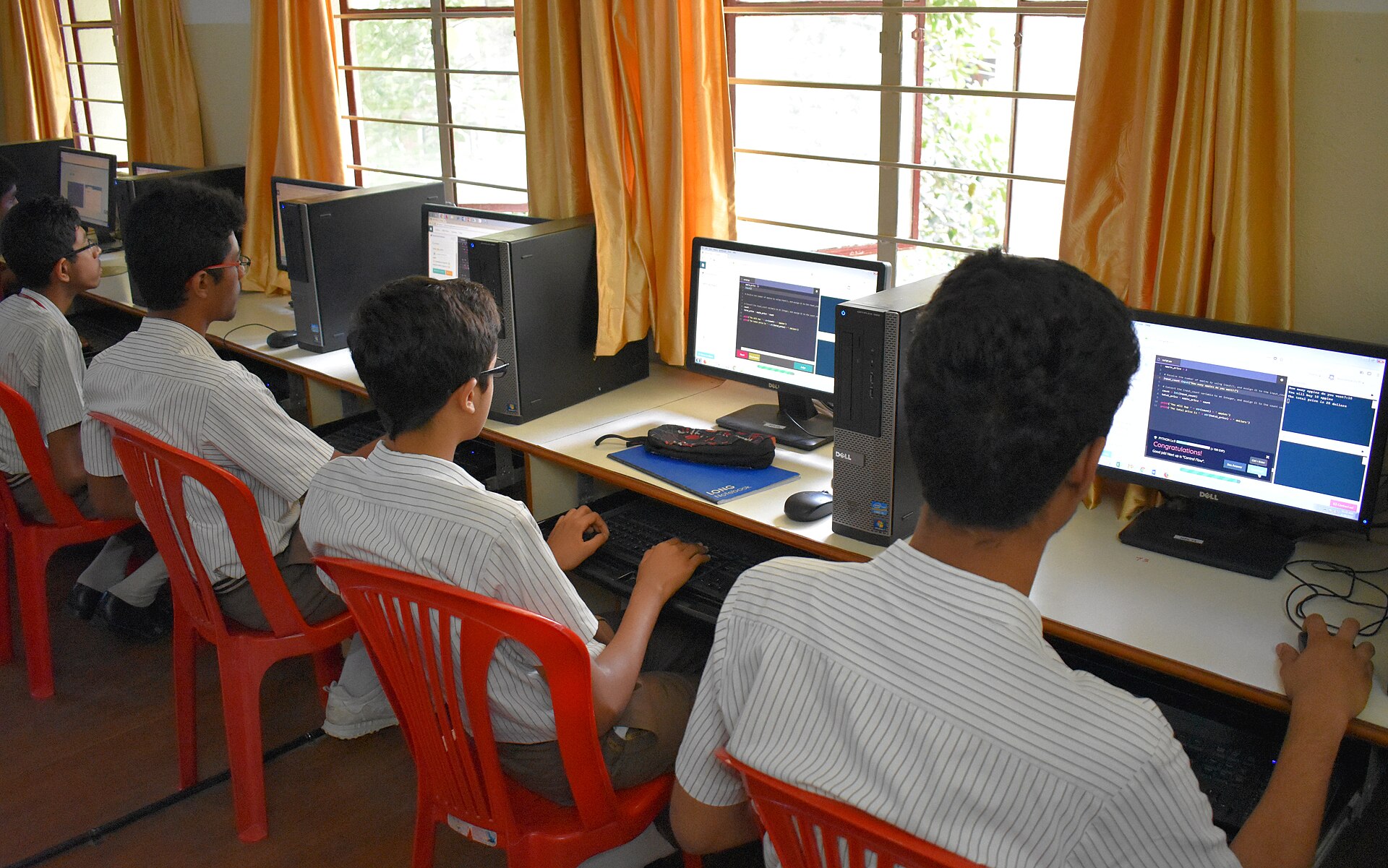
Students learning on computers at a school in Bengaluru

Photo: Nayakyashraj / Wikimedia Commons (CC BY-SA 4.0)

Share on FacebookShare on WhatsApp
Advertisement Advertisement Advertisement
ADVERTISEMENT

Quick answer

The National Education Policy (NEP) 2020 is India’s framework for reforming school and higher education. Approved by the Union Cabinet on 29 July 2020, it replaced the 1986 policy. Key changes include the 5+3+3+4 school structure, learning in the mother tongue in early years, easier and more flexible board exams, a 4-year undergraduate degree with multiple exit options and the Academic Bank of Credits.

NEP 2020 is a policy, not a law. States and institutions implement it in stages, so what changes for a student depends on their board, state and university.

Table of Contents
  • School education: the key changes
    • The new 5+3+3+4 structure
    • Mother tongue in early years
    • Flexible subjects and vocational skills
    • Board exams and report cards
  • Higher education: the key changes
  • What it means for parents and students
  • Frequently asked questions
    • What is the 5+3+3+4 system in NEP 2020?
    • Is the four-year degree compulsory under NEP 2020?
    • What is the Academic Bank of Credits?

School education: the key changes

The new 5+3+3+4 structure

  • Foundational stage (5 years): ages 3 to 8, three years of preschool plus Classes 1 and 2
  • Preparatory stage (3 years): ages 8 to 11, Classes 3 to 5
  • Middle stage (3 years): ages 11 to 14, Classes 6 to 8
  • Secondary stage (4 years): ages 14 to 18, Classes 9 to 12

This replaces the old 10+2 structure and brings early childhood education into the formal system.

RelatedPosts

An open notebook with handwritten notes and a pen

How to Take Better Notes: 5 Proven Methods for Students

Parliament of India building in New Delhi

Fundamental Duties in the Indian Constitution: All 11 Explained Simply

Mother tongue in early years

The policy recommends that, wherever possible, the medium of instruction until at least Class 5, and preferably Class 8, should be the home language, mother tongue or regional language.

Flexible subjects and vocational skills

There is less separation between arts, commerce and science streams, and between curricular and extracurricular activities. Vocational education and internships are to start from Class 6, and coding is to be introduced in the middle stage.

Board exams and report cards

Board exams are meant to test core concepts rather than rote learning, and students may get more than one attempt. CBSE has announced a second, optional Class 10 board exam from 2026. A 360-degree holistic report card and a national assessment centre, PARAKH, are also part of the reform.

Higher education: the key changes

  • Four-year undergraduate programme with multiple entry and exit options: a certificate after 1 year, a diploma after 2 years, a degree after 3 years, and a degree with honours or research after 4 years.
  • Academic Bank of Credits: a digital store of credits earned, so students can move between institutions and resume studies later.
  • Common entrance test: the CUET is used for admission to central universities.
  • Multidisciplinary education: students can combine subjects across streams.
  • Target: a gross enrolment ratio of 50% in higher education by 2035.

What it means for parents and students

  • More focus on understanding, skills and projects than on memorising.
  • More choice of subjects and the option to pause and resume a degree.
  • Changes arrive gradually, so check your school board and university for current rules.

Frequently asked questions

What is the 5+3+3+4 system in NEP 2020?

It divides schooling into four stages: foundational (ages 3 to 8), preparatory (8 to 11), middle (11 to 14) and secondary (14 to 18), replacing the 10+2 structure.

Is the four-year degree compulsory under NEP 2020?

No. Students can exit with a certificate after 1 year, a diploma after 2 years or a degree after 3 years, or continue to a 4-year honours or research degree.

What is the Academic Bank of Credits?

It is a digital system that stores the credits a student earns, so they can move between institutions or resume their studies later.

Sources and further reading

  • Ministry of Education: National Education Policy 2020 (PDF)

Featured image: Photo: Nayakyashraj / Wikimedia Commons (CC BY-SA 4.0)
ShareSend
Tweet
Previous Post

How to Take Better Notes: 5 Proven Methods for Students

Next Post

Box Office Numbers Explained: Gross vs Net vs Share in Indian Cinema

Related Posts

An open notebook with handwritten notes and a pen
Education

How to Take Better Notes: 5 Proven Methods for Students

Good notes help you understand and remember. These five note-taking methods, and a few simple habits, work for school, college...

Read moreDetails
Parliament of India building in New Delhi
Education

Fundamental Duties in the Indian Constitution: All 11 Explained Simply

Article 51A lists eleven duties every Indian citizen is expected to follow. Here they are in plain language, with their...

Read moreDetails
gandhi
Listicles

Gandhi Jayanti: The Teachings of Gandhi That Stands True Even Today

Gandhi's quotes which still teach, inspire, motivate and stand true to the need of the present scenario. Let's read along...

Read moreDetails
A Guide To 7 Fundamental Rights Every Indian Citizen Should Know
Education

A Guide To 7 Fundamental Rights Every Indian Citizen Should Know

In the democratic republic of India, the Constitution plays a pivotal role in safeguarding the rights and liberties of its...

Read moreDetails
10 Most Famous Renaissance Paintings
Education

10 Most Famous Renaissance Paintings

Renaissance, a period whose exact date cannot be determined anywhere in history, but believed to begin from the 14th century...

Read moreDetails
The Importance of Mock Tests in CAT Preparation: SuperGrads' Approach to Success
Education

The Importance of Mock Tests in CAT Preparation: SuperGrads’ Approach to Success

SuperGrads, a leading CAT coaching institute, emphasizes the importance of mock tests in their preparation strategy, and their approach to...

Read moreDetails
Load More
Next Post
Ticket counters at Metro Cinema in Mumbai

Box Office Numbers Explained: Gross vs Net vs Share in Indian Cinema

About

The Second Angle

The Second Angle (TSA Mag) is an infotainment and lifestyle magazine covering entertainment, travel, technology, health, education and finance.

Important Links

  • About The Second Angle
  • Write for Us: Guest Post Guidelines
  • Privacy Policy
  • Terms
  • Contact Us
  • Newsletter

Explore

  • Infotainment
  • Entertainment
  • Buzz
  • Education
  • Travel
  • Finance
  • Healthcare
  • Technology
Advertise with us

© 2017-2026. The Second Angle. All Rights Reserved. Developed and Managed by SquareBase.io

Welcome Back!

Login to your account below

Forgotten Password?

Retrieve your password

Please enter your username or email address to reset your password.

Log In
No Result
View All Result
  • Infotainment
    • Sports
    • People
    • Inspiring
  • Entertainment
    • Lifestyle
    • Home & Decoration
  • Buzz
  • Education
  • Travel
  • Finance
  • Healthcare
  • Technology

© 2017-2026. The Second Angle. All Rights Reserved. Developed and Managed by SquareBase.io

This website uses cookies. By continuing to use this website you are giving consent to cookies being used. Visit our Privacy and Cookie Policy.