
Technological innovations transforming Indian agriculture include agricultural drones, digital farmer IDs under AgriStack, satellite and AI crop monitoring, private weather forecasting, farm input apps, pheromone pest traps, smart aquaculture sensors, mechanised spraying, farmer video networks and online mandis. Together they help farmers cut costs, reduce risk and sell better.
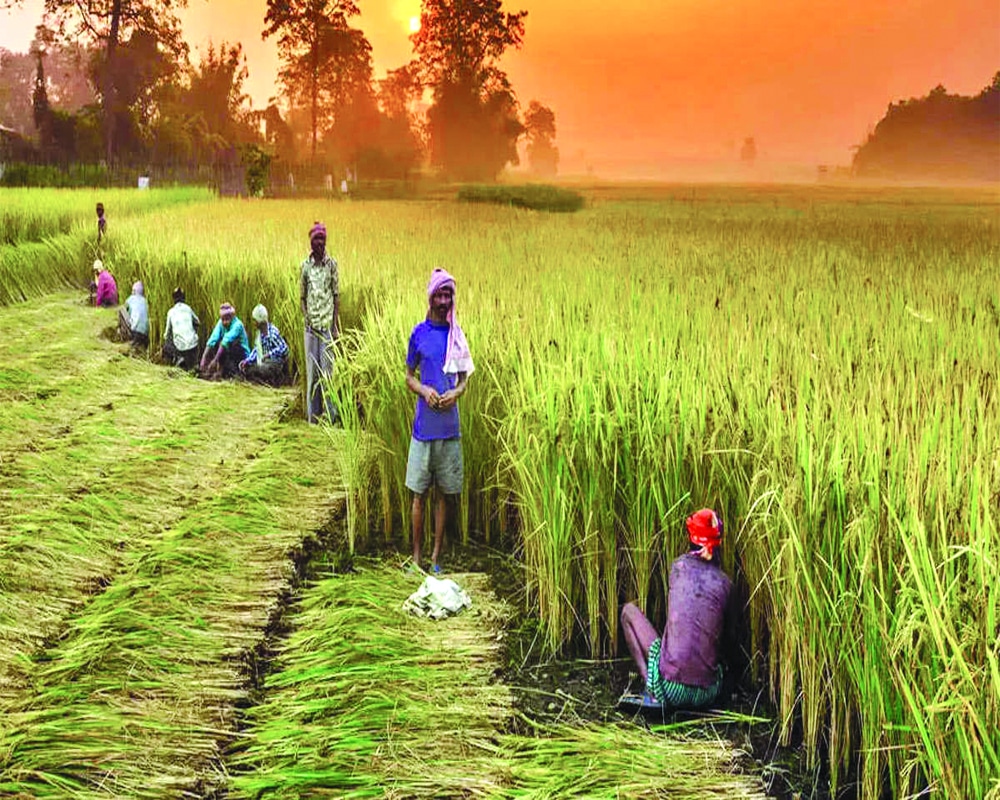
Agriculture still supports close to half of India’s workforce, yet most farmers work small plots with thin margins. Over the last few years, both the government and private startups have pushed technology into fields, from Rs 8 lakh drone subsidies for women’s self-help groups to apps that deliver seeds to a village doorstep. Here are ten innovations making a measurable difference, updated for 2026.
- Quick facts: agri-tech in India in 2026
- 1. Agricultural drones and Namo Drone Didi
- 2. AgriStack and digital farmer IDs
- 3. Satellite and AI crop monitoring
- 4. Hyperlocal weather forecasting
- 5. Farm input apps like AgroStar
- 6. Pheromone traps for pest control
- 7. Smart sensors for aquaculture
- 8. Mechanised sprayers for orchards
- 9. Farmer-made videos and AI advisory
- 10. Online mandis through e-NAM
- What these innovations mean for farmers
- Frequently asked questions
Quick facts: agri-tech in India in 2026
| Area | Key fact |
|---|---|
| Digital Agriculture Mission | Approved by the Union Cabinet with an outlay of Rs 2,817 crore |
| AgriStack farmer IDs | 7.68 crore IDs created in 14 states as of 4 December 2025 (PIB) |
| Agricultural drones | 15,000 drones approved; 1,094 distributed by early 2026 (PIB) |
| Farm mechanisation | About 45% on average across operations (PIB) |
| Agri-startups supported | 2,096 startups helped under RKVY between 2019-20 and 2025-26 |
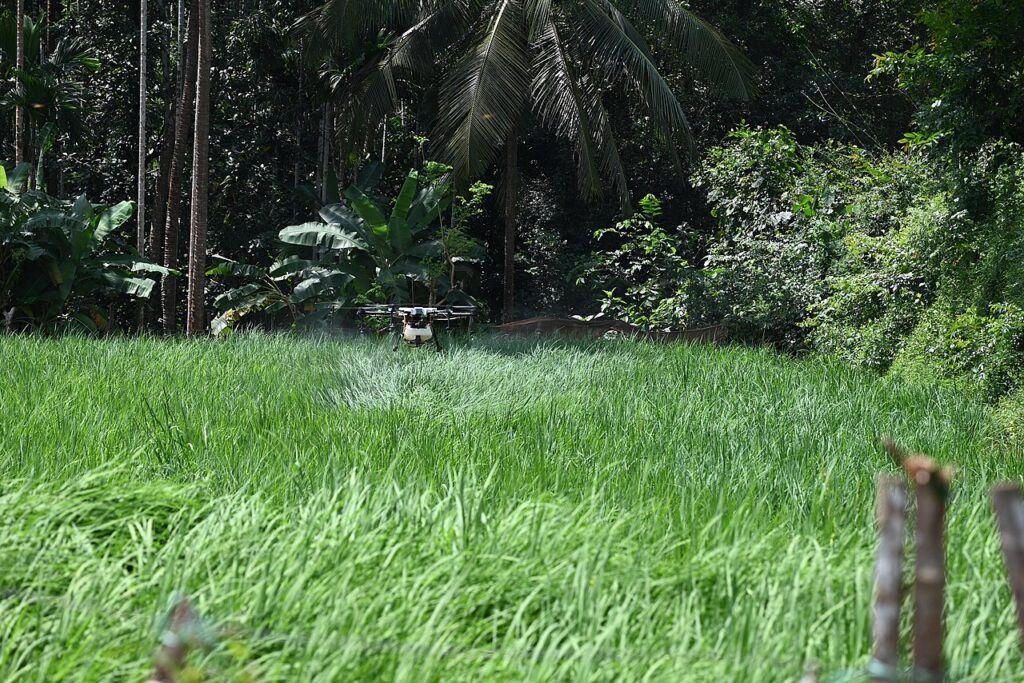
1. Agricultural drones and Namo Drone Didi
Drones can spray fertiliser and pesticide over an acre in minutes, using less chemical and keeping farmers away from toxic sprays. Under the Namo Drone Didi scheme, the Centre covers 80% of the cost of a drone package for women’s self-help groups, up to Rs 8 lakh, so they can rent spraying services to farmers.
 Also readTop 3 Agritech Platforms in India Using Tech to Help Farmers
According to the government’s New India Samachar (February 2026), 15,000 drones have been approved for procurement, and farmer producer organisations can get a 75% subsidy on drone costs.
2. AgriStack and digital farmer IDs
AgriStack is the digital backbone of the Digital Agriculture Mission. Each farmer gets an Aadhaar-like ID linked to land records and crops sown. This makes it easier to get crop loans, insurance and scheme benefits without repeated paperwork.
The farmer ID is now mandatory for PM-Kisan registration in states where it has rolled out. Government data shows 7.68 crore IDs had been created by December 2025.
3. Satellite and AI crop monitoring
Bengaluru-based Cropin, founded in 2010, was one of India’s first agri-tech platforms. It started with a mobile app that let food companies track crops on contract farms, and now uses satellite imagery, weather data and AI models to predict yields and spot crop stress.
The company says its platform reaches users in more than 100 countries. For Indian farmers working with seed companies and exporters, this kind of monitoring means earlier warnings about pests, water stress or poor growth.
4. Hyperlocal weather forecasting
A single unseasonal rain can wipe out a harvest. Private forecaster Skymet, alongside the India Meteorological Department, provides weather forecasts, monsoon outlooks and crop risk data used by insurers, banks and agri businesses.
Better forecasts help farmers decide when to sow, spray or harvest. Many states now send weather advisories to farmers by SMS and app in local languages.
5. Farm input apps like AgroStar
AgroStar lets farmers order seeds, crop nutrition and crop protection products through a missed call or its app, and get agronomy advice in regional languages. It cuts out several middlemen and helps reduce the sale of fake inputs.
The model has been copied widely, and farmers in many districts now order inputs by phone the way city users order groceries.
6. Pheromone traps for pest control
Bengaluru-based Barrix Agro Sciences makes pheromone-based traps that attract and catch specific pests such as fruit flies. This cuts the need for repeated chemical sprays, lowers costs and helps farmers meet residue limits for exports.
Such eco-friendly crop protection is gaining ground as consumers and export markets ask for food with fewer chemical residues.
7. Smart sensors for aquaculture
Vijayawada-based Eruvaka Technologies makes solar-powered floating sensors and apps that track dissolved oxygen, temperature and pH in shrimp and fish ponds. Low oxygen at night can kill a pond’s stock within hours, so alerts on a phone give farmers time to switch on aerators.
Andhra Pradesh is one of India’s largest shrimp-producing states, which makes pond monitoring a practical, high-value use of sensors.
8. Mechanised sprayers for orchards
Nashik-based Mitra builds tractor-mounted air-blast sprayers for grape, pomegranate and other orchards. These machines cover rows evenly and use less labour and chemical than manual spraying.
Mechanisation is still uneven in India. Government data puts average farm mechanisation at about 45%, with lower levels in weeding and harvesting, so tools like these fill a real gap.
9. Farmer-made videos and AI advisory
Digital Green, a non-profit that began in 2006 as a Microsoft Research India project, trains farmers to make short videos showing practices that worked on their own fields. Neighbours watch and adopt them because the advice comes from people like them.
Advisory has since moved to chatbots and voice tools in local languages, including the government’s Kisan e-Mitra assistant for PM-Kisan queries.
10. Online mandis through e-NAM
The electronic National Agriculture Market, launched in 2016, links regulated APMC mandis on a single online platform. Farmers can see prices across markets and sell to buyers beyond their local mandi, which improves price discovery.
Digital payments and online trading under e-NAM have also reduced cash handling and delays in getting paid.
What these innovations mean for farmers
Most of these tools aim at the same things: lower input costs, fewer crop losses and fairer prices. The challenge is reach. Smartphone access, local-language support and trust still decide whether a small farmer uses a new tool. Shared models, like drone rental by self-help groups, help bring costly technology within reach.
Read more on startups and gadgets in our Technology section, and on rural money matters in our Finance section.
Frequently asked questions
What are the latest technologies in Indian agriculture?
Agricultural drones, AgriStack digital farmer IDs, satellite and AI crop monitoring, IoT sensors, farm input apps and online mandis under e-NAM are among the main technologies in use in 2026.
What is the Namo Drone Didi scheme?
It is a central scheme that gives women’s self-help groups 80% of the cost of an agricultural drone package, up to Rs 8 lakh, so they can offer spraying services to farmers.
What is AgriStack?
AgriStack is a digital public infrastructure under the Digital Agriculture Mission. It gives farmers a unique ID linked to land and crop records to simplify loans, insurance and scheme benefits.
Which are the top agri-tech startups in India?
Well-known names include Cropin, AgroStar, Skymet, Barrix Agro Sciences and Eruvaka Technologies, along with non-profits such as Digital Green.
Sources: New India Samachar, PIB (February 2026), Drishti IAS on Namo Drone Didi, Cropin, Wikipedia: Digital Green.