India is one of the major food growers in the world that produces tons of food to feed its population and export the surplus that is left. Agriculture is undoubtedly the backbone of our nation. Even today, most of the people of our country depend on farming to support their living and still use outdated methods. For the production of food, irrigation becomes an important factor as producing this much food requires a lot of water too. Food grains like paddy and wheat come under staple food of most of the Indians and therefore are in high demand but rice requires a large amount of water. but the traditional method of irrigation wastes a lot of water too. With a high rising population, great demand for food also rises, and with high demand for food, production increases, and with an increase in production, water requirements go up automatically. Farmers love to grow these two staple crops (wheat and rice) along with sugarcane mainly because of three major reasons: their high demand, stable price, and assured state purchase. These two staples, along with another thirsty crop, sugar cane, are grown in 40% of the country’s gross farmed area but consume about 80% of its irrigation water.
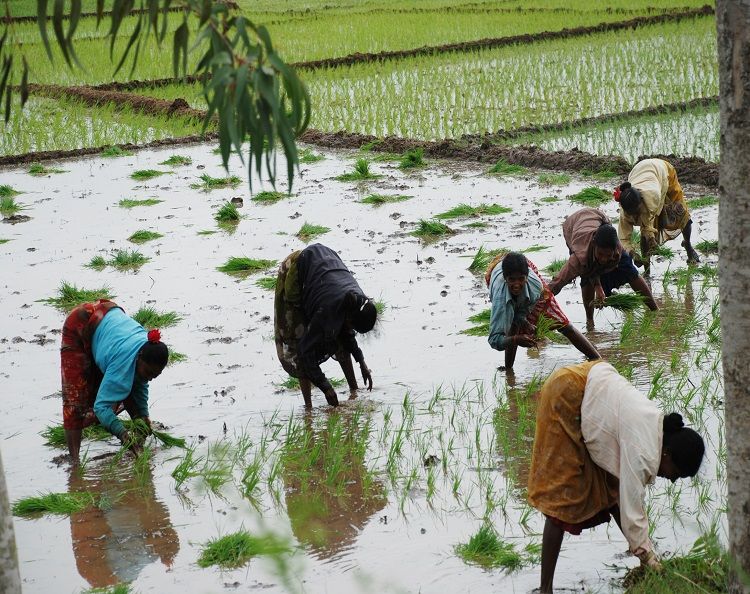
But unfortunately, India’s 1.3 billion people only have access to about 4% of the world’s water. Farmers consume almost 90% of the groundwater water available. Most of the areas in India use traditional irrigation techniques that stress the availability of water. The traditional method of irrigation wastes a lot of water due to evaporation, water conveyance, drainage, percolation, and the overuse of groundwater. Water shortages are already acute. Nearly half the country’s population faces high-to-extreme water stress and about 200,000 die each year due to inadequate access to safe water.
Water is the central point of our lives but not the central point of our focus. The basic necessity of not only humans but also plants, birds, reptiles and every other living creature. But water scarcity is a major issue that is rising very rapidly in modern-day India. The problem has become so severe that in many states the groundwater has almost dried up and people have to depend on water supply from other sources. In addition, water is one of the most misused commodities that we still waste, that too without any regret.
 Also readA Flooding India: A Global Warning
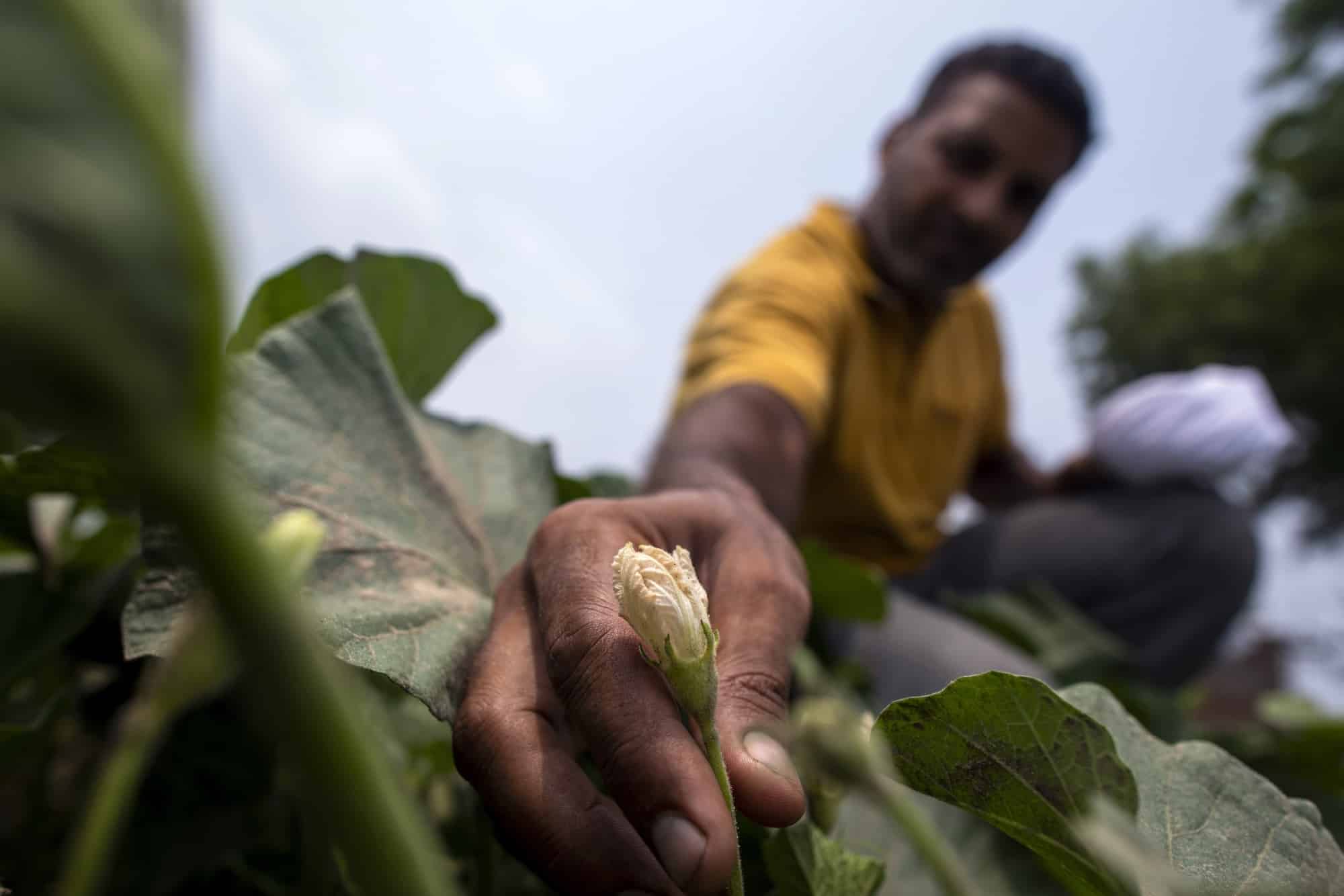
But some humans out there take nature’s problems, as their own. They think about the future generation and every other creature who dies due to inaccessibility of certain things. One such human is Ajay Singh, who earlier used to come in the same category of farmers who grow rice and bring in about 150,000 rupees ($2,000) a year, which is considered as above the average income in a developing country like India but he gave up on such living where he considered himself as one amongst the thirst quencher of future generation and hence started cultivating pearl millet, cow peas, bottle gourd and corn — crops that consume about 80% less water than rice and also required less labour, fertilizer and electricity.
Millets, once a staple in India, fell out of favour as the government popularised the cultivation of other cereal grains. Unlike wheat and rice, millet cultivation is incredibly sustainable. Millets can grow in any climate; they are mainly rain-fed and are not prone to pests. So, millets can be grown in areas where water resources are not easily available too. They are not expensive to farm as they do not require expenditure on pesticides. But Unlike rice, which the government always buys at a set price, these crops have no guaranteed market. “I am taking this risk because I have a passion to leave enough water for future generations,” Singh said.
India’s food policy has remained focused on wheat and rice since the 1960s when the Green Revolution changed the farming landscape and made the country food self-sufficient for the first time. Millets became sidelined as a staple food grain in India due to the government’s lack of recognition. The government proactively pushed rice and wheat in the subsidised public distribution system, de-incentivising farmers from cultivating millets.
The water crisis has forced Prime Minister Narendra Modi’s government to try and turn around decades of established farming practices and convince the country’s most powerful voting bloc to change the crops they plant. Water-guzzlers like rice and wheat are out, corn and pulses are in. For Modi, pushing farmers to change is risky business because of their sheer numbers and political power. As the farmers, some backed by the opposition Congress party said the government couldn’t deprive farmers of the right to grow crops that fetched the best price.
In a country like India, it is important to highlight millets not only to farmers but also to its population as millets are not only good for the environment but for us too.
However, of late, it has come into the notice of fitness-centric youngsters who are learning the wellness potential of this humble food. But it will take time to change the mindset of farmers and most of the farmers fear taking such risk. The government should give assurance to procure these crops, more access to market and set up infrastructural facilities like cold storage, maybe then, it will be easy to bring a change in the current draining situation of India’s water as well as economy.
Also Checkout: Inspiring Story Of Alan Turing