Nawab Viqar-ul-Mulk, born Mushtaq Hussain in Meerut on 24 March 1841, was an administrator, educationist and political figure of British India. He served the Hyderabad State for years, was a close associate of Sir Syed Ahmad Khan in the Aligarh Movement, and was among the founders of the All-India Muslim League in Dhaka in December 1906.
His birth anniversary falls on 24 March. This profile sets out what the historical record says about his life, his work for Muslim education and his political role, and corrects a few details that are often repeated incorrectly online.
Quick facts
| Detail | Information |
|---|---|
| Birth name | Mushtaq Hussain |
| Born | 24 March 1841, Meerut (then North-Western Provinces) |
| Known as | Nawab Viqar-ul-Mulk (also spelt Waqar-ul-Mulk) |
| Main roles | Hyderabad State official, Honorary Secretary of M.A.O. College, Aligarh |
| Political role | Co-founder of the All-India Muslim League, Dhaka, December 1906 |
| Died | 27 January 1917, buried at Amroha, Uttar Pradesh |
Early life and background
Mushtaq Hussain was born into a Kamboh family of Meerut. His father was Sheikh Fazal Hussain. His family had links with Amroha, where he was later buried.
 Also readAapli Aaji: The Marathi Grandmother Who Became a YouTube Star
He came to public notice through writing. In 1870 he won an essay prize from a society that worked to promote education among Muslims. That interest in education stayed with him for the rest of his life.
Work with the Aligarh Movement
From 1866 onwards he worked with the Aligarh Movement led by Sir Syed Ahmad Khan. He joined the Scientific Society, which Sir Syed had set up to translate useful Western works into Urdu, and he translated a book on the French Revolution and Napoleon for it.
He was one of Sir Syed’s most committed supporters. The movement’s main goal was to give Indian Muslims access to modern education while keeping their religious and cultural identity. Its best-known result was the Muhammadan Anglo-Oriental (M.A.O.) College at Aligarh, founded in 1875, which became Aligarh Muslim University in 1920.
Career in Hyderabad State
Like several Aligarh figures, he built a long career in the service of the Nizam’s Hyderabad State. He worked as Law Secretary and then moved to the Revenue Department. He later served as secretary and adviser to the Prime Minister of Hyderabad and rose to a senior post often described as Deputy Prime Minister.
On 9 December 1890 he received the title Viqar-ul-Mulk. The Nizam also gave him other honorific titles, including Waqar-ud-Daula and Intisar Jung. His Hyderabad service lasted about 17 years.
Return to Aligarh and M.A.O. College
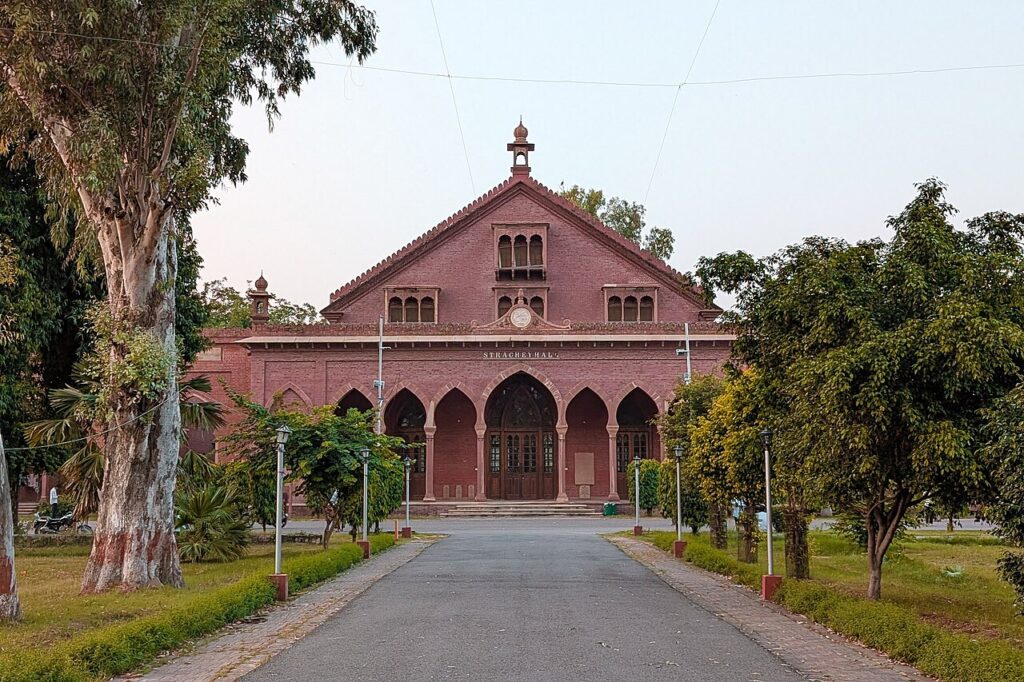
He joined the work of M.A.O. College formally in October 1892. As a member of the college fund committee, he helped raise about Rs 7.5 lakh, a large sum at the time, for the institution.
After Sir Syed’s death in 1898, the college went through a period of financial and administrative strain. In 1907 Viqar-ul-Mulk became Honorary Secretary of M.A.O. College, the most important management post. He was known as a strict and disciplined administrator. He gave up the post in 1912 because of poor health.
Readers interested in how such institutions shaped modern Indian education will find that the Aligarh model influenced several later community-run colleges.
Role in founding the All-India Muslim League
The All-India Muslim League was founded on 30 December 1906 in Dhaka (then Dacca), at the end of the annual session of the All India Muhammadan Educational Conference. That conference was itself a body started by Sir Syed.
Viqar-ul-Mulk presided over the meeting at which the League was formed. Other key figures included Nawab Salimullah Khan of Dhaka, who hosted the session, and Sir Aga Khan III, who became the League’s first president. Viqar-ul-Mulk served as the League’s general secretary in its early phase.
Some online articles say the League was founded in Calcutta. That is incorrect. Standard references, including Banglapedia, place its founding in Dhaka.
The title of Nawab
In 1908 the British Government of India also conferred on him the title of Nawab. By then he was already widely known by his Hyderabad title, which is why he is usually remembered as Nawab Viqar-ul-Mulk.
Influence and public image
Contemporaries described him as austere, outspoken and firm in his views. He wrote and spoke in favour of Muslim education, community organisation and political representation at a time when these ideas were still forming.
Historians usually group him with Sir Syed Ahmad Khan and Nawab Mohsin-ul-Mulk as the three central figures of the first generation of Aligarh leaders. Claims that he personally brought later leaders into the League are not well documented, so they are best treated with caution.
Final years and death
His health declined after he left Aligarh. A stroke left him paralysed by around 1915. He died on 27 January 1917, aged 75, after a long illness, and was buried in his family graveyard at Amroha in present-day Uttar Pradesh.
For more profiles of historical and public figures, see our people section, and browse infotainment for history explainers.
Why he is remembered
Viqar-ul-Mulk’s legacy rests on three pieces of work. He helped keep M.A.O. College running in a difficult period, which matters because it later became Aligarh Muslim University. He served for years in the administration of one of the largest princely states. And he was part of the founding of a political party that went on to shape the history of the subcontinent.
His life is also a reminder of how closely education and politics were linked for Indian Muslim leaders of the late 19th and early 20th centuries. Many of the men who built schools and colleges were the same people who later formed political organisations.
Frequently asked questions
When was Nawab Viqar-ul-Mulk born?
He was born Mushtaq Hussain on 24 March 1841 in Meerut, in what is now Uttar Pradesh.
What was his role in the Muslim League?
He was one of its founders. He presided over the December 1906 meeting in Dhaka at which the All-India Muslim League was formed and served as its general secretary in the early years.
What did he do for Aligarh Muslim University?
He helped raise funds for M.A.O. College and served as its Honorary Secretary from 1907 to 1912. The college became Aligarh Muslim University in 1920.
Where is Nawab Viqar-ul-Mulk buried?
He died on 27 January 1917 and was buried in his family graveyard at Amroha, Uttar Pradesh.
Sources: Wikipedia: Waqar-ul-Mulk, Banglapedia: Muslim League, Wikipedia: Aligarh Muslim University.