

• About   |
  • Submit Guest Post |
  • Contact Us
No Result
View All Result
The Second Angle (TSA Magazine)
Advertise
  • Infotainment
    • Sports
    • People
    • Inspiring
  • Entertainment
    • Lifestyle
    • Home & Decoration
  • Buzz
  • Education
  • Travel
  • Finance
  • Healthcare
  • Technology
The Second Angle
No Result
View All Result
  • Infotainment
  • Entertainment
  • Buzz
  • Education
  • Travel
  • Finance
  • Healthcare
  • Technology
Advertisement
ADVERTISEMENT
Home Economy

GST Council voted against keeping petroleum products under the regime

Sitharaman also mentioned that the demands by certain States to extend the five years further on the 14 per cent revenue growth that was assured to them during the implementation of the GST

by TSA Desk
March 10, 2022
in Economy
Reading Time: 3 mins read
GST Council voted against keeping petroleum products under the regime
Share on FacebookShare on WhatsApp
Advertisement Advertisement Advertisement
ADVERTISEMENT

The 45th Goods and Services Tax (GST) Council was held in person and was chaired by the finance minister Nirmala Sitharaman in Lucknow on Friday, where various decisions were taken. One of them was to not bring petroleum products under the GST regime, as the council discussed the Kerala High Court’s suggestion to bring petrol and diesel within the ambit.
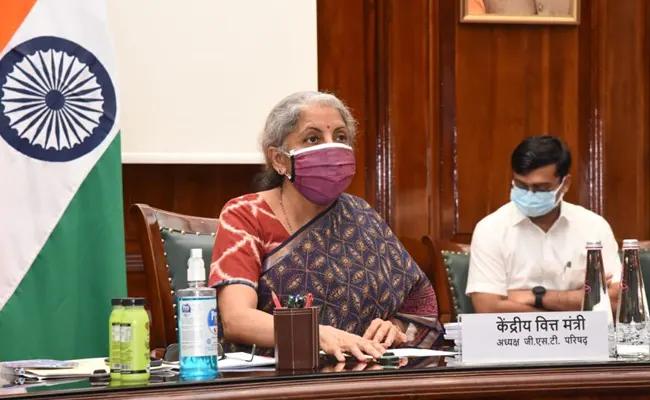
GST Council voted against keeping petroleum products under the regime
image source: ndtv

“The Council members spoke very clearly that they don’t want petroleum products to be included in the GST at this time. We shall report the same to the court that the Council felt this wasn’t the time to bring petroleum products into GST,” the finance minister said. Kerala High Court’s suggestion to the Council in June was based on a writ petition filed in the court.

The compensation cess on products like automobiles will however continue to be paid by the consumers till March 2026, extended from July 2022. Sitharaman also mentioned the demands by certain States to extend the five-year period further on the 14 per cent revenue growth that was assured to them during the implementation of the GST. “Legally, compensation was to be paid for five years till July 2022 with an assured revenue for the States,” she asserted.

Speaking on the effective fall rate of the actual GST revenues, Sitharaman claimed that the tax rate has come down to 11.6 per cent in the last few years.


RelatedPosts

What are the Different Types of Small Business Loans?

What are the Different Types of Small Business Loans?

Everything You Need to Know about Banglarbhumi West Bengal

Everything You Need to Know about Banglarbhumi West Bengal

GST Council voted against keeping petroleum products under the regime
image source: hindustantimes

“A detailed presentation was made on the revenue generation aspects, correction of inverted duty structure aspects and the various ways in which the revenue-neutral position, which was 15.5 per cent at the time of introduction of GST, has steadily come down to 11.6 per cent.

Revenue neutral is to keep it at 15.5 per cent and, therefore, if revenues are coming down, and you think it is not helping the overall GST collection, what was arrived at the time of introducing GST has been, knowingly or unknowingly, brought down by the reduction in tax rates of some items,” she added.

The Council met in person for the first time after 20 months and took decisions, including continuation in the rate cuts for medicines related to cancer and Covid-19. Another decision was that the liability of collecting and depositing the tax on food would fall on the delivery platforms like Zomato and Swiggy instead of the restaurants. 

The compliance burden might increase for the food aggregators and the restaurants even after the change in liability. The industry as well as the tax experts have mixed responses as there will be extra processes, budget detailing and separate books of the accounts.

Partner at Price Waterhouse & Co, LLP, Pratik Jain said, “In essence, the compliance burden is likely to be shifted to food aggregators. From a consumer perspective, there should not be a material change because consumers will still pay 5 per cent GST on food. Small restaurants, which have less than Rs 20 lakh of turnover, are exempt from GST but if food-aggregators are made responsible, perhaps GST will be applicable on the smaller restaurants too”. 

Also Read : “Bad Bank” To Bail Out The Commercial Banks Of Their Piling NPAs Worth Rs 2 Lakh Crore


ShareSendTweet
Previous Post

A pandemic that has orphaned many disabled

Next Post

Thalaivi Film Review- Despite Powerful Performances, The Film Is Another Bollywood Biopic Misfire

Related Posts

What are the Different Types of Small Business Loans?
Economy

What are the Different Types of Small Business Loans?

choosing the right type of small Business Loan that is affordable and fulfils the funding requirement adequately is imperative. Here...

Read moreDetails
Everything You Need to Know about Banglarbhumi West Bengal
Economy

Everything You Need to Know about Banglarbhumi West Bengal

With the launch of Banglarbhumi, an online portal of West Bengal's land and property records department, citizens can now easily...

Read moreDetails
Some governments believe that it should be banned altogether, while others think that it should be regulated in the same way as traditional currency. So far, no country has come up with a perfect solution, and the future of cryptocurrency is still uncertain.
Business

Governments Struggle to Balance Cryptocurrency Regulation: How Will It Impact the Future of Digital Currency?

Some governments believe that it should be banned altogether, while others think that it should be regulated in the same...

Read moreDetails
The Rupee Hit An All-Time Low Against The US Dollar | How Does It Impact You? | Is It A Bad Thing?
Explainers

The Rupee Hit An All-Time Low Against The US Dollar | How Does It Impact You? | Is It A Bad Thing?

The rupee fell 51 paise to an all-time low of 77.41, breaking the previous low of 76.98 set in March.

Read moreDetails
What is Supply Shock Inflation, and Why Should you Care About it?
Explainers

What is Supply Shock Inflation, and Why Should you Care About it?

The rising inflation is a result of too many supply chain disruptions over the last two years, caused first by...

Read moreDetails
Price rises and inflation in India: What to expect in the future months, from food products to edible oil rates?
Economy

Price rises and inflation in India: What to expect in the future months, from food products to edible oil rates?

While oil marketing organizations have raised the cost of fuel and diesel by roughly Rs 10 per litre in the...

Read moreDetails
Load More
Next Post
Thalaivi Film Review- Despite powerful performances, the film is another Bollywood biopic misfire.

Thalaivi Film Review- Despite Powerful Performances, The Film Is Another Bollywood Biopic Misfire

Important Links

  • About
  • Guest Post
  • Privacy Policy
  • Terms
  • Contact Us
  • Newsletter

© 2017-23. The Second Angle. All Rights Reserved. Developed and Managed by SquareBase.io

Welcome Back!

Login to your account below

Forgotten Password?

Retrieve your password

Please enter your username or email address to reset your password.

Log In
No Result
View All Result
  • Infotainment
    • Sports
    • People
    • Inspiring
  • Entertainment
    • Lifestyle
    • Home & Decoration
  • Buzz
  • Education
  • Travel
  • Finance
  • Healthcare
  • Technology

© 2017-23. The Second Angle. All Rights Reserved. Developed and Managed by SquareBase.io

This website uses cookies. By continuing to use this website you are giving consent to cookies being used. Visit our Privacy and Cookie Policy.