
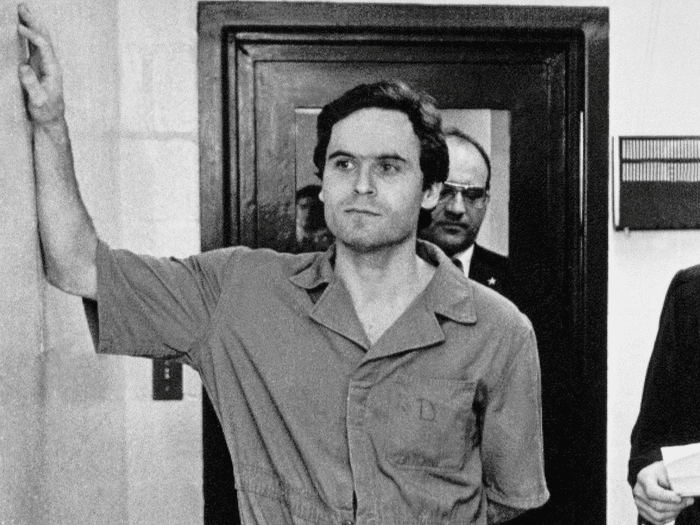

Ted Bundy was an American serial killer who murdered young women across seven US states between 1974 and 1978. He confessed to 30 homicides before he was executed in Florida on 24 January 1989. His case is still studied because he hid his crimes behind an educated, ordinary public image.
This explainer covers his early life, how he was caught, his trials and escapes, and the books, films and documentaries made about him. It avoids graphic detail and keeps the focus on what was established in court and by reliable records.
Quick facts about Ted Bundy
| Detail | Fact |
|---|---|
| Born | 24 November 1946, Burlington, Vermont, USA |
| Education | BA in psychology, University of Washington; later enrolled in law school |
| Period of known crimes | 1974 to 1978 |
| States involved | Washington, Oregon, Utah, Colorado, Idaho, California and Florida |
| Confessed homicides | 30 |
| Final arrest | 15 February 1978, Pensacola, Florida |
| Executed | 24 January 1989, Florida State Prison |
Early life and education
Bundy was born Theodore Robert Cowell to Eleanor Louise Cowell, who was unmarried. His father was never officially identified. In his early years he was raised in the home of his maternal grandparents in Philadelphia, and he was told for some time that his mother was his older sister.
 Also readBhagat Singh Birth Anniversary: Life, Key Dates and Legacy
His mother later moved with him to Tacoma, Washington, where she married Johnny Culpepper Bundy, who adopted him. Biographers report that Bundy learned the truth about his birth as a young adult and resented the secrecy around it.
He studied at the University of Puget Sound for a year before moving to the University of Washington, where he completed a degree in psychology. He volunteered at a Seattle crisis helpline, worked on political campaigns and later enrolled in law school. To people around him, he appeared confident, articulate and ambitious.
The crimes, in brief
From early 1974, young women began disappearing in Washington and Oregon. Many were students. Witnesses in some cases described a polite young man, sometimes with an arm in a sling or a cast, asking for help carrying something to his car. Police later linked this approach to Bundy.
When Bundy moved to Salt Lake City for law school in late 1974, similar disappearances began in Utah, then Colorado and Idaho. Investigators in different states did not share information quickly in those years, which helped him avoid detection for a long period.
In January 1978, after escaping custody, he attacked women at the Chi Omega sorority house at Florida State University in Tallahassee, killing two. A few weeks later he abducted and killed 12-year-old Kimberly Leach in Lake City, Florida. These Florida cases led to his death sentences.
Arrest, conviction and two escapes
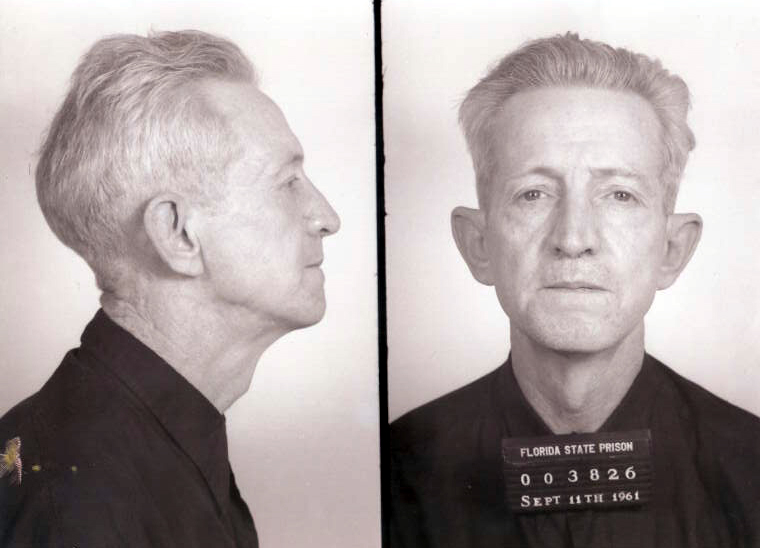
Bundy was first arrested in Utah in August 1975 during a traffic stop. Items in his car raised suspicion, and Carol DaRonch, a young woman who had escaped an abduction attempt in November 1974, identified him. In February 1976 he was found guilty of aggravated kidnapping and was later sentenced to 1 to 15 years in Utah State Prison.
He was then sent to Colorado to face a murder charge. On 7 June 1977 he jumped from a second-floor window of the Pitkin County Courthouse in Aspen and was recaptured six days later. On 30 December 1977 he escaped again, this time through a ceiling of the Garfield County jail in Glenwood Springs, and reached Florida.
Police officer David Lee arrested him in Pensacola on 15 February 1978. He was convicted in 1979 for the Chi Omega killings and in 1980 for the murder of Kimberly Leach. He received three death sentences in total.
Confessions and execution
Bundy spent about nine years on death row while his appeals were heard. In his final days he gave detailed confessions to investigators, admitting to 30 homicides in seven states. Investigators believe the true number could be higher, but it has never been confirmed.
He was executed in the electric chair at Florida State Prison on 24 January 1989. Crowds gathered outside the prison that morning, which showed how much public attention the case had drawn.
Why experts still study the case
Bundy did not fit the image many people had of a violent criminal. He was a university graduate, had worked in politics and seemed socially at ease. Writers and investigators have described him as manipulative and lacking empathy, though labels such as “psychopath” are opinions of commentators, not court findings.
The case also changed policing. Delays in sharing information between states were widely criticised, and the case is often cited in discussions on why the FBI and state agencies built better systems to link violent crimes across jurisdictions.
Books, films and documentaries on Ted Bundy
- The Stranger Beside Me (1980): Book by Ann Rule, a former Seattle police officer who worked alongside Bundy at the crisis helpline before his arrest.
- The Deliberate Stranger (1986): US television miniseries with Mark Harmon as Bundy.
- Conversations with a Killer: The Ted Bundy Tapes (2019): Four-part Netflix documentary series by Joe Berlinger, based on audio recorded on death row. It is available on Netflix in India.
- Extremely Wicked, Shockingly Evil and Vile (2019): Feature film directed by Joe Berlinger, with Zac Efron as Bundy and Lily Collins as his girlfriend.
- No Man of God (2021): Film about Bundy’s interviews with FBI agent Bill Hagmaier, with Luke Kirby and Elijah Wood.
Some critics and families of victims have said that such films risk glamourising the killer. Many recent works try to give more space to the victims and survivors. For more stories on real cases and the people behind them, see our People section, and for screen recommendations, visit Entertainment.
Frequently asked questions
How many people did Ted Bundy kill?
Bundy confessed to 30 homicides in seven states between 1974 and 1978. Investigators believe the real figure may be higher, but that has never been proven.
When and where was Ted Bundy executed?
He was executed in the electric chair at Florida State Prison on 24 January 1989, after about nine years on death row.
How did Ted Bundy escape from custody?
He escaped twice in Colorado in 1977: first by jumping from a courthouse window in Aspen, then through a jail ceiling in Glenwood Springs.
Where can I watch the Ted Bundy documentary in India?
Conversations with a Killer: The Ted Bundy Tapes streams on Netflix in India. Availability of other Bundy films can change, so check the platform before watching.
More explainers are in our Infotainment section.
Sources: Encyclopaedia Britannica, Wikipedia: Ted Bundy, JustWatch India.