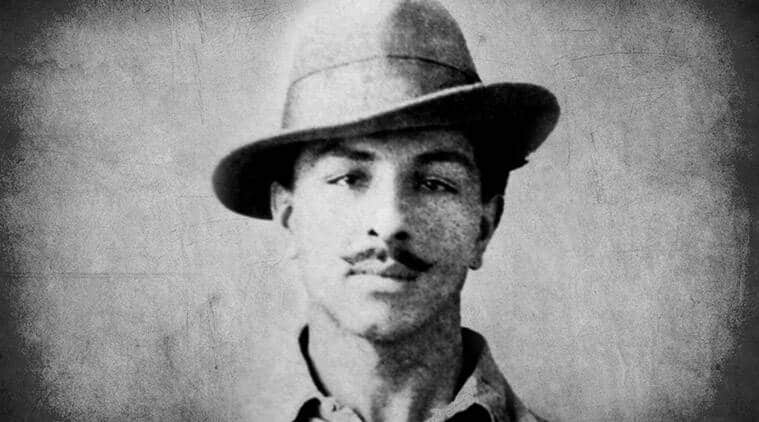

Bhagat Singh’s birth anniversary falls on 27 or 28 September; he was born in 1907 in Banga, Lyallpur district (now in Pakistan). The 114th birth anniversary was marked in 2021, and 2026 marks the 119th. He was hanged in Lahore on 23 March 1931 at the age of 23, alongside Rajguru and Sukhdev.
- Bhagat Singh birth anniversary: quick facts
- Why the date is given as 27 or 28 September
- What drew him to the freedom struggle
- Key events in Bhagat Singh's life
- His writings and ideas
- What Nehru and Netaji said about him
- How India remembers him today
- Why his legacy still matters
- Frequently asked questions
Bhagat Singh birth anniversary: quick facts
| Detail | Fact |
|---|---|
| Born | 27 September 1907 (some sources say 28 September) |
| Birthplace | Banga village, Lyallpur district, Punjab (now Pakistan) |
| Known as | Shaheed-e-Azam (great martyr) |
| Organisation | Hindustan Socialist Republican Association (HSRA) |
| Executed | 23 March 1931, Lahore Central Jail, aged 23 |
| Executed with | Rajguru and Sukhdev |
| Birth anniversary in 2026 | 119th |
Why the date is given as 27 or 28 September
Records and commemorations differ on his exact date of birth. Both dates are used in commemorations across India. Both dates point to the same 1907 birth year, so the anniversary count stays the same.
He came from a family already active in politics. His father, Kishan Singh, and his uncle, Ajit Singh, were involved in progressive politics and the Ghadar movement, which shaped his early ideas.
 Also readLady Cop Disguised As a Student To Solve Ragging Cases in Indore Medical College
What drew him to the freedom struggle
The Jallianwala Bagh massacre in Amritsar is widely seen as one of the events that turned him towards the freedom movement while he was still a boy. As a young man, he joined the Hindustan Republican Association and is credited with a large role in renaming it the Hindustan Socialist Republican Association in 1928.
He read widely, including Marx, Lenin, Bakunin and Trotsky, and moved towards socialist ideas. He did not accept Gandhian non-violence as the only path to independence.
Key events in Bhagat Singh’s life
- Saunders killing, 17 December 1928: After the death of Lala Lajpat Rai, HSRA members planned to kill police officer James Scott in Lahore. In a case of mistaken identity, they shot Assistant Superintendent John P. Saunders. Constable Chanan Singh was also killed while chasing the group.
- Central Legislative Assembly, 8 April 1929: Bhagat Singh and Batukeshwar Dutt threw low-intensity bombs into the Assembly in Delhi. The bombs were designed not to kill. They stayed back, raised the slogan “Inquilab Zindabad” and were arrested.
- Life sentence, 12 June 1929: Both were given life imprisonment in the Assembly bomb case.
- Hunger strike, 1929: In jail, he led a hunger strike demanding that revolutionaries be treated as political prisoners. Fellow revolutionary Jatin Das died on 13 September 1929 after a 63-day fast. Bhagat Singh ended his strike on 5 October 1929, after 116 days.
- Lahore Conspiracy Case: The trial for the Saunders killing began on 10 July 1929. On 7 October 1930, a special tribunal sentenced Bhagat Singh, Sukhdev and Rajguru to death.
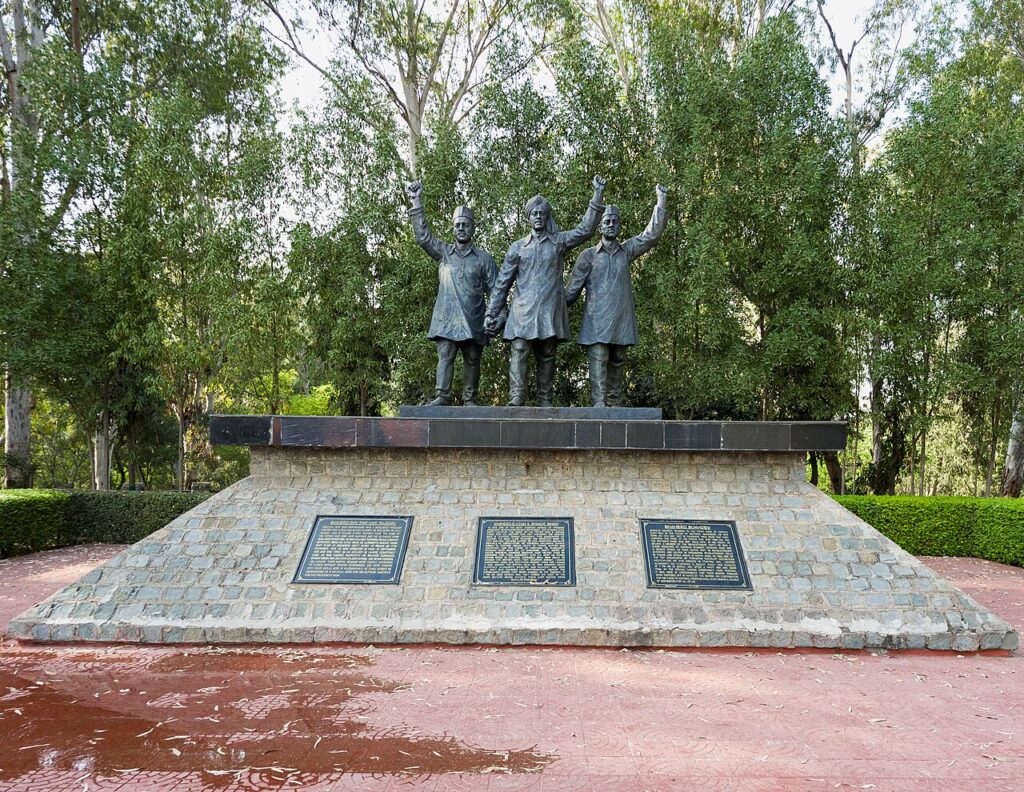
- Execution, 23 March 1931: The three were hanged at Lahore Central Jail. The execution was moved a day ahead of the scheduled date of 24 March.
His writings and ideas
Bhagat Singh is remembered as much for his ideas as for his actions. His best-known essay, “Why I Am an Atheist”, was written in jail in reply to a fellow inmate, Randhir Singh, who tried to persuade him to believe in God. In it, he explained his reasoning calmly and at length.
His writings show a secular outlook and a concern for social and economic equality, not only the end of British rule. This is one reason students, writers and political groups across the spectrum still quote him.
What Nehru and Netaji said about him
Both Jawaharlal Nehru and Subhas Chandra Bose spoke of him with respect. Nehru described him as a clean fighter who faced his enemy in the open. Bose said Bhagat Singh had become a symbol of a new awakening among young people.
These tributes show how widely he was admired across the freedom movement, even by leaders who followed different methods.
How India remembers him today
- Martyrs’ Day, 23 March: His death anniversary is observed across Punjab. A Shaheedi Mela is held every year at the National Martyrs Memorial in Hussainiwala, built at the cremation site in 1968.
- Chandigarh airport: Chandigarh’s airport was renamed Shaheed Bhagat Singh International Airport, as reported in September 2022.
- Parliament statue: An 18-foot bronze statue was installed in Parliament on 15 August 2008.
- Khatkar Kalan museum: The Shaheed-e-Azam Sardar Bhagat Singh Museum in his ancestral village opened on the 50th anniversary of his death. A memorial was added there in 2009.
- Farmers’ protests: During the 2021 farmers’ protests, groups at the Tikri border and in Punjab and Haryana marked his birth anniversary.
Why his legacy still matters
Bhagat Singh died at 23, yet his name remains one of the most recognised in India’s freedom struggle. Public places such as the Chandigarh airport carry his name, and his birth anniversary each September brings tributes from political leaders and citizens.
For many young Indians, his appeal lies in his reading, his clear writing and his willingness to argue his case in court and in print. Read more stories on people who shaped India and on education and history.
Frequently asked questions
When is Bhagat Singh’s birth anniversary?
It is observed on 27 or 28 September each year. He was born in 1907, and sources differ on the exact date.
Which birth anniversary of Bhagat Singh is it in 2026?
September 2026 marks his 119th birth anniversary. The 114th was in 2021.
How old was Bhagat Singh when he was hanged?
He was 23. He was hanged on 23 March 1931 at Lahore Central Jail with Rajguru and Sukhdev.
Why was Bhagat Singh hanged?
He was sentenced to death in the Lahore Conspiracy Case for the 1928 killing of police officer John Saunders, which was meant to avenge Lala Lajpat Rai’s death.
Sources: Bhagat Singh, Wikipedia, Chandigarh International Airport, Wikipedia, The Indian Express.