


“To call woman the weaker sex is a libel; it is man’s injustice to woman. If by strength is meant brute strength, then, indeed, is woman less brute than man. If by strength is meant moral power, then woman is immeasurably man’s superior. Has she not greater intuition, is she not more self-sacrificing, has she not greater powers of endurance, has she not greater courage? Without her, man could not be. If nonviolence is the law of our being, the future is with woman. Who can make a more effective appeal to the heart than woman?” – Mahatma Gandhi.
The status of women in India has been subject to many great changes over the past few millennia. With a decline in their status from the ancient to medieval times, to the promotion of gender equality by many reformers, their history has been eventful.
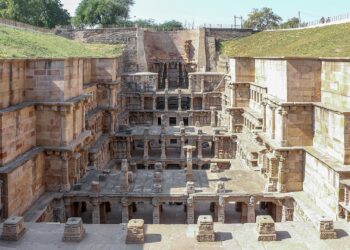
 Also readStepwells of India: History, Famous Baolis and How to Visit
Women during the early Vedic period enjoyed equal status with men in all aspects of life. Works by ancient Indian grammarians such as Patanjali and Katyayana suggest that women were educated in the early Vedic period. Rig Vedic verses suggest that women married at a mature age and were probably free to select their own husbands in a practise called swayamvar or live-in relationship called Gandharva marriage. Scriptures such as the Rig Veda and Upanishads mention several women sages and seers, notably Gargi and Maitreyi.
Also in Medieval India, there were cases of women often becoming prominent in the fields of politics, literature, education and religion. Razia Sultana (1205-1240) became the only woman monarch to have ever ruled Delhi. The Gond queen Durgavati (1524-1564) ruled for fifteen years before losing her life in a battle with Mughal emperor Akbar’s general Asaf Khan in 1564. Chand Bibi defended Ahmednagar against the powerful Mughal forces of Akbar in the 1590s. Jehangir’s wife Nur Jehan effectively wielded imperial power and was recognised as the real power behind the Mughal throne. The Mughal princesses Jahanara and Zebunnissa were well-known poets, and also influenced the ruling powers. Shivaji’s mother, Jijabai, was queen regent because of her ability as a warrior and an administrator. Tarabai was another female Maratha ruler. In South India, many women administered villages, towns, and divisions, and ushered in new social and religious institutions.
Now In modern India, women have held high offices including that of the President, Prime Minister, Speaker of the Lok Sabha, Leader of the Opposition, Union Ministers, Chief Ministers and Governors.
Women’s rights under the Constitution of India mainly include equality, dignity, and freedom from discrimination; additionally, India has various statutes governing the rights of women.
Thus, with women participating in nationalist movements, to being pushed into the domestic household space, to their resurgence as super-women today, women in our country have seen it all.
But beside every measure taken and every fact-checked, a recent survey conducted by the Thomson Reuters Foundation has ranked India as the world’s most dangerous country for women, ahead of Afghanistan, Syria and Saudi Arabia. Is this apt?
Well, let us have a look at the facts again for the answer.
Firstly, As many as 39 crimes against women were reported every hour in India, up from 21 in 2007, according to Crime in India 2016 report by the National Crime Records Bureau (NCRB). The rate of crime against women – crimes per 100,000 female population – was 55.2 in 2016, up from 41.7 in 2012.
Furthermore, the year 2016 saw the lowest conviction rate (18.9 per cent) – the percentage of cases convicted to cases in which trials were completed by the courts – for crimes against women in a decade where Cruelty by a husband or his relatives” was the most reported crime against women, accounting for 33 per cent of all crimes in 2016 – 110,378 cases or 13 crimes every hour.
Cruelty by husband/relatives was followed by cases reported under “assault on women with intent to outrage her modesty” (25 per cent), “kidnapping and abduction of women” (19 per cent) and “rape” (11 per cent).
Rape cases were reported every hour in the country in 2016, up from two every hour in 2007. Madhya Pradesh registered the most cases (4,882), while Sikkim reported the highest crime rate for rape (30.3). The nationwide crime rate was 6.3.
Reported rape cases have increased 88 per cent from 20,737 in 2007 to 38,947 in 2016.
Of 39,068 rape victims in 2016, 43 per cent were girls below 18 years. Offenders were known to the victim in 95 per cent reported cases. Of these, 29 per cent were “neighbours”, “known persons on a promise to marry the victim” (27 per cent) and “other known persons” (30 per cent).
Delhi topped the list for most rapes reported among 19 cities with populations more than two million in 2016 – 1,996, or five every day, Indiaspend reported. The city also ranked first in terms of crime rate (26.3 cases per 100,000 women) for rape, against the national average of 9.1.
Thus, while on one hand, India has seen an increased percentage of literacy among women, and women are now entering professional fields, the practices of female infanticide, rape, poor health conditions and lack of education still persist. Even the patriarchal ideology of the home is a woman’s ‘real domain’ and marriage being her ultimate destiny hasn’t changed much. If one looks at the status of women then and now, one has to look at two sides of the coin; one side which is promising, and one side which is bleak.
When our country got its independence, the participation of women nationalists was widely acknowledged. When the Indian Constitution was formulated, it granted equal rights to women, considering them legal citizens of the country and as an equal to men in terms of freedom and opportunity.
Indian women, who fought as equals with men in the nationalist struggle, were not given that free public space anymore. They became homemakers and were mainly meant to build a strong home to support their men who were to build the newly independent country. Women were reduced to being second class citizens. The national female literacy rate was alarmingly low of 8.6%. The Gross Enrolment Ratio (GER) for girls was 24.8% at primary level and 4.6% at the upper primary level (in the 11-14 years age group). There existed insoluble social and cultural barriers to the education of women and access to organised schooling.
A very few were allowed into the public space, which she was expected to manage on her own while maintaining her domestic role as a homemaker. In spite of the Sharda Actwhich was passed in the 1950s to raise the marital age limit for girls, child marriage, particularly in North India, was quite prevalent though the average age at marriage for females was increased to 18. It was almost unthinkable for women to have a choice or a say in matters of marriage, career or life. Rather she had no voice at all. Thus, maybe not worst but India today is definitely not a safe place for its women citizens.