• About   |
  • Advertise |
  • Contact Us
No Result
View All Result
The Second Angle (TSA Magazine)
Advertise
  • Infotainment
    • Sports
    • People
    • Inspiring
  • Entertainment
    • Lifestyle
    • Home & Decoration
  • Buzz
  • Education
  • Travel
  • Finance
  • Healthcare
  • Technology
The Second Angle
No Result
View All Result
  • Infotainment
  • Entertainment
  • Buzz
  • Education
  • Travel
  • Finance
  • Healthcare
  • Technology
Advertisement Advertisement Advertisement
ADVERTISEMENT
Home Featured

World Tsunami Awareness Day 2020: History & Significance

by The Second Angle Crew
June 11, 2021
in Featured, Offbeat, World News
Reading Time: 3 mins read
Tsunami

Image Credit: un.org

Share on FacebookShare on WhatsApp
Advertisement Advertisement Advertisement
ADVERTISEMENT
4 min readGAdd The Second Angle as a preferred source on Google
Key takeaways
What generates TSUNAMI?: According to a UN estimate, over 700 million people live in the low-lying coastal areas and small island...Simple & Effective Precautions:: UN disaster risk reduction UNDRR is a body that observes this day in collaboration with the rest of...What Resources Do We Have For Better Risk Governance?: Join the United Nation's Social Media Campaign today using the following Hashtags: #TsunamiDay #Plan2survive

It was December 2015 when the United Nations General Assembly considered and designated November 5th as the World Tsunami Awareness Day.

This day is marked for bringing in the various National governments, Non-Government Bodies, and most importantly the Civil Society to raise Tsunami awareness amongst the masses and share innovative approaches towards risk reduction. Tsunamis do not occur frequently but they are a combination of rarity with extreme deadliness.

The past century has observed 58 such tsunamis that have claimed more than 2,60,000 lives, with an average of 4,600 deaths each time a Tsunami strikes, which is much more than any other natural hazard. The most number of deaths during the 100 years were recorded in the tsunami of the Indian Ocean in December 2004 that affected approximately 2,27,000 lives & affected over 14 countries. The hardest-hit Nations included Indonesia, Sri Lanka, India, and Thailand.

The rapid increase in rates of urbanization across various countries and an increase in seaside tourism, especially in tsunami-prone areas are generating more and more risks every year.
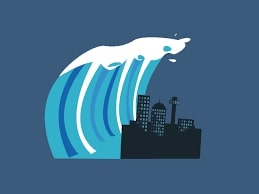
Tsunami
Image Credit: earthhow.com

We cannot avoid natural calamities but a reduction in the mortality rates during one can be achieved.

‘TSU’ MEANS HARBOUR ‘NAMI’ MEANS WAVE

A tsunami is a giant wave of ocean water created when there is some kind of disturbance underneath the ocean surface (an underwater earthquake.) A number of such waves displace a huge amount of water. These giant waves seem to be walls when they hit the shoreline. They can create dangerous impacts that might last for hours. Waves during a Tsunami hit the shore every 5 to 60 minutes.

Tsunami
A tsunami is a series of enormous waves created by an underwater disturbance usually associated with earthquakes occurring below or near the ocean. | Image Credit: un.org
Table of Contents
  • What generates TSUNAMI?
  • Simple & Effective Precautions:
  • What Resources Do We Have For Better Risk Governance?

What generates TSUNAMI?

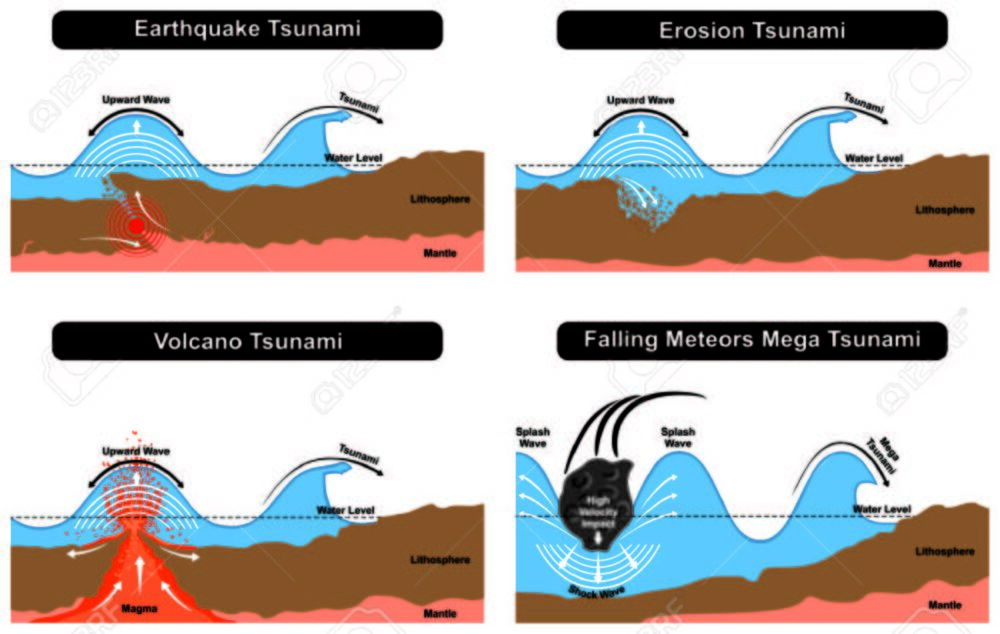
  1. An  Earthquakes (Underwater): It can be generated by movements along fault zones associated with plate boundaries. Most strong earthquakes occur in subduction zones where an ocean plate slides under a continental plate or another younger ocean plate. All Earthquakes don’t lead to Tsunamis.
  2. A Landslide: If they occur in some coastal areas.
  3. A Volcanic Eruption: Violent eruptions generate impulsive disturbances, generating extremely destructive volcanoes.
Tsunami
Image Credit: 123rf.com

According to a UN estimate, over 700 million people live in the low-lying coastal areas and small island developing states and are thus, exposed to extreme sea-level events including tsunamis. With increasing rates of Polar Ice Caps melting due to global warming, these areas are becoming more and more prone to Tsunamis.

The Past two decades have witnessed the occurrence of Tsunamis that have caused an approximate 10% of the Economic Loss compared to all forms of disasters, holding back development in the affected regions. Countries that have their coastlines in The Indian and The Pacific Ocean have met with serious impacts in the past.

  • The Tohoku Earthquake of Japan in the year 2011, caused damages of more than 235 billion dollars and is considered to be the costliest disaster in the world’s history.
  • The explosion of The Volcano of  Krakatoa (Krakatau) in Indonesia on 26th August 1883 lead to one of the largest and most destructive tsunami ever recorded. The waves reached 135 feet, destroying coastal towns and villages along the Sunda Strait in the Islands of Java and Sumatra killing 36,417 people.

Simple & Effective Precautions:

UN disaster risk reduction UNDRR  is a body that observes this day in collaboration with the rest of the organs of the United Nations, ensuring proper addressal of the protocols dedicated towards all-natural hazards.

  • Tsunami early warning.
  •  Public action.
  •  And building back better after being hit by the disaster to decrease future risk.

These must be implemented with collective efforts from community leaders, disaster management offices, NGOs, and most importantly the citizens.

What Resources Do We Have For Better Risk Governance?

  • Sendai Framework for disaster risk reduction.
  • Hyogo Framework for action.
  • UNESCO online lecture series making countries “Tsunami Ready” in the “Indian Ocean.”
  • Stories of “Tsunami ready communities” that have implemented tsunami ready plans into their mainstream disaster management programs, including regular drills for students.
  • Documentaries of the survivors and eye-witnessed stories of 1927, 1938, 1968, and 2018 earthquakes and tsunamis in Central Sulawesi will be revealed today on World Tsunami Awareness Day 2020.
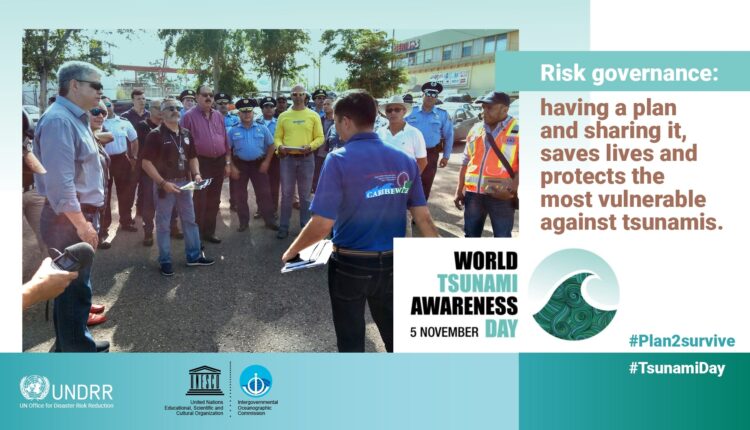
Tsunami
Image Credit: tsunamiday.undrr.org

Join the United Nation’s Social Media Campaign today using the following Hashtags: #TsunamiDay #Plan2survive

Also Read: International Day For Disaster Risk Reduction, October 13: It’s All About Governance Now


Enjoyed this story?Share it with your friends
WhatsAppLinkedInXFacebookEmail
See more TSA Mag stories on GoogleAdd us as a preferred source and our stories will show up more often in your Top Stories.
GAdd The Second Angle as a preferred source on Google
ShareSend
Tweet
Previous Post

Bali University Permits Students To Pay Their College Fees In Coconuts: Inculcates Entrepreneur’s Skills In Them

Next Post

Chills, Thrills and Horrors Films: Here Are Top 10 movies to watch this Halloween

Related Posts

Home Renovations Made Easy: Creative Ways to Fund Your Dream Upgrades
Home & Decoration

Adam Sandler Net Worth 2026: Netflix Deal, Salary and Career

Adam Sandler net worth explained: his estimated fortune, Forbes earnings, Netflix deals, Happy Gilmore 2 success and how Happy Madison...

Read moreDetails
PicsArt_11-02-09.24.24
Entertainment

Happy Birthday Shah Rukh Khan: A Heartfelt Letter as SRK Turns 61

Shah Rukh Khan birthday letter: as SRK turns 61 on 2 November 2026, a fan looks back at DDLJ, Jawan,...

Read moreDetails
Is AMU a Secular University? Minority Status Explained
Opinion

Is AMU a Secular University? Minority Status Explained

Is AMU a secular university? What the AMU Act says on admissions, the history of its minority status case and...

Read moreDetails
Inspirational Quotes for College Essays
Offbeat

15 Inspirational Quotes for College Essays and How to Use Them

15 inspirational quotes for college essays from Mandela, Kalam, Ambedkar and others, with checked attributions and tips on using a...

Read moreDetails
LGBTQIA+ in Afghanistan
World News

LGBTQIA+ in Afghanistan: Life Under Taliban Rule in 2026

LGBTQIA+ in Afghanistan: the law before 2021, abuses reported under the Taliban, and the July 2025 ICC arrest warrants that...

Read moreDetails
chinese
Opinion

Boycott Chinese Products: What Changed in India Since 2020

Did the call to boycott Chinese products after Galwan work? A look at app bans, investment rules, phone sales and...

Read moreDetails
Load More
Next Post
Chills, Thrills and Horrors Films: Here Are Top 10 movies to watch this Halloween

Chills, Thrills and Horrors Films: Here Are Top 10 movies to watch this Halloween

About

The Second Angle

The Second Angle (TSA Mag) is an infotainment and lifestyle magazine covering entertainment, travel, technology, health, education and finance.

Important Links

  • About The Second Angle
  • Advertise With Us
  • Editorial Policy
  • Privacy Policy
  • Terms and Conditions
  • Contact Us
  • Careers
  • Newsletter

Explore

  • Infotainment
  • Entertainment
  • Buzz
  • Education
  • Travel
  • Finance
  • Healthcare
  • Technology
Advertise with us

© 2017-2026. The Second Angle. All Rights Reserved. Developed and Managed by Squarebase.io

Welcome Back!

Login to your account below

Forgotten Password?

Retrieve your password

Please enter your username or email address to reset your password.

Log In
No Result
View All Result
  • Infotainment
    • Sports
    • People
    • Inspiring
  • Entertainment
    • Lifestyle
    • Home & Decoration
  • Buzz
  • Education
  • Travel
  • Finance
  • Healthcare
  • Technology

© 2017-2026. The Second Angle. All Rights Reserved. Developed and Managed by Squarebase.io

We use cookies to keep TSA fast and relevant. Read our Privacy Policy.