
• About   |
  • Submit Guest Post |
  • Contact Us
No Result
View All Result
The Second Angle (TSA Magazine)
Advertise
  • Infotainment
    • Sports
    • People
    • Inspiring
  • Entertainment
    • Lifestyle
    • Home & Decoration
  • Buzz
  • Education
  • Travel
  • Finance
  • Healthcare
  • Technology
The Second Angle
No Result
View All Result
  • Infotainment
  • Entertainment
  • Buzz
  • Education
  • Travel
  • Finance
  • Healthcare
  • Technology
Advertisement
ADVERTISEMENT
Home Culture

Basant Panchami: Rituals and historical significance

Basant Panchami also known as Vasant Panchmai is observed on 5th February 2022. The festival marks the beginning of spring and the farewell of the cold breeze of the winters. It is celebrated forty days before Holi, according to the Hindu calendar.

by Fatima Jamali
February 5, 2022
in Culture
Reading Time: 3 mins read
Basant Panchami: Rituals and historical significance
Share on FacebookShare on WhatsApp
Advertisement Advertisement Advertisement
ADVERTISEMENT

Basant Panchami, also known as Vasant Panchami is observed on 5th February 2022. Basant Panchami is celebrated annually according to the Hindu calendar on the fifth day that is called the Panchami Tithi of the Shukla Paksha Magh. It is celebrated forty days before Holi. Basant Panchami marks the beginning of the spring season and the farewell of the cold breeze of the winters. 

Table of Contents
  • Historical Significance of Basant Panchami
  • Significance and Rituals associated with Basant Panchami

Historical Significance of Basant Panchami

The historians and the legends say that Kalidasa was very unhappy because of the abandonment of his wife and planned to take his life by drowning in the river water. While he was about to jump in the river goddess Saraswati came out of the river’s water and asked Kalidasa to take a bath in the river. After that moment he found peace in the world and got blessed with wisdom and became a famous poet thereafter.

Basant Panchami: Rituals and historical significance
Image Source: patrika

Another story is based on Hindu mythology. According to the mythology, Hindu lord Kamadeva once disturbed Lord Shiva while he was in deep meditation. Shiva was deeply engaged in meditation because of the demise of his wife Sati. To awaken him from the meditation seer approached Kamadeva so that he could see the efforts of Maa Parvati. He shot errors made of flowers and bees with the bow of sugarcane. Lord Shiva was immersed in meditation when the arrow hit him and burnt Kamadeva to ashes. Lord Shiva agreed to bring him back to life after 40 days of penance of his wife, and it was the day of Basant Panchami when he came back to life. It is said that he was later born as the son of Lord Krishna. These are some of the historical beliefs associated with the festival.

Significance and Rituals associated with Basant Panchami

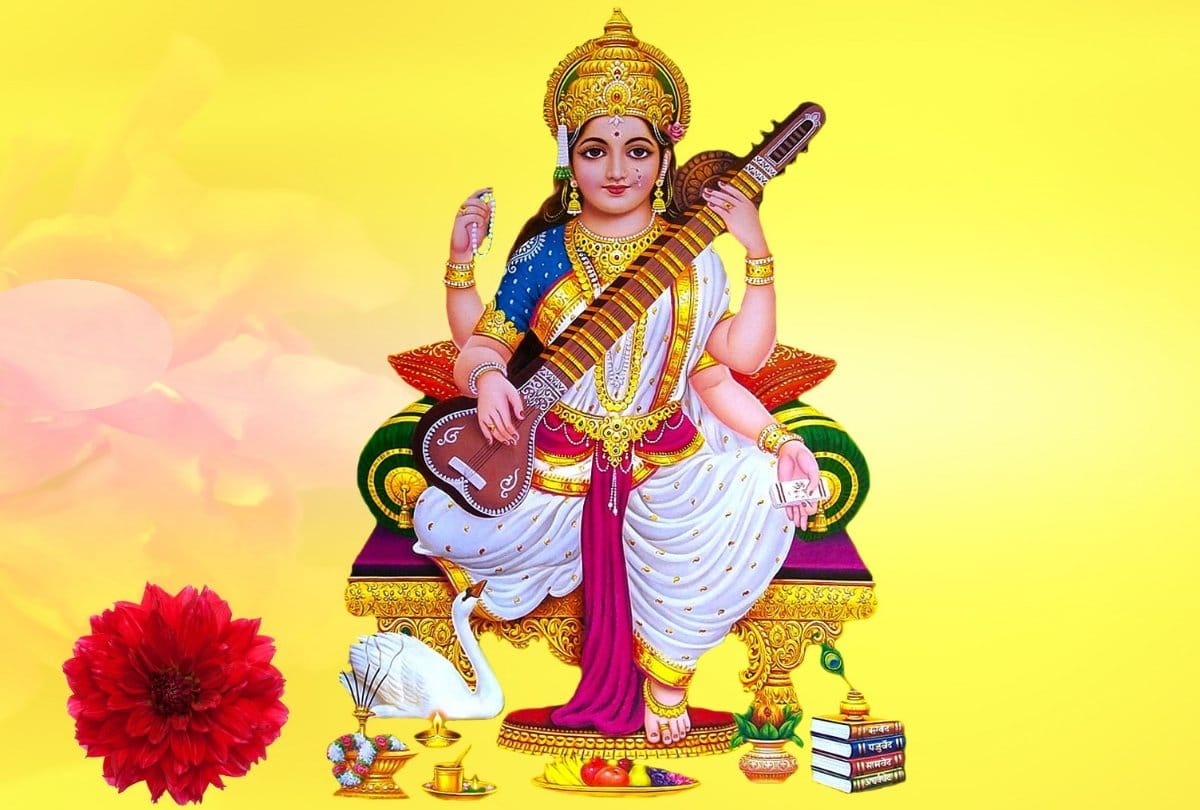
The people believing in the Hindu faith worship Goddess Saraswati on Basant Panchami. Goddess Saraswati is known to be the goddess of knowledge and wisdom and people worship the goddess Saraswati on Basant Panchami. Devotees worship goddess Saraswati in a belief of eliminating the ignorance in their lives and having a prosperous life thereafter. The worshippers adorn the deity with yellow and white clothes. Sweets made with sesame seeds mixed with milk are offered in front of the Saraswati Mata. This day is also marked by the ritual of Vidhya Aarambbha. As Goddess Saraswati is associated with music, art, and knowledge this day is also marked as the beginning of the learning segment of the young children. Goddess Saraswati is also worshipped in schools.

RelatedPosts

6 Best Places To Visit In India During the Month Of Ramzan

6 Best Places To Visit In India During the Month Of Ramzan

Looking beyond the binaries: Towards a Nuanced Understanding of Gender

Looking beyond the binaries: Towards a Nuanced Understanding of Gender


Basant Panchami: Rituals and historical significance
Image Source: indiatoday.in


Basant Panchami is celebrated in different ways in different states of India. In West Bengal, people worship the goddess Saraswati in their homes and massive pandals are made in different areas. Gigantic idols of Goddess Saraswati are installed and are immersed in water in the evening. Worshippers in parts of India cook yellow rice to mark the beginning of Basant and enjoy eating the yellow rice with friends and families. 

Basant Panchami is a very famous festival in the northern region of India. As the festival is associated with the beginning of spring, the festival is celebrated enthusiastically by the culture of flying kites in Punjab and Haryana. People from all age groups participate altogether and fly kites in the sky. The sky is filled with kites of different patterns and colours and everyone keeps on having the kite fight with their kite rivals till sunset. As the festival is linked with the beginning of spring people wear yellow dresses and cook yellow food as well. In the southern states of India, people celebrate it as Sri Panchami. In Maharashtra, Madhya Pradesh, Chhattisgarh, and Uttar Pradesh people worship Shiva and Parvati on Basant Panchami.

Also Checkout: When Grocery shopping and dating come together

Continue Reading
ShareSendTweet
Previous Post

14 Bollywood Songs for a Good Night’s Sleep

Next Post

All you need to know about the Ukraine-Russia situation and the mounting danger of war

Related Posts

6 Best Places To Visit In India During the Month Of Ramzan
Culture

6 Best Places To Visit In India During the Month Of Ramzan

Ramadan, the Muslim holy month, has begun, and Muslims worldwide are fasting from dawn to sunset. Let's take a look...

Read moreDetails
Looking beyond the binaries: Towards a Nuanced Understanding of Gender
Culture

Looking beyond the binaries: Towards a Nuanced Understanding of Gender

People have, at all times, in multiple geographical locations and cultures, found ways to shatter the binary lens

Read moreDetails
Mercy In The Month Of Ramadan And Nine Blessed Nights of Navratri: Token of Peace and Harmony For People Of India
Culture

Mercy In The Month Of Ramadan And Nine Blessed Nights of Navratri: Token of Peace and Harmony For People Of India

Goddess Durga is worshipped during Chaitra Navratri, also known as Vasant Navratri. Ramadan is a 30-day fast that is followed...

Read moreDetails
Exploring the City of “Tehzeeb”- Culture of Hyderabad
Culture

Exploring the City of “Tehzeeb”- Culture of Hyderabad

The culture of Hyderabad is highly distinct, with a mix of modern and traditional influences. In the culture of this...

Read moreDetails
The History of Delhi’s iconic Sujan Singh Park
Culture

The History of Delhi’s iconic Sujan Singh Park

The structure muddled in controversies is an amalgamation of various aspects of the history of India

Read moreDetails
Rishikesh: Pure Waves of Holy Ganges
Culture

Rishikesh: Pure Waves of Holy Ganges

Rishikesh, one of the best tourist places in India serves a variety of tourist attractions like sportsmen, pilgrims, families, and...

Read moreDetails
Load More
Next Post
All you need to know about the Ukraine-Russia situation and the mounting danger of war

All you need to know about the Ukraine-Russia situation and the mounting danger of war

Important Links

  • About
  • Guest Post
  • Privacy Policy
  • Terms
  • Contact Us
  • Newsletter

© 2017-23. The Second Angle. All Rights Reserved. Developed and Managed by SquareBase.io

Welcome Back!

Login to your account below

Forgotten Password?

Retrieve your password

Please enter your username or email address to reset your password.

Log In
No Result
View All Result
  • Infotainment
    • Sports
    • People
    • Inspiring
  • Entertainment
    • Lifestyle
    • Home & Decoration
  • Buzz
  • Education
  • Travel
  • Finance
  • Healthcare
  • Technology

© 2017-23. The Second Angle. All Rights Reserved. Developed and Managed by SquareBase.io

This website uses cookies. By continuing to use this website you are giving consent to cookies being used. Visit our Privacy and Cookie Policy.