

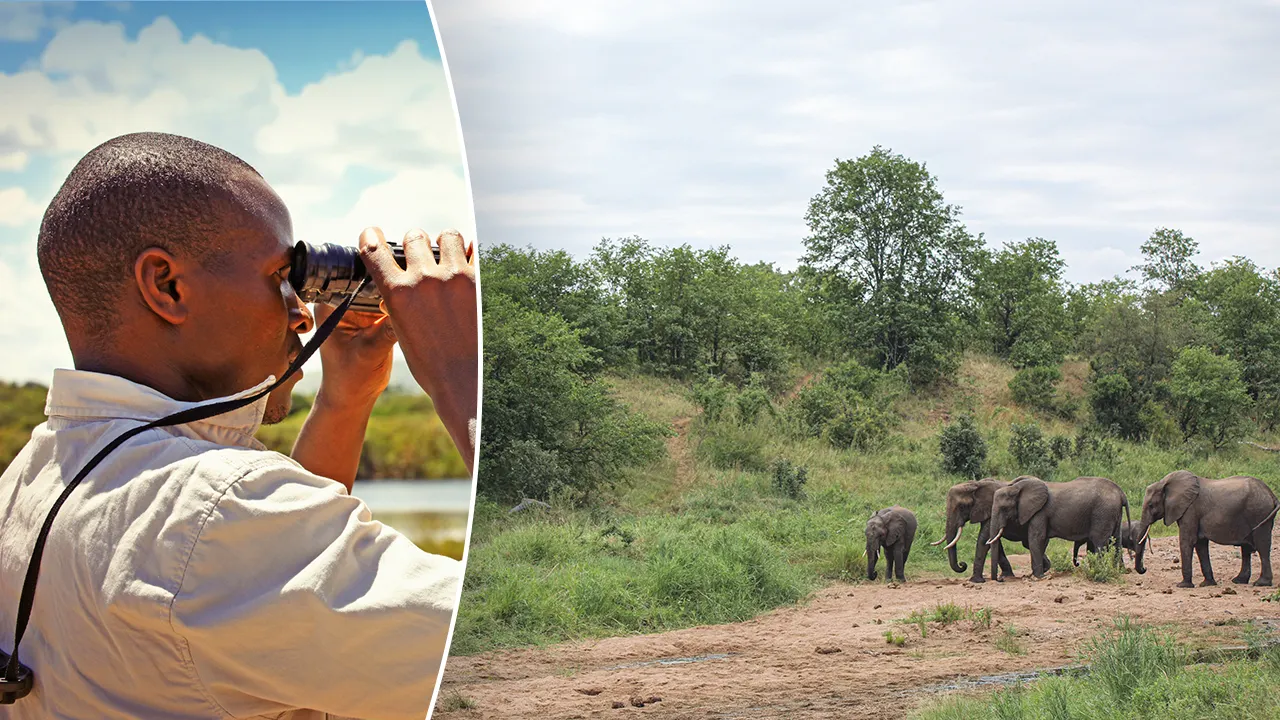

This South Africa travel guide covers what Indian travellers need to know in 2026: you need a visa, the best time for safaris is the dry season from May to September, and the top experiences are a Big Five safari in Kruger, Table Mountain, the Garden Route drive and Robben Island. Plan at least 8 to 10 days.
South Africa packs wildlife, beaches, mountains, wine country and important history into one trip. It is also a fairly easy long-haul destination for Indians, with a large Indian-origin community, familiar food in cities like Durban, and a time difference of just three and a half hours behind IST.
- South Africa travel guide: quick facts
- Visa rules for Indian travellers in 2026
- What to pack
- 1. See the Big Five on safari
- 2. Go up Table Mountain in Cape Town
- 3. Drive the Garden Route
- 4. Visit Robben Island
- 5. Explore the Cape Winelands and Cape Peninsula
- 6. Durban for Indian food and beaches
- Safety and money tips
- Frequently asked questions
South Africa travel guide: quick facts
| Item | Details |
|---|---|
| Visa for Indians | Required; apply through the official process before travel |
| Currency | South African rand (ZAR) |
| Time difference | 3 hours 30 minutes behind IST |
| Best time for safari | May to September (dry winter) |
| Best time for Cape Town | November to March (warm, dry summer) |
| Power plugs | Type M (large three-pin) and Type N; carry an adapter |
| Ideal trip length | 8 to 14 days |
Visa rules for Indian travellers in 2026
Indian passport holders need a visa to visit South Africa as tourists. Applications are made through the Department of Home Affairs process, with in-person submission handled by VFS Global centres in India. South Africa has historically not charged Indians a visa fee, though service charges apply. Apply at least three to four weeks before your flight.
 Also readWhy Egypt Asked Its Airlines To Avoid Iranian Airspace In 2024
South Africa has also announced a Trusted Tour Operator Scheme meant to speed up entry for tourist groups from India and China booked through approved operators. Rules and eligibility are still being rolled out, so check the official Home Affairs website or your travel agent before booking.
What to pack
- Light, neutral-coloured clothes for safaris; bright colours and white are best avoided in the bush.
- A warm jacket: early morning game drives in winter can be close to freezing.
- Comfortable walking shoes for hikes and city tours.
- Sunscreen, a hat and sunglasses, as the sun is strong at altitude.
- Insect repellent, and a doctor’s advice on malaria precautions if you are going to Kruger.
- Binoculars, which make a big difference on game drives.
- A small daypack for water and snacks.
1. See the Big Five on safari
The Big Five are the lion, leopard, elephant, rhino and Cape buffalo. Hunters first used the term for the animals that were most dangerous to hunt on foot. Today it simply means the animals visitors most want to see.
Kruger National Park, in the north-east, is the country’s best-known reserve and covers nearly two million hectares. You can self-drive on its tarred roads, book guided drives, or stay in private reserves along its borders that offer off-road game drives. Dry winter months make animals easier to spot near water.
2. Go up Table Mountain in Cape Town
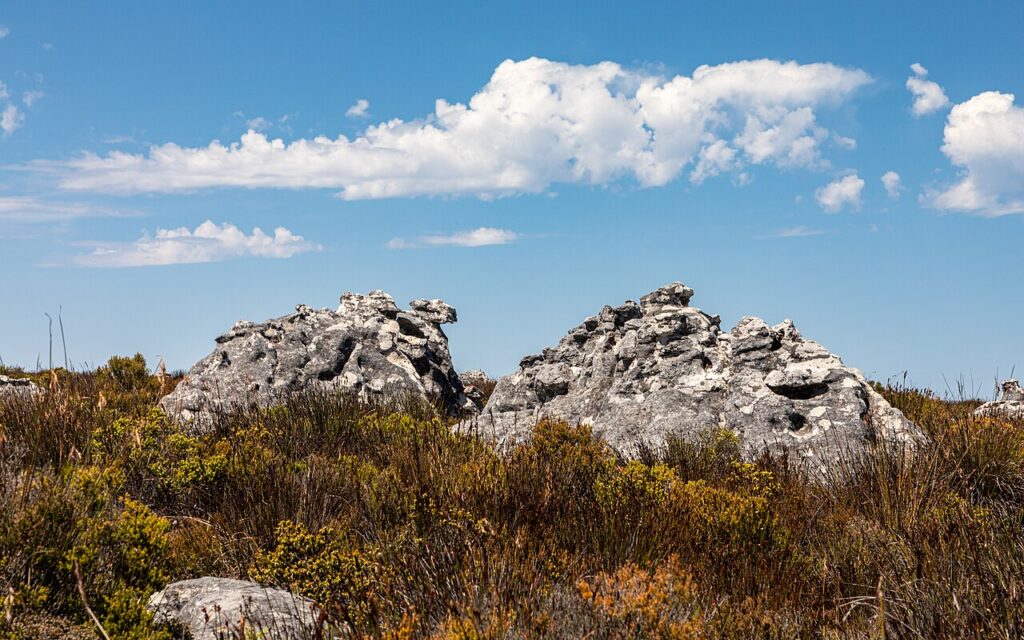
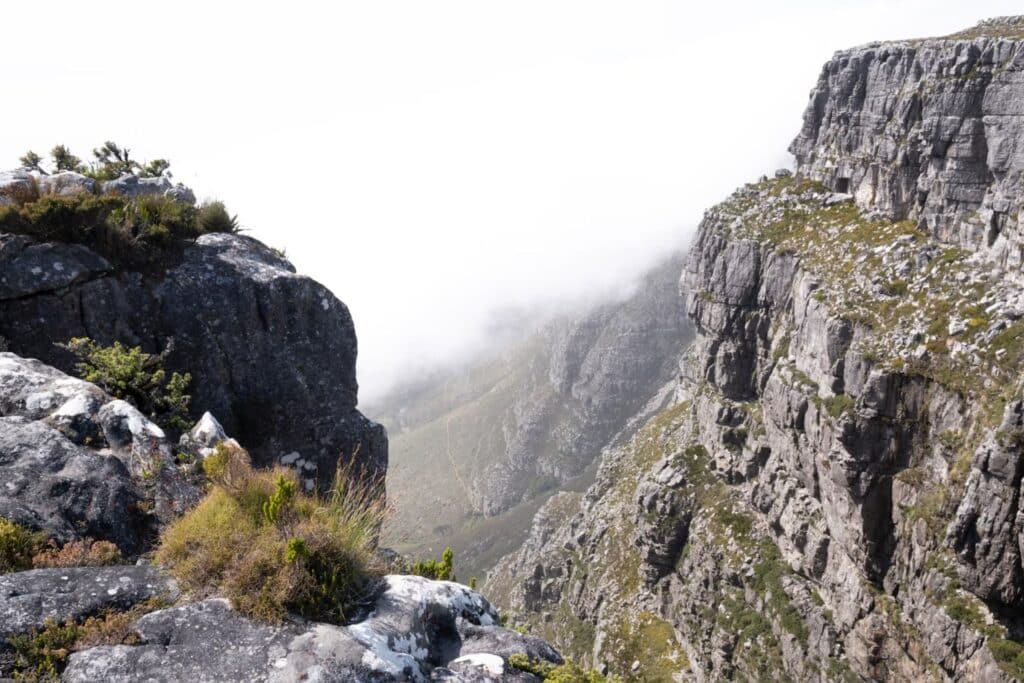
Table Mountain rises above Cape Town and gives wide views of the city, the Atlantic and Robben Island. Fit walkers can hike up in roughly two to three hours by popular routes such as Platteklip Gorge.
The easier option is the aerial cableway, which first opened in 1929. The rotating cable car reaches the top in a few minutes. Strong winds often close it, so check the status on the day and keep a backup plan.
3. Drive the Garden Route
The Garden Route runs along the southern coast, roughly 200 km from Mossel Bay to Storms River. It mixes beaches, lagoons, forests and small towns such as Knysna and Plettenberg Bay.
Many travellers start from Cape Town and take three to five days. Stops can include whale watching in Hermanus (best from about June to November), ostrich farms in Oudtshoorn, and the suspension bridge and canopy tours in Tsitsikamma. Indian licence holders should carry an International Driving Permit to rent a car.
4. Visit Robben Island
Robben Island lies in Table Bay and is reached by ferry from the V&A Waterfront in Cape Town. Nelson Mandela spent 18 of his 27 years in prison here. The island is a UNESCO World Heritage Site.
Tours are often led by former political prisoners and include Mandela’s cell. Book ferry tickets online well ahead, as they sell out and sailings are cancelled in rough weather.
5. Explore the Cape Winelands and Cape Peninsula
Stellenbosch and Franschhoek, about an hour from Cape Town, are known for wine estates, food and Cape Dutch buildings. Even non-drinkers enjoy the scenery and restaurants.
A day on the Cape Peninsula covers Chapman’s Peak Drive, Cape Point and the African penguin colony at Boulders Beach near Simon’s Town.
6. Durban for Indian food and beaches
Durban, on the warm Indian Ocean coast, has one of the largest Indian-origin populations outside India. Try bunny chow, a hollowed loaf filled with curry that was born in the city’s Indian community.
From Durban you can also reach the Drakensberg mountains and smaller game reserves in KwaZulu-Natal.
Safety and money tips
Use registered taxis or ride-hailing apps, avoid walking alone at night, and keep valuables out of sight. Cards are widely accepted in cities, but carry some cash for tips and small shops. Tipping about 10% in restaurants is normal. For more travel ideas, see our Travel section, and for budgeting your trip, our Finance section.
Further reading: 7 Hidden Gems in Morocco: Unveiling the Treasures of North Africa.
Frequently asked questions
Do Indians need a visa for South Africa?
Yes. Indian citizens need a visa before travelling to South Africa for tourism. Apply through the official process, with submission at VFS Global centres, and check the Department of Home Affairs website for the latest rules.
What is the best time to visit South Africa?
May to September is best for safaris because animals gather near water. November to March suits Cape Town and the beaches, with warm and mostly dry weather.
How many days are enough for South Africa?
Eight to ten days covers Cape Town, the Winelands and a short safari. Add four to five days if you want to drive the Garden Route.
Is South Africa safe for tourists?
Most tourists visit without problems by following basic precautions: avoid isolated areas at night, use trusted transport and keep valuables hidden. Check your government’s travel advisory before going.
Sources: SANParks: Kruger National Park, UNESCO: Robben Island, Table Mountain Aerial Cableway.