
• About   |
  • Advertise |
  • Contact Us
No Result
View All Result
The Second Angle (TSA Magazine)
Advertise
  • Infotainment
    • Sports
    • People
    • Inspiring
  • Entertainment
    • Lifestyle
    • Home & Decoration
  • Buzz
  • Education
  • Travel
  • Finance
  • Healthcare
  • Technology
The Second Angle
No Result
View All Result
  • Infotainment
  • Entertainment
  • Buzz
  • Education
  • Travel
  • Finance
  • Healthcare
  • Technology
Advertisement
ADVERTISEMENT
Home Culture

Dravidians and the Harappan Civilization, Do they have a connection?

Tracing the possible link

by Manya Arora
December 27, 2021
in Culture
Reading Time: 3 mins read
Dravidians and the Harappan Civilisation, Do they have a connection?
Share on FacebookShare on WhatsApp
Advertisement Advertisement Advertisement
ADVERTISEMENT
4 min readGAdd The Second Angle as a preferred source on Google
Key takeaways
The Indus Valley Civilization is perhaps the earliest known urban settlement in the Indian Subcontinent.It was Sir John Marshall (during the British rule) who is regarded to set India 2000-3000 years older than it was thought to be.Certain significant features that catch our eye include the drainage system, the grid pattern, and the infamous presumed ritual site, the Great Bath.

The Indus Valley Civilization is perhaps the earliest known urban settlement in the Indian Subcontinent. Emerging on the banks of river Indus, the civilisation has provided a great deal of historical health to us.

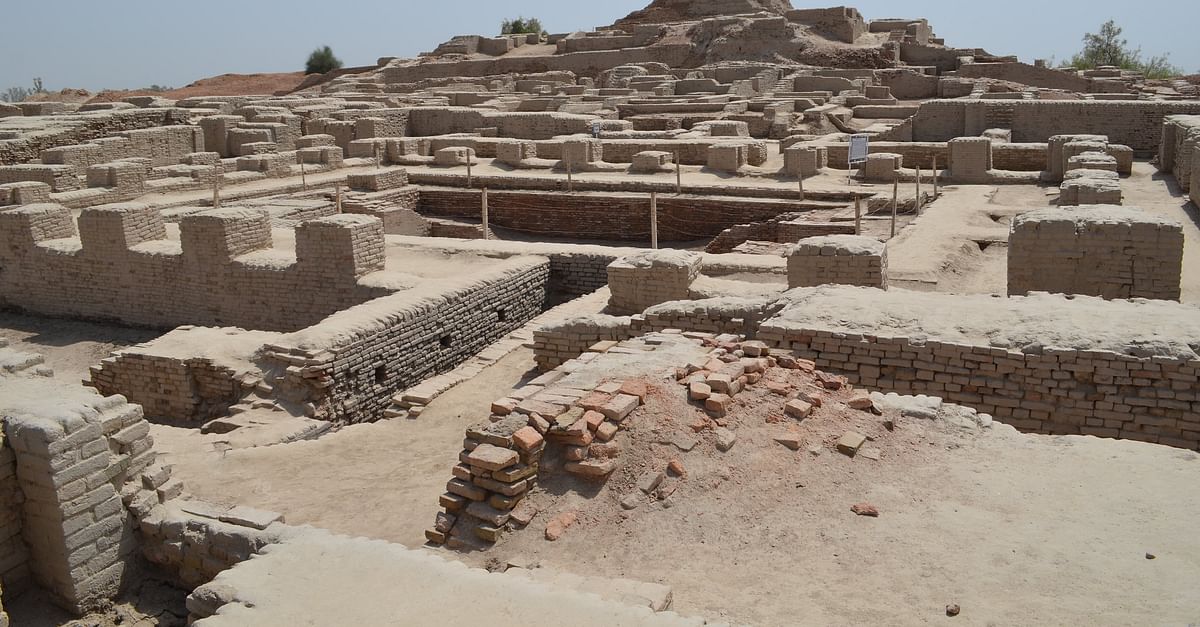
It was Sir John Marshall (during the British rule) who is regarded to set India 2000-3000 years older than it was thought to be. It is best known for its city of Mohenjodaro, which is much more well preserved than Harappa (due to brick robberies it has deteriorated).

Certain significant features that catch our eye include the drainage system, the grid pattern, and the infamous presumed ritual site, the Great Bath.

10 travel destinations in India to add to your bucket listAlso read10 travel destinations in India to add to your bucket list

However, it hasn’t been an easy task for archaeologists and historians to reconstruct the past. Errors in interpretation can often give misleading information especially when it comes to understanding social life. The most reliable source is the written form.

Unfortunately, the enigmatic script of Harappan culture hasn’t been deciphered yet which explains the confusion that goes around as to what exactly was the language people spoke, ideas they held, etc.

Deciphering scripts broadens the horizons and enables more closed doors to open. For instance, when James Princep deciphered Kharosthi and Brahmi, many of the ancient Indian texts were finally understood right.
Dravidians and the Harappan Civilization, Do they have a connection?
Webdunia
Table of Contents
  • Now, who are the Dravidians, and why are they linked to the Indus Valley Civilisation?

Now, who are the Dravidians, and why are they linked to the Indus Valley Civilisation?

The Dravidians are an ethnolinguistic group that originated in South Asia with a majority of speakers in South India. Their origin is considered very complex and open to debate.

The most common Dravidian languages are namely Telugu, Tamil, Malayalam, Kannada, Brahui, Coorg, Tulu, and Gondi. While it is dominantly spoken in parts of South India, it is believed to be widespread during and before Indo-Aryan migration.

The Proto-Dravidian language has no records. Though many historians have been increasingly connecting it with the Indus Valley Civilisation.

Dravidians and the Harappan Civilization, Do they have a connection?
The Hindu

Krishnamurti says Proto-Dravidian may have been spoken in the Indus civilization, suggesting a “tentative date of Proto-Dravidian around the early part of the third millennium.”

Findings such as the late Neolithic stone celt with markings of Indus symbols and signs have been regarded as crucial evidence in tracing the connection.

Henry Heras and Yuri Knorozov worked towards surmising the symbols. Yuri, on the basis of computer analysis, said that Dravidian is the “most likely candidate” for the underlying language.

Parpola and his Finnish team investigated and agreed with most of the material produced by Heras and Knorozov and also equated Dravidian words such as ‘min’ with the symbol of fish but disagreed on certain readings. 

The very recent study, published in Nature suggests that a large number of people spoke ancestral Dravidian languages. Words used for elephant such as ‘pīri’, ‘pīru’ in Mesopotamia, in Hurrian, and in Old Persian records all are taken from

Dravidians and the Harappan Civilization, Do they have a connection?
Dawn

the proto-Dravidian word for elephant. The research provides us with the idea that since ‘tooth’ ( pīlu) was a borrowable part of the conserved vocabulary, it indicates the possibility of Harappans speaking Dravidian languages.

Not to ignore the disclaimer put by researcher Bahata Ansumali Mukhopadhyay that it will be wrong to assume only one language was spoken throughout the settlement.

Additionally, she said, “during the Indus Valley civilisation era, this region could have been even more multilingual, with some languages that are now extinct.”

Towards the end, the mystery of language of the Harappan Civilisation still remains unsolved but it is definitely fascinating to know that there once was a civilisation dating back to c. 3300 – c. 1300 BCE, which doesn’t fail to mesmerise us as more and more things come to light. 


Also Read:  10 travel destinations in India to add to your bucket list
Enjoyed this story?Share it with your friends
WhatsAppLinkedInXFacebookEmail
See more TSA Mag stories on GoogleAdd us as a preferred source and our stories will show up more often in your Top Stories.
GAdd The Second Angle as a preferred source on Google
ShareSend
Tweet
Previous Post

NASA claims that Asteroid Bennu-An Asteroid as big as the Empire state building can hit the Earth

Next Post

World’s first Climate Change induced famine expected in Madagascar

Related Posts

Carved stone levels of Rani ki Vav stepwell in Patan, Gujarat
Editors' Pick

Stepwells of India: History, Famous Baolis and How to Visit

A guide to the stepwells of India: how baolis worked, their history, and key facts on Rani ki Vav, Chand...

Read moreDetails
Handloom weaving, one of India's GI-tagged crafts
Editors' Pick

GI-Tagged Sarees of India: How to Identify 8 Handloom Classics

A guide to GI-tagged sarees of India, from Kanchipuram and Banarasi to Paithani and Patola, with simple checks to tell...

Read moreDetails
Human-animal Marriage: “One of the Creepiest and Bizarre traditions of India”
Culture

Human-Animal Marriage in India: Rituals, Beliefs and the Law

Human-animal marriage in India explained: the dog, tree and frog wedding rituals reported from different states, the beliefs behind them...

Read moreDetails
Thane Period Room: What It Is and Why It Matters for Women
Culture

Thane Period Room: What It Is and Why It Matters for Women

The Thane period room, built in a slum toilet in 2021 for Rs 45,000, gave women a safe place to...

Read moreDetails
A Bharatanatyam dancer in performance
Culture

Indian Classical Dance Forms: A Beginner’s Guide to All Eight

From Bharatanatyam to Sattriya, India has eight recognised classical dance forms. Here is where each comes from and what makes...

Read moreDetails
6 Best Places To Visit In India During the Month Of Ramzan
Culture

6 Best Places To Visit In India During the Month Of Ramzan

Ramadan, the Muslim holy month, has begun, and Muslims worldwide are fasting from dawn to sunset. Let's take a look...

Read moreDetails
Load More
Next Post
World's first Climate Change induced famine expected in Madagascar

World's first Climate Change induced famine expected in Madagascar

About

The Second Angle

The Second Angle (TSA Mag) is an infotainment and lifestyle magazine covering entertainment, travel, technology, health, education and finance.

Important Links

  • About The Second Angle
  • Advertise With Us
  • Editorial Policy
  • Privacy Policy
  • Terms and Conditions
  • Contact Us
  • Careers
  • Newsletter

Explore

  • Infotainment
  • Entertainment
  • Buzz
  • Education
  • Travel
  • Finance
  • Healthcare
  • Technology
Advertise with us

© 2017-2026. The Second Angle. All Rights Reserved. Developed and Managed by Squarebase.io

Welcome Back!

Login to your account below

Forgotten Password?

Retrieve your password

Please enter your username or email address to reset your password.

Log In
No Result
View All Result
  • Infotainment
    • Sports
    • People
    • Inspiring
  • Entertainment
    • Lifestyle
    • Home & Decoration
  • Buzz
  • Education
  • Travel
  • Finance
  • Healthcare
  • Technology

© 2017-2026. The Second Angle. All Rights Reserved. Developed and Managed by Squarebase.io

We use cookies to keep TSA fast and relevant. Read our Privacy Policy.