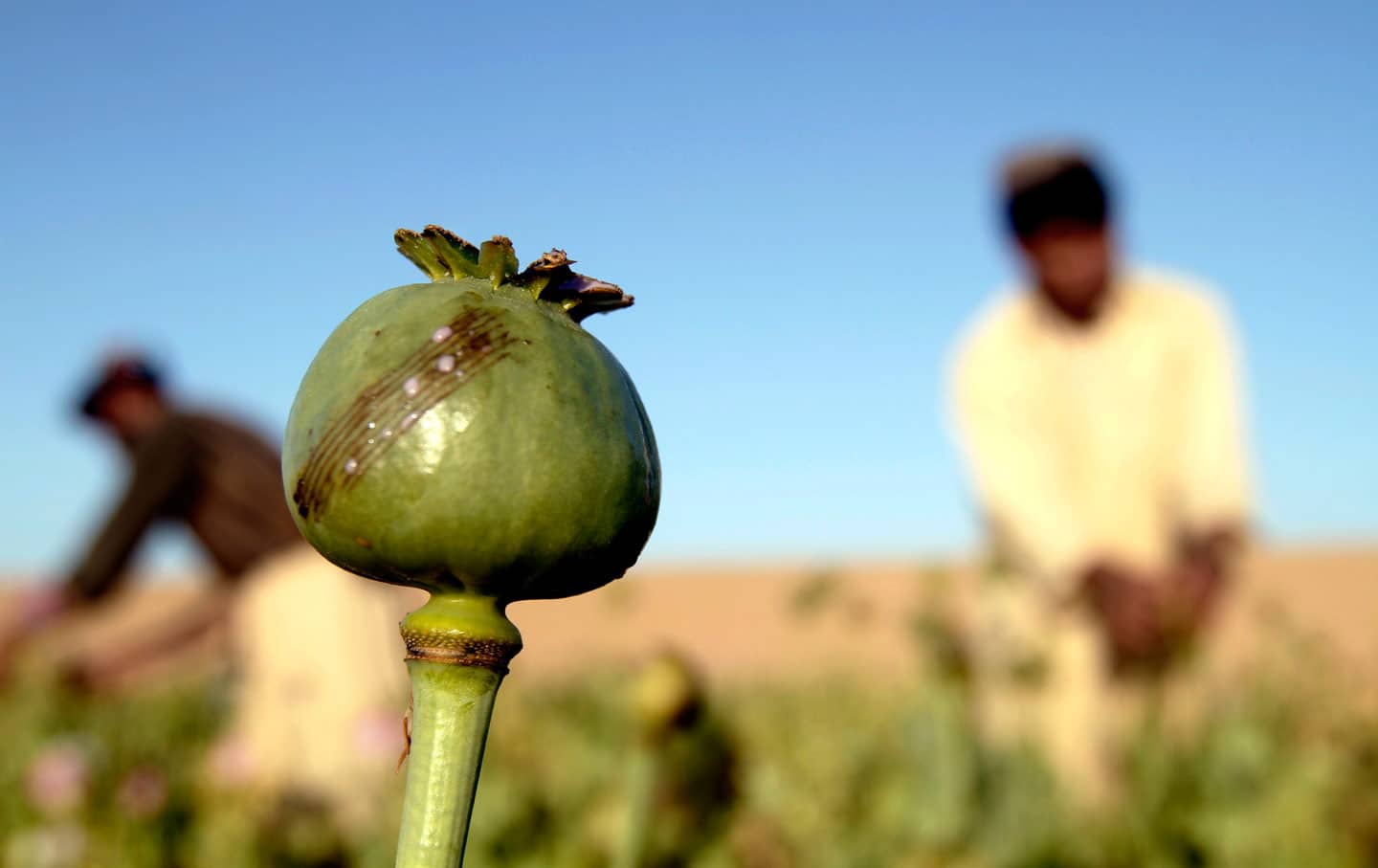

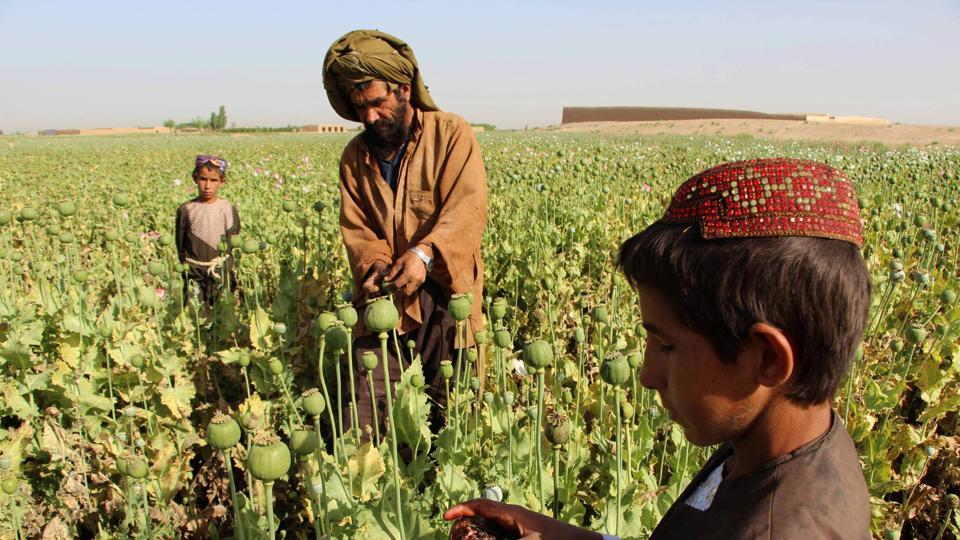
Do you know that 90% of the opium supply in the world comes from Afghanistan? The total area under the production of opium is 224,000 hectares.
71% of production takes place in the south-western area of the country and the rest in other provinces of the country producing a total of 6,300 tons. It’s also the leading producer of Hashish in the world.
 Also readCelebrating the gift of life on the occasion of World Organ Donation Day
There are several reasons behind the production and cultivation of opium in the country. There is a lack of employment opportunities, political instability, deprivation of quality education with difficult access to markets that promote the growth of opium.
Opium cultivation has been a major factor contributing to the Afghan economy during its history of instability. But, the monopoly lies with dealers, warlords, and traffickers who make huge profits.
The opium-growing farmers who are poverty-stricken despite the large-scale production, their condition worsens in the coming years.
While most of the opium is used for non-pharmaceutical purposes. It is a big part of the opium consumption in Afghanistan and Europe.
The origin and growth of opium cultivation in Afghanistan:-
The origin of opium production began in the mid-50s. Poppy cultivation was prohibited in Iran and Pakistan, and Afghanistan became the primary source of its supply.
Later, in the mid-70s there was political instability in south-eastern Asia that blocked the supply of opium to Europe and North America.
This allowed Afghanistan to become the source of opium supply, and opium cultivation increased in Afghanistan.
In the next few years, the left-government in Afghanistan that was favored by the soviet union fell after the lack of public support. Due to this reason, the Soviet forces invaded Afghanistan.
The leaders fighting against them decided to increase opium cultivation for financial aid. Even the Soviet government stated that the US was trying to support the export of opium to increase the finances of the freedom fighters against them. In 1989, the Soviet Union forces had to withdraw from Afghanistan.
After this, there was no power to exert control and administrate the country. The leaders in freedom-fighting organizations fought with each other for power and this strengthened the poppy production for financial support after the US stopped supporting export.
The opium cultivation under Taliban rule:-
The Taliban was founded in 1994 at Kandahar in Afghanistan. Under Taliban rule in 1999, the nation reported growth in opium crop production.
In July 2000, the leader of the Taliban collaborated with the UN to eliminate the narcotic production of Drugs labeling it un-Islamic.
As a result, the world’s biggest anti-drug campaign was initiated with a 99% reduction in opium production.
Some people alleged that it was a market strategy because the dry form of drugs can be stored for a long time. The ban on opium and other narcotics increased its price in the market. Therefore, it resulted in good profits and sales.
The opium cultivation during the Afghan war:-
After the attacks of 9/11, the US decided to enter Afghanistan against the Taliban, beginning the Afghan war. During this, the masses suffered due to scarcity of essentials, crippled economy, and disrupted trade.
With no potential alternative, the small farmers again began to produce opium for survival. Decisions at the International level were undertaken to stabilize the situation in Afghanistan.
A Democratic government under Hamid Karzai was formed. The United Kingdom had the responsibility to tackle narcotics production in the country.
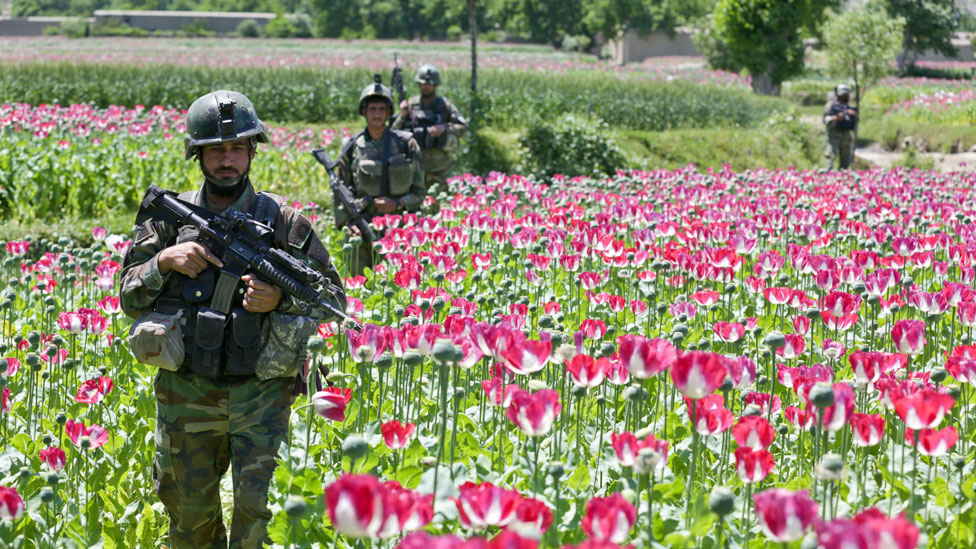
There were allegations that the government authorities took bribes for letting the production of opium and lack of initiative among the officials made the enforcement efforts ineffective.
Since lakhs of poor farmers earned from opium and narcotics cultivation, destroying or banning it would have resulted in public discontent and violent movements.
The production in recent years:-
The growth and expansion of opium cultivation in Afghanistan have made it difficult to control or eliminate narcotic production. With the lack of resources, institutional potential, and control network it would be difficult to cease the narcotic production.
Some people allege that this production is the main source of financial gains to the various organizations functioning in the country. There is no effective structure to enforce and keep a check on the traffickers in the illicit trade.
Most of the refugees from Iran and Pakistan have a drug addiction. Nearly 2-2.5 million people in Afghanistan consume drugs. Drug consumption is common among unemployed, government employees, farmers, and private business runners.
Afghanistan lies at the bottom of many development surveys at the International level. There is a disturbing level of infant mortality, life expectancy, and illiteracy.
All these things have contributed to an increase in opium production because poppies give a decent return on investment to support the economy.
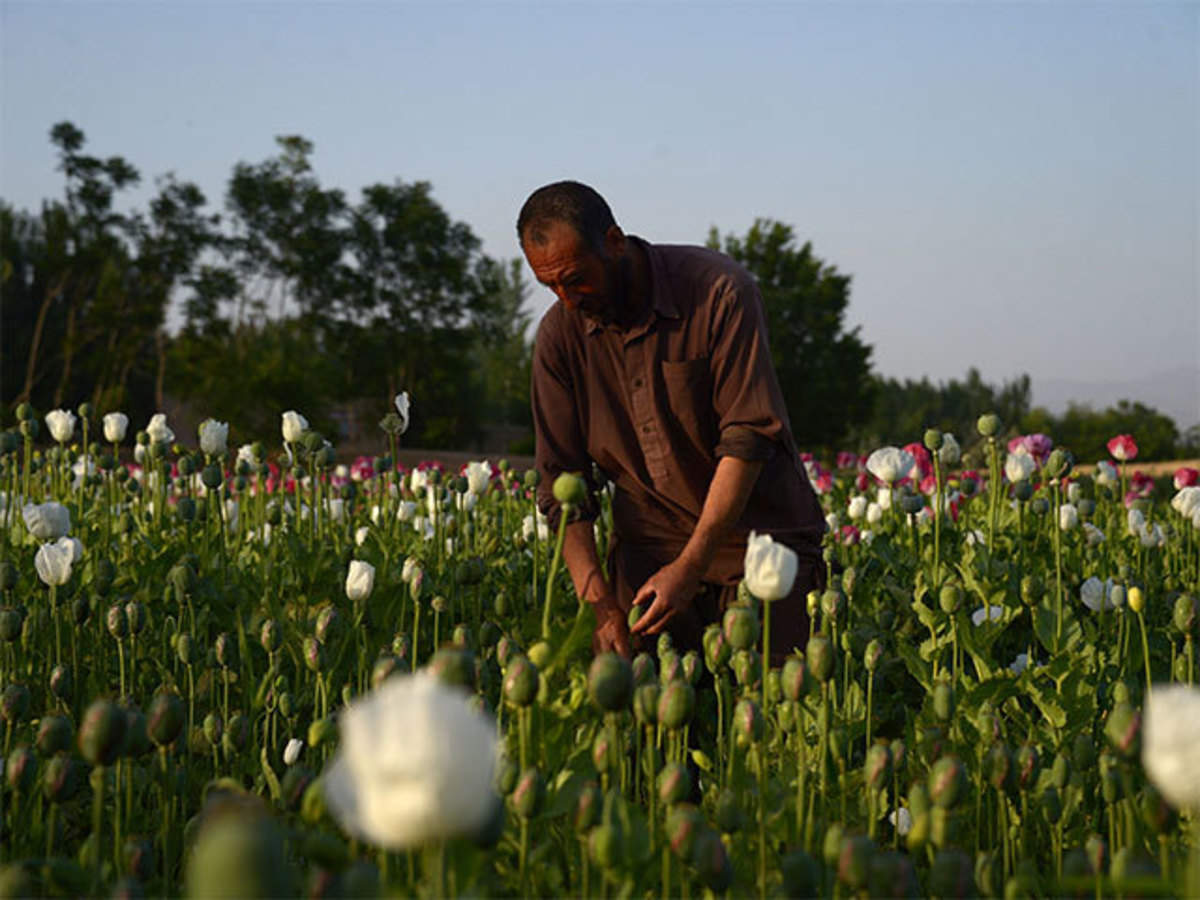
It’s not a traditional practice. 70% of Afghanistan’s primary source of income is opium production. There are several crops like nuts, fruits, and grapes grown in Afghanistan but the largest cash crop is opium.
It brings more profits than wheat that supported the economy earlier. Somehow, the cultivation of opium also gives a chance to work alongside their male counterparts to meet the supply demands.
Drug traffickers and Taliban:-
The drug traffickers have an illustrative relationship with the Taliban and Al Qaeda with instability making opium cultivation easier.
It brings financial resources to buy their weapons and pay their soldiers. In turn, soldiers create a favorable environment for the cultivation of opium. (Written by Antoria Maria costa in 2007 oped for Washington post)
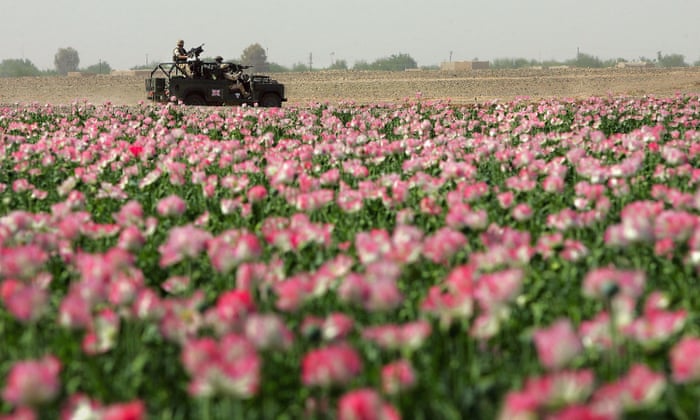
The globalization and development of trade have forced the farmers to change their traditional cultivation of wheat, nuts, and fruits cultivation.
It has boosted poppy production for higher opportunities because other cultivations required financial investments while problems of land scarcity and difficult access to loans further made it difficult.
Now, the changing political circumstances in Afghanistan will decide the future of the opium trade in Afghanistan.
Also Read: Purpose in common, is Power: